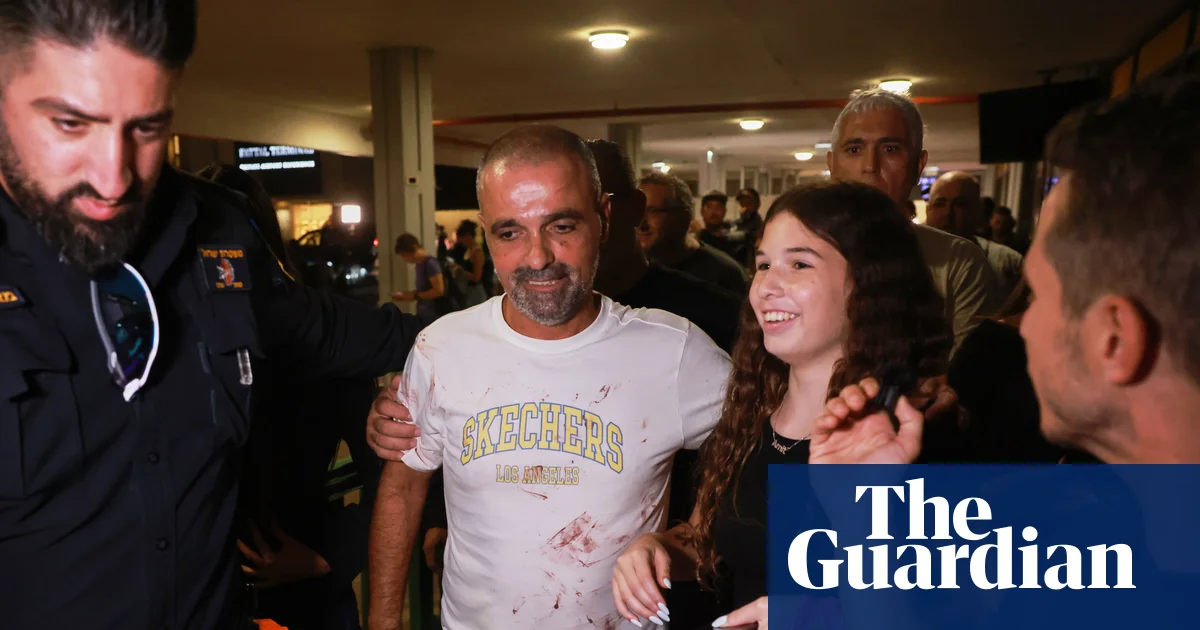
At about 9.30 on Wednesday morning local time, Tali Manes was taking her six-year-old daughter, Nina, to the toilet on the regular flydubai flight from Dubai to Tel Aviv when she heard a series of heavy blows against the cockpit door. This was reported by Qazaqyia.kz citing The Guardian.
Manes, an Israeli bank executive, immediately told a flight attendant seated nearby that something was wrong. When he did not react, she shouted at him: "Something is happening in there!" Seconds later, the man "simply went to the [cockpit] door and opened it", Manes told Israel's Channel 12 TV.
Inside, the scene was the stuff of travellers' nightmares: blood spattered over the cockpit walls and a brutal struggle in progress between the badly injured pilot and the co-pilot, who was armed with some kind of sharp weapon. There was no one at the controls of the Boeing 737.
Manes shouted again: "He's stabbing the pilot, he's stabbing the pilot, come help!"
Many of the details of what happened on flight FZ 1073 are still unclear, but what happened next is well documented by witness testimony and videos.
As the plane went into a steep dive, losing 16,000ft of altitude in about a minute, most of the 182 passengers screamed, prayed and tried desperately to reassure panicking children. But a small group rushed to the cockpit and overpowered the co-pilot. One, a plumber, copied an action seen on TV documentaries about plane crashes to pull the aircraft out of its dive.
Two off-duty pilots on the flight, both among the handful of non-Israeli passengers, then took over the controls of the now almost rudderless aircraft to guide it eventually to a landing 90 minutes later in Tabuk, Saudi Arabia. In the meantime, Manes had helped truss the co-pilot with a telephone cord while a dentist treated the injured Indian pilot, Smit Machchhar. It was a "great miracle", Manes said on eventually reaching Tel Aviv on an emergency flight 10 hours later.
In a video call with Narendra Modi, the Indian prime minister, broadcast live by TV networks, Machchhar, who is recovering in an Abu Dhabi hospital, said he had been "fighting for my life".
The pilot successfully sent an alarm to air traffic control signalling the attack and then, as his strength ebbed, managed to unlock the cockpit security door.
"I had so many wounds. I had fallen down," Machhchar said. "At one point, I realised that if I didn't get up ... then passengers would lose their lives."
For the moment, the identity of the co-pilot who attacked Machchhar is unknown, though regional sources said he was an Omani national who had joined flydubai – which is owned by the United Arab Emirates (UAE) government – between five and nine months ago.
In Israel, there is little doubt about the co-pilot's intentions. "The co-pilot is a terrorist who tried either to hijack the plane or bring it down as a suicide. The worst scenario is he was trying to get into Israel," said Arik Arad, the chair of the aviation cybersecurity consultancy Cyviation and El Al's former head of security at Ben Gurion airport
Benjamin Netanyahu, Israel's prime minister, has claimed the co-pilot was exposed to "Islamist radical indoctrination", saying Israeli investigators had found evidence on social media accounts that he wanted to "kill Jews".
"The attacker, he calls out to the aircrew: 'Kill me, kill me,'" Netanyahu told Fox News, adding it was "clear he was suicidal".
Experts said there have been only a handful of instances of suicide by plane – cases where the pilot's motivation is primarily to kill him or herself by crashing the plane, rather than using the plane as a weapon, as in the 9/11 attacks.
In 2015, the co-pilot of a low-cost German airline flight who had hidden evidence of psychiatric illness from his employers deliberately crashed, killing himself and 150 others. Suggestions that the crash of an AirIndia 787 in Ahmedabad last year was the result of a pilot deliberately cutting fuel to engines have been fiercely disputed.
Terrorism experts are sceptical that the flydubai co-pilot's only motivation was to end his own life. "The odds that a pilot would decide to commit suicide and just happen to be flying a plane full of Israelis are pretty low," said Colin Clarke, a terrorism expert at the respected Soufan Center in New York.
"Netanyahu has a big interest in this being terrorism, but the best explanation is probably the most obvious one [ie terrorism]," he said. "The question … is: was [the co-pilot] recruited by a group or an organisation … or was he radicalised alone? In which case, what was hyping him up, given he was flying a planeload of Israelis? Could that be Gaza?"
Security services have been warning of a wave of radicalisation across the Middle East prompted by the war in Gaza, which came to an inconclusive halt with a fragile ceasefire.