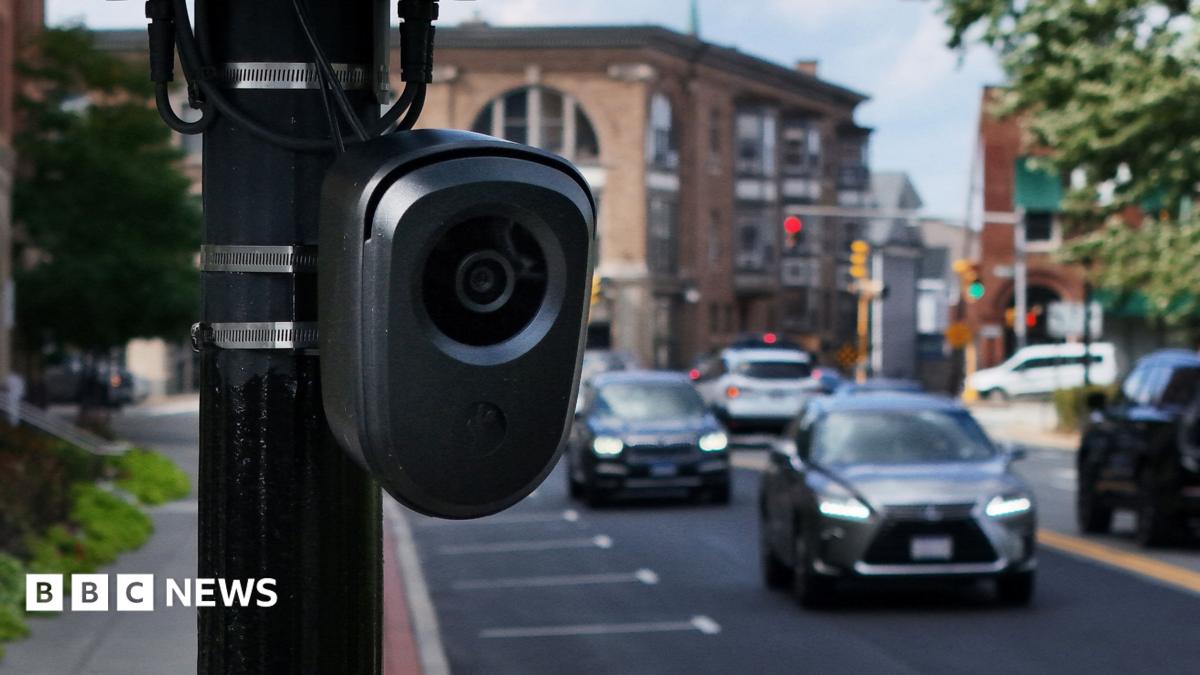
Houston's historic Old Braeswood neighborhood is affluent and tree-lined. These are not the kind of streets where you would expect to see coordinated vandalism. Yet here four surveillance cameras were attacked and cut down in the middle of the night. This was reported by Qazaqyia.kz citing BBC News.
The metal poles were severed, leaving the distinctive black oval cameras and accompanying solar panels lying on the ground. On some of the cameras was a red sign reading: "Notice. 24/7 video recording".
These cameras are run by a company called Flock Safety and this sabotage, which happened in late July, is a signal of growing concern over the nationwide spread of sophisticated AI-powered surveillance systems. Similar vandalism incidents have occurred in Minnesota, California, and Georgia.
Proponents say they have made communities safer, and helped dramatically increase the rate at which crimes are solved. But recent examples of misuse have led some to worry. Critics say the cameras, which take pictures of the rear of every car that drives past, are overly broad investigative tools that treat civilians like suspects.
They see the little black poles popping up in their neighbourhoods as visible reminders of state power, at a time when public confidence in institutions is historically low and many are concerned about the accelerating pace of technological change and the influence of AI on people's lives.
Founded in 2017, Flock Safety has become one of the country's biggest makers of Automatic Licence Plate Readers (ALPRs). These AI-powered cameras take a picture of the rear of every car that drives past. Footage is retained for a specified amount of time.
The company does not publish exact data, but says it works with more than 7,000 communities nationwide, and estimates there are approximately 100,000 cameras deployed.
Records obtained by the BBC provide a rare glimpse into the extensive network of cameras and surveillance tech being used in America's fourth largest city, Houston, including the use of controversial facial recognition software powered by artificial intelligence.
Flock is not just selling cameras - it is selling access to a database that can include thousands of cameras from around the country. Older ALPRs did not have this vast network, which is a major selling point for law enforcement.
For example, Houston's METRO Transit Authority owns 35 cameras. But documents show METRO has access to around 20,000 devices in the Flock network - including some as far as Albany County, New York.
And as Flock expands, so too can the scope of investigations. Documents released to the BBC show how the network has grown year on year. In the Cypress-Fairbanks independent school district, a typical licence plate lookup in April 2024 searched around 270 networks of cameras. By April 2025, the typical search scope had almost doubled to around 500 networks. In April 2026, 20% of searches were conducted across more than 6,000 networks.
Critics in Houston say this national network concerns them more than individual cameras. Christopher Rivera, from the Texas Civil Rights Project, worries that authorities could use "these databases to search our everyday routines, which ultimately scrapes out our routes to work, where our children go to school, and where we worship. And that's very problematic".
There have been recent incidents of privacy breaches that have caught national attention. Last week, a police officer in Kentucky was charged after using the Flock system to track his ex-girlfriend - who filed a protection order - over 2,000 times. He was caught using Flock's newly mandatory, AI-powered audit tool that flags suspicious use.
Others are concerned about Flock being a way for police to avoid warrants, which are usually required to search a person's property or tap their phone. In 2025, a detective in Johnson County, Texas, searched over 80,000 images to locate a woman suspected of having an abortion. He did not have a warrant.
With AI, unlike older licence-plate readers, law enforcement can search surveillance footage with a string of words like "Caucasian man, blue shirt" - not just a licence-plate image.
One thing Flock does not use is facial recognition. But that doesn't mean police departments are avoiding that tech. Critics say it violates human rights, is susceptible to misidentifying innocent people, and can be biased against minorities.
The BBC has received documents revealing that Harris County Sheriff's Office, which covers Houston, uses other facial recognition technology, Clearview AI. The tool includes a database of over 70 billion images, many of which were scraped from public internet sources including social media. The documents, including purchase orders and a License Agreement, show that the county's Clearview AI contract currently runs through to March 2027.
Several European countries have issued the company with data protection fines, including a £7.5m penalty from the UK's Information Commissioner.
Harris County Sheriff's Office use of this facial recognition technology has not been reported before. The office did not respond to requests for comment.