Computer scientist Louis Castricato was in his eighth year studying large language models — the artificial intelligence technology behind chatbots like ChatGPT and Claude — when he started to feel like he was hitting a dead end. "We basically have passed the point of doing real fundamental LLM research," Castricato said. "Now it's just applications." The researcher quit his studies at Brown University and started a new company, called Overworld. Its ambition is in its name: AI that can understand and navigate a world, not just words. This was reported by Qazaqyia.kz citing Associated Press.
This was reported by Qazaqyia.kz citing Associated Press.
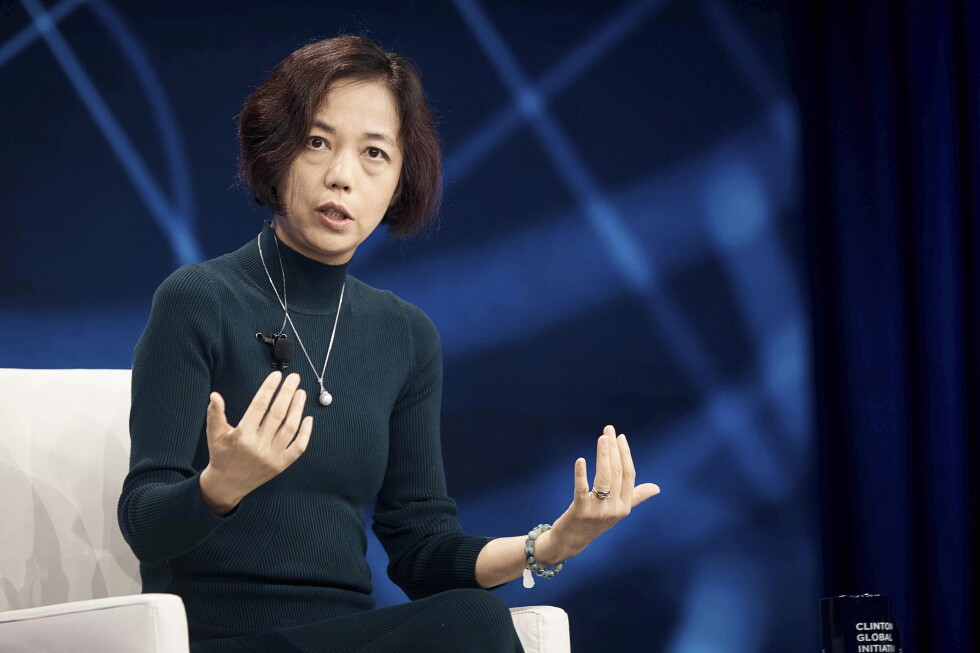
There's still plenty of money to be made from AI chatbots — investors are counting on it as they commit trillions of dollars to leading developers like Anthropic and OpenAI. But a growing number of AI entrepreneurs are dedicating themselves to what they see as the next frontier: "world models" that teach AI systems, and sometimes robots, how to react in a physical environment. They include some of the field's most prominent scientists, such as "Godmother of AI" Fei-Fei Li, who describes the concept of a world model as "one of the most important and most overloaded terms in AI today."
At the heart of world model research is the idea that AI can't be truly intelligent if it can only read a book. It also needs to read the room. "Where language models learn the statistical structure of text, world models learn the statistical structure of space and time: how light falls on a surface, how a garden looks from an angle no camera has captured, how objects respond to force and follow the laws of physics," wrote Li, founder of the San Francisco startup World Labs, in an essay published this month.
Another proponent is AI pioneer Yann LeCun, who quit his job as Meta's chief AI scientist last year to start Paris-based Advanced Machine Intelligence Labs. "World model is quickly becoming a buzzword," LeCun said on a recent "Unsupervised Learning" podcast. He said he views it as something that enables an AI agent "to predict the consequences of its own actions."
There are multiple ways of defining world models, often based on the technologies someone hopes to build with it — be it robots or a more interactive video game. Training on all of humanity's books, news articles and visual media, as AI language models have done, has led to AI assistants that are changing the nature of office-based work and some creative fields. But some proponents see limitations in generative AI models that work by repeatedly predicting the next word or pixel to produce new dialogue, images or lines of code. Chatbots can't pick up a coffee mug, notes Martin Hebert, dean of computer science at Carnegie Mellon University.