Destructive earthquake in Philippines: 32 people killed
At least 32 people have died in a magnitude 7.8 earthquake that struck off the coast of Mindanao island in the southern Philippines. This was reported by Qazaqyia.kz citing BBC News.
The earthquake occurred on Monday at 07:37 local time (Sunday, 23:37 GMT), triggering tsunami warnings for the Philippines, Indonesia, Japan and Australia. Some of them were lifted after a few hours.
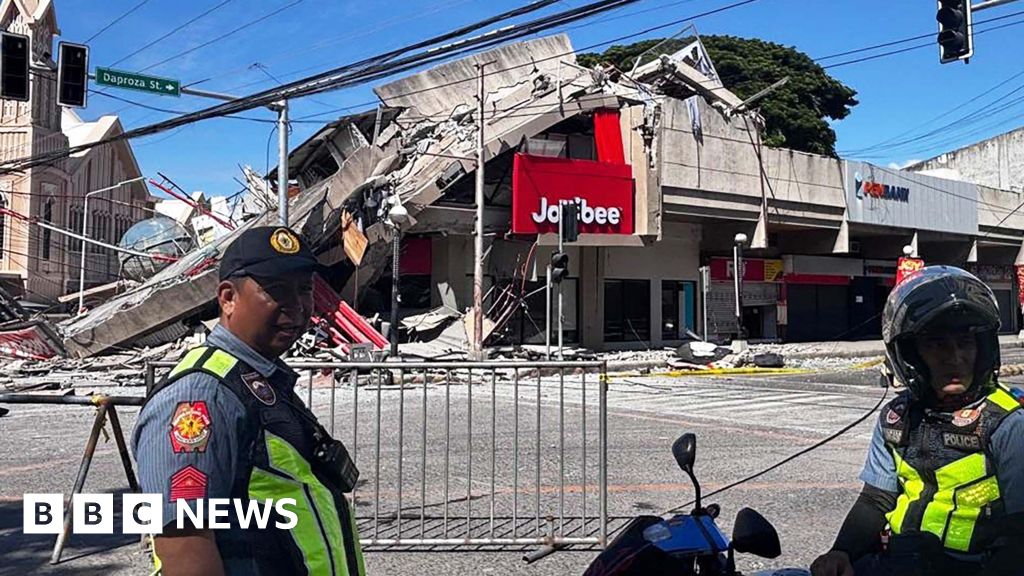
Video and photographs show buildings collapsing, including footage of a Jollibee fast food restaurant reduced to rubble. Landslides have been recorded in some areas.
According to authorities, more than 100 people have been injured in several provinces, nearly two dozen are missing, and 10,000 residents have been preemptively evacuated.
Mindanao is the second largest island in the Philippines both in area and population, with about 26 million people.
The death toll is to be confirmed by the national disaster agency, which is collecting and verifying data from various local sources and is expected to provide an official update in the coming days.
Local authorities in the coastal province of Sarangani, located about 20 km from the epicenter, reported 17 deaths there, many from a landslide. The earthquake temporarily cut power and communications in Sarangani, but they were later restored.
In General Santos, the city closest to the epicenter, 10 people died, the Civil Defense Office reported. Another 22 people are listed as missing. General Santos is known as the tuna capital of the Philippines and is also the hometown of Manny Pacquiao, a world boxing champion turned politician.
South Cotabato and Sultan Kudarat were also badly affected.
Philippine President Ferdinand Marcos Jr. said in a statement that agencies are coordinating disaster response efforts. "The national government is working, and we will not abandon Mindanao," he promised.
Marcos also ordered the suspension of classes in affected areas after the earthquake, which coincided with the first day of the school year in the Philippines.
In one video released by an elementary school in Davao Occidental province, dozens of frightened students are seen crouching on the shaking ground. The video also shows a corrugated iron canopy collapsing behind them, although the school said no one was injured.
More than 130 aftershocks ranging from magnitude 1.3 to 6.7 have been recorded since the initial earthquake.
Earthquakes are common in the Philippines, which lies on the geologically unstable "Ring of Fire." While most of these tremors are minor and pass relatively calmly, some are deadly. In September last year, a magnitude 6.9 earthquake struck the central Visayas region, killing more than 70 people.
Shortly after the earthquake on Monday morning, Japanese authorities warned of tsunami waves up to one meter high that could reach its shores. Later, a tsunami wave several centimeters high was recorded in the southern prefecture of Okinawa, and a 20 cm wave was measured on the remote Ogasawara Islands, authorities said. Waves were also detected at several locations along the coasts of Indonesia, Palau and the Philippines. The height of these waves ranged from a few centimeters to 1.4 meters, according to authorities.