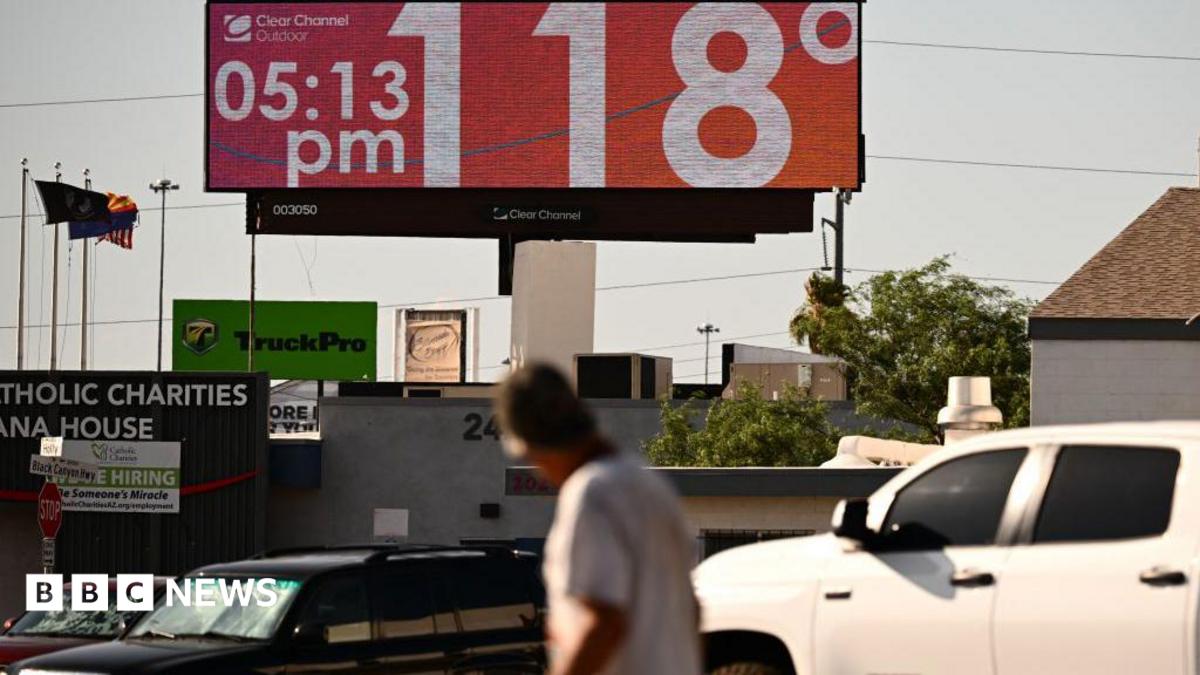
Phoenix, Arizona, may serve as an example for the world in tackling heat-related deaths. This was reported by Qazaqyia.kz citing BBC News.
Scientists warn that extreme temperatures have become the new normal. France reported more than 2,000 excess deaths during the record-breaking heatwave in late June. In England and Wales, scientists estimated that more than 2,700 people may have died from heat-related causes from a series of heatwaves since May. In the US, at least 44 heat-related deaths were reported over the 4 July holiday weekend.
"People don't realise this is not the same heat that we were experiencing 10 years ago, it is actually worse, because in many cases nighttime temperatures are not cooling off," said Jennifer Marlon, a Yale University researcher.
Maricopa County, where Phoenix is located, is one of the hottest areas in the US. It offers access to cooling centres and free air conditioning. In 2021, Phoenix became the first city worldwide to hire a heat officer.
"We've had the relative benefit of knowing that this is going to be a problem every year, but it appears to be more and more of a problem or more of a predictable event in communities across the globe," said Nicholas Staab, Maricopa County's chief medical officer.
After heat-related deaths peaked at 645 in 2023, they declined to 405 in 2025, with experts attributing part of the decline to policy changes. The county focuses on increasing access to air conditioning, as many deaths were among low-income or homeless people.
However, as of 11 July this year, Maricopa County has recorded 23 heat-related deaths, with another 282 under investigation. If confirmed, these numbers would outpace the previous year.
"It's incredibly important to make someone responsible for heat because the problem is, if it's no one's responsibility, then no one will address it," said Ladd Keith, director of the Heat Resilience Initiative at the University of Arizona.
Experts warn that heatwaves have become more frequent, intense, and longer-lasting due to climate change. The world has already warmed by more than 1.1°C since the industrial era. It is essential to understand that heat is not only a health issue but also an infrastructure and economic issue.