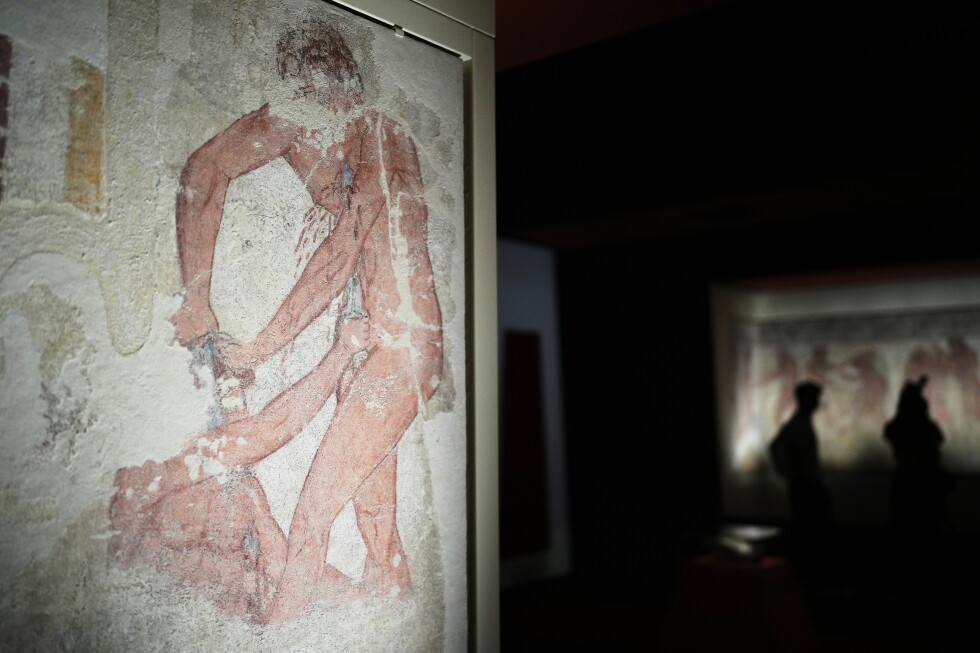
Italy has unveiled reconstructed frescoes from the François Tomb at the Villa Giulia Etruscan Museum in Rome, marking the country's latest cultural acquisition. This was reported by Qazaqyia.kz citing Associated Press.
The frescoes date from 330–310 B.C. and include works such as "The fratricidal conflict between Eteocles and Polyneices for the throne of Thebes" and "The Sacrifice of the Trojan Prisoners." These frescoes are considered rare examples of Etruscan art.
The François Tomb is an Etruscan tomb from the 4th century B.C., discovered in 1857. The tomb's frescoes depict scenes from Etruscan mythology and Greek epics. A reconstructed model of the tomb is on permanent display at the museum.
The exhibition opened on Tuesday, June 30, 2026, with journalists invited for a preview. Among the exhibits are the frescoes "The fratricidal conflict between Eteocles and Polyneices for the throne of Thebes" and "The Sacrifice of the Trojan Prisoners." These frescoes are valued as important examples of Etruscan art.
The Villa Giulia Etruscan Museum is the largest museum of Etruscan art in Rome. According to the museum director, this exhibition is a significant step in preserving and promoting Italy's cultural heritage. The reconstruction work took several years and involved international experts.
Visitors to the exhibition cannot see the original frescoes, as they remain inside the tomb. However, the reconstructed model in the museum offers a full replica of the frescoes. Through this model, visitors can learn about the characteristics of Etruscan art.
The Etruscans were an ancient civilization that lived in what is now Italy from the 8th to the 1st century B.C. Their art and culture greatly influenced later Roman civilization. The frescoes of the François Tomb are considered among the best-preserved examples of Etruscan art.
The exhibition is open to the public from June 30, 2026. The museum is open six days a week, closed on Mondays. Admission is 10 euros. Discounts are available for students and seniors.