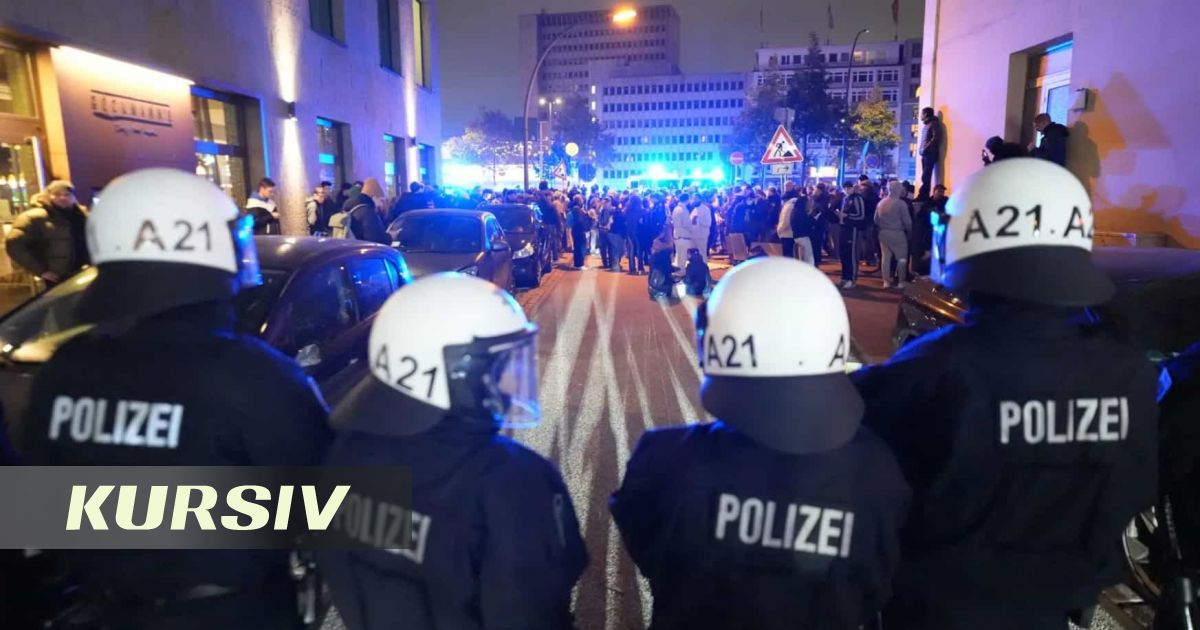
Mass protests against rising living costs, unaffordable housing and cuts to social spending took place in France, Germany, Italy and Portugal. Some of the actions ended in clashes with police. In Poland, demonstrators gathered at the Constitutional Tribunal amid a conflict over its leadership. This was reported by Qazaqyia.kz citing Kursiv Media.
France: third consecutive Saturday of national protests
In France, the third consecutive Saturday of nationwide protests took place on 31 October. According to the country's Interior Ministry, 320,000 people took to the streets, including 70,000 in Paris. Organizers estimated the number of participants at almost 500,000. This was reported by The Guardian, citing the Interior Ministry.
Protesters are speaking out against rising living costs, problems in education and government policy. Trade unions and participants in the "yellow vests" movement joined the actions by schoolchildren and students.
According to official estimates, the number of demonstrators is declining: 550,000 people took part in protests on 17 October, and 410,000 on 24 October. However, the authorities continued to strengthen security measures: on 31 October, 70,000 police officers and gendarmes were deployed across the country.
Most marches passed peacefully, but in several cities clashes began after they ended. In Paris, rioters threw stones and incendiary mixtures at police, and security forces responded with tear gas and used batons. Five law enforcement officers were injured in the capital. In total, 565 people were detained across the country.
Germany: demonstrations by the Gen Z regelt initiative
In Germany, demonstrations by the Gen Z regelt initiative took place on 31 October. Actions were organized in 34 cities, including Berlin, Frankfurt am Main, Munich and Cologne. This was reported by Reuters.
Participants are speaking out against high prices, cuts to social spending and the introduction of compulsory military service. Among their demands are increased investment in education, climate protection and accessible psychological help.
In Berlin, according to police, about 5,000 people gathered at the Brandenburg Gate. Organizers claimed 11,000 participants. In Frankfurt, police counted about 8,000 demonstrators.
In a number of cities, the actions were accompanied by unrest. In Frankfurt, shops were damaged and looted, and bottles, stones and incendiary mixtures were thrown at police. In Cologne, the march was stopped early after the use of pyrotechnics and violations of the ban on face coverings. In Hamburg, rioters set fire to barriers. Police used water cannons.
Italy: general 24-hour strike
In Italy, mass actions took place on 30 October in more than 60 cities. At the same time, a general 24-hour strike was held at the initiative of the Unione Sindacale di Base trade union, ANSA reports.
Demonstrators protested against rising living costs, higher rents and fuel prices, as well as increased military spending. Workers, students and schoolchildren took part in the marches.
Estimates of the numbers varied significantly: according to the Interior Ministry, 255,000 people took part in the actions, while USB reported 1–1.5 million participants. One of the protesters' slogans was "We need more housing, not more bombs."
Most demonstrations passed peacefully. However, clashes occurred in Rome, Turin and Vicenza. In Rome, rioters set fire to garbage containers and built barricades, and in Turin police used water cannons.
Portugal: march against housing policy
In Lisbon, thousands of people marched against the government's housing policy. Protesters demand the withdrawal of a rental bill that they believe will worsen housing unaffordability, Reuters reports.
After the march on 31 October, participants set up more than 50 tents on Rossio Square. Early in the morning of 1 November, police demanded the camp be removed, and then dispersed people covering the tents using shields and batons. A smaller camp was also dismantled in Porto.
The bill provides for simplified evictions and the removal of rent restrictions under new contracts. Since 2017, housing in Portugal has more than doubled in price, and rents under new contracts have risen by almost half.
Poland: conflict over the Constitutional Tribunal
In Poland, a coup attempt was announced. In Warsaw, demonstrators gathered at the Constitutional Tribunal after the announcement of the removal of its president, Bogdan Święczkowski, and deputy Bartłomiej Sochański.
The decision was announced by judge Anna Korwin-Piotrowska, who stated that she now heads the body's work. This was reported by Reuters.
Sochański disputed the legality of what was happening.
"I do not know of any laws that would allow interference in the independence of a court and an independent judge in this way. A coup is taking place," he said.
The situation sparked protests near the tribunal building. Police units arrived at the scene, and several demonstrators were detained. President Karol Nawrocki interrupted a flight to Senegal and returned to the country. The conflict has exacerbated the standoff between Donald Tusk's government and the nationalist opposition over the judicial system.