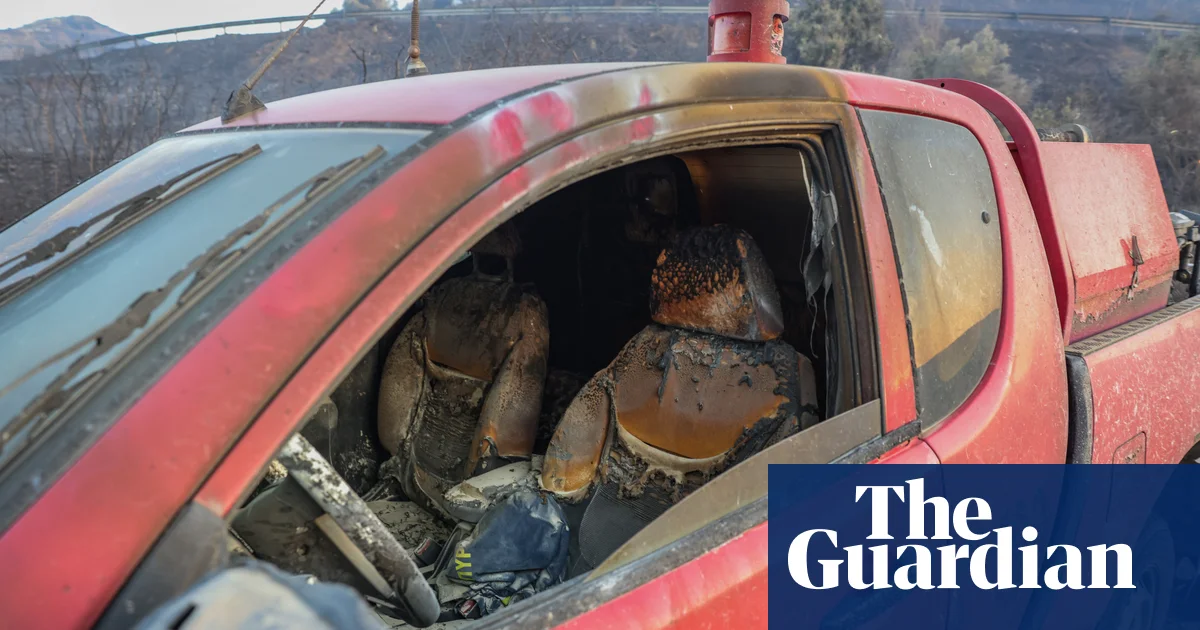
Three Greek firefighters have died while tackling wildfires on the island of Crete and in the south of the mainland, the Greek fire department has said, as extreme heat hinders efforts to control blazes ravaging southern Europe. This was reported by Qazaqyia.kz citing The Guardian.
The arc of brutal fires, which runs from the Atlantic coast to the eastern Mediterranean, and from the Scottish Highlands to the south of Spain, has alarmed experts because many of the fires have been out of control and burning close to towns and cities.
Temperatures exacerbated by the climate crisis reached 38C on Wednesday in Bordeaux in France, where firefighters kept a huge blaze in nearby pine forests from reaching the suburbs, and 37C in Madrid, west of which Spain's largest wildfire on record had been "technically stabilised", according to the interior minister, Fernando Grande-Marlaska.
Dozens of ground crews had managed to contain the Madrid fire overnight, emergency services for the region said on Wednesday morning, but a separate fire near València, where temperatures will peak at a cooler 32C, is still out of control.
In televised comments from the Navalcarnero command centre on Wednesday morning, the Spanish prime minister, Pedro Sánchez, said the situation near the capital was improving but stressed it was the first time in Spanish history that a wildfire had been raised to "operational level 3", with the national government taking over the disaster response. "I believe the next 12 hours will be very important," he said. "They are going to be decisive in consolidating the work done by the national civil protection system."
Accompanied by strong winds, the fourth heatwave of western Europe's scorching summer has alarmed firefighters, who warn it makes blazes harder to quell and raises the risk of fires restarting in areas that have been stabilised. New fires also prompted evacuations in Greece – where authorities said two firefighters "fell heroically in the line of duty" while trying to extinguish the fire in Crete – and Turkey.
French authorities benefited from a calm night on Tuesday that allowed flare-ups to be swiftly extinguished but warned of "unfavourable" developing weather conditions that could hamper progress. The prefecture of Gironde said 126 firefighters had been injured since the start of the fire but the total burned area remained stable at 42,000 hectares (104,000 acres) on Wednesday morning.
Wildfires have burned a record-breaking area of France, data from the European Forest Fire Information System shows, while France and Spain have experienced record-breaking numbers of fires for this time of year. More than 330,000 people in southern Europe have been forced to flee their homes and hotels.
Officials began to lift evacuation orders on Tuesday as fires were brought under control, allowing tens of thousands of people living in towns near Bordeaux, Madrid and València to go back to their homes. Some of them returned to find burnt-out buildings and charred belongings.
José Fernández, a 74-year-old pensioner, told AFP he had "no money, no documents, no home" after he came back to the remains of what used to be his house in Pelayos de la Presa, in the Community of Madrid. "This place has been reduced to a total ruin."
Europe's wildfire season is growing hotter and longer as carbon pollution heats the continent twice as fast as the global average. Repeated heatwaves this year have dried vegetation and turned forests and shrubland into tinderboxes, alarming EU officials, who have said wildfires could still be burning in November.
Ursula von der Leyen, the president of the European Commission, thanked firefighters for their "courage and commitment" on Wednesday. "As the fires in France and Spain continue to ravage, European solidarity knows no limit," she said in a social media post. "Romania and Greece have decided to extend their missions, continuing their support to the affected regions. And from Saturday, Poland will join the fray."
Earlier this week, the European Commission said it had sent France seven planes and four helicopters from countries as far away as Sweden and Turkey, while in Spain, it said it had mobilised six planes from Greece, Italy and Turkey, along with 134 personnel and 41 vehicles from Portugal. A Super Puma helicopter from Serbia was expected to arrive in Madrid on Wednesday, according to Spain's interior ministry, with 40 personnel and 18 vehicles to shortly follow.
The European Union's crisis management team said on Wednesday it expected difficult weeks ahead, fearing a further outbreak of wildfires.