A five-month investigation by the Guardian and Investigate Europe has uncovered disturbing evidence that migrant workers building datacentres across Europe are exposed to dangerous conditions and living in fear of speaking out. This was reported by Qazaqyia.kz citing The Guardian.
Sandu* checked his watch. He was winding down the last 15 minutes of his shift at a vast Google datacentre site in Saint-Ghislain, Belgium, in March, when the call came in. The 34-year-old electrical tester had already worked almost 10 hours, but says such last-minute jobs were normal: “I had no choice. People have been fired after saying no.” The task was one Sandu had done many times before and involved a series of tests measuring the safety and integrity of the electrical wiring. A protective suit was locked away in an equipment room. The round trip would have added another 15 minutes to the job, he says, and people were waiting, so he decided not to retrieve the suit.
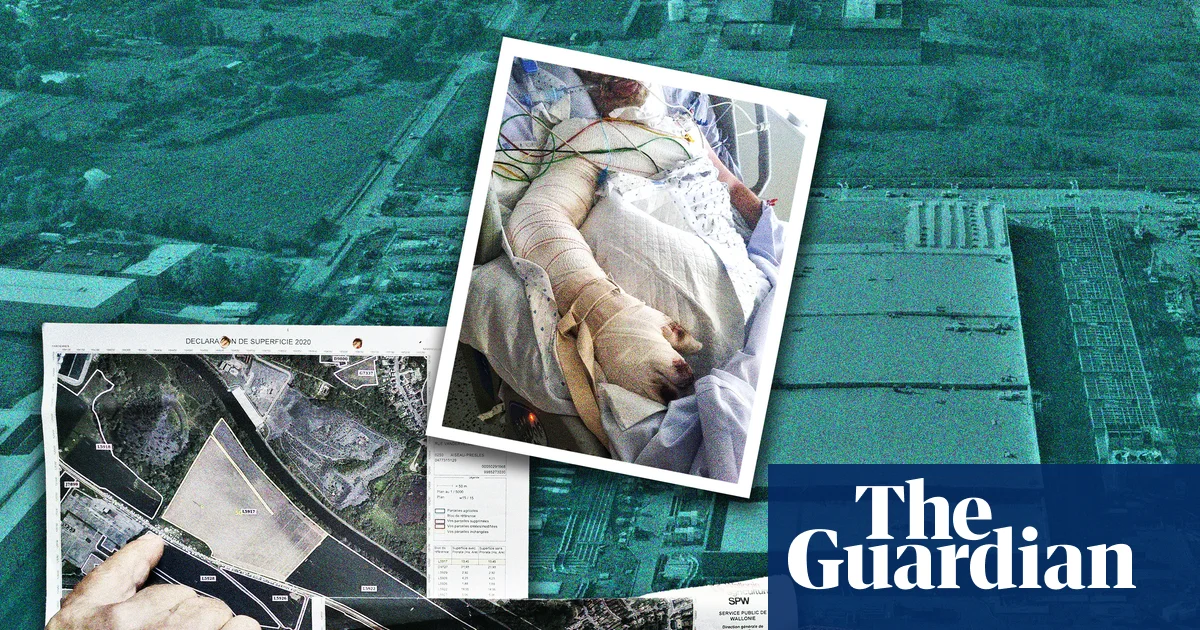
Once in the voltage room, Sandu says the managers confirmed the lines had been de-energised. In the first round, everything went as planned. Then, on the second test, while holding insulated tongs, he linked the cables. But this time, the lines were live. The blast was immediate and catastrophic. In milliseconds, 400 volts and 12,000 amps hit Sandu’s face and across the right side of his body. “I went completely blind,” he says. When doctors received him in the Grand Hôpital de Charleroi, he says he was placed in an induced coma for five days. Hospital records seen by the Guardian and Investigate Europe show that the arc flash electrocution had burned 12% of Sandu’s body, with second-degree burns to the face and neck, as well as third-degree burns across his right shoulder and fingers.
When Sandu woke from surgery in the intensive care unit a week later, his wife was at his bedside. He says his entire body felt like a “white-hot blister … It was so much pain. The human heart cannot comprehend it.” Sandu says the regional director of Google, along with a representative from Dornan Engineering, an Irish company that oversaw his contractor, and his recruiter, came to visit. While he lay bandaged in the hospital bed, he says the Google director told him he was lucky to be alive.
To date, no company or contractor appears to have been found liable for the accident. The local labour inspectorate closed its investigation in late October and found no wrongdoing. A spokesperson for Dornan Engineering said it was “committed to maintaining safe working conditions, complying with applicable labour laws and continually learning to help prevent incidents like this from happening again”.
Sandu’s electrocution appears brutal and harrowing, but far from unique, according to a five-month investigation by Investigate Europe and the Guardian into conditions for migrant workers on datacentre sites across Sweden, Norway, Belgium and the Netherlands. Europe is in the midst of a datacentre boom, the largest infrastructure surge the continent has seen in decades, with more than 2,300 datacentres rapidly altering the physical and energy landscape of Europe (at least 500 of them in the UK) and hundreds more under construction. But unions say the push for tech sovereignty in Europe is becoming increasingly reliant on the exploitation of migrant workers.
In dozens of interviews we found evidence of debilitating injuries, squalid living conditions, an unreported infectious outbreak, unpaid wages and exploitative employment practices. In the UK, a general contractor died while working on a datacentre site last year, while another fatality was reported in 2024 at an electrical substation being built for a Microsoft datacentre. Serious accidents have also been recorded this year at projects in Italy, Sweden, Norway and Belgium, and exploitative labour practices have been found at projects around the world, including in Brazil.
On the outskirts of Gävle, a city two hours north of Stockholm, past timber-framed cottages and dense pine forests, lies a smooth road leading to one such site. The remote clearing is part of a 130-hectare, €3bn expansion plan begun in June 2024 to scale up Microsoft’s AI datacentre infrastructure. One subcontractor at the site is the Irish-owned construction company BenBau. It is among 148 firms working under Collen Construction at the Gävle site, including 28 direct subcontractors.
For months, there has been a growing sense of outrage among Adrian*, 45, and his colleagues working for BenBau on the Microsoft site. They showed evidence of crowded living quarters – 24 people to a kitchen, 14 men to a single bathroom – and say they have reported vermin infestations, broken ventilation systems and lack of heating during the sub-zero Swedish winters, but the problems remain. Such conditions can make the transmission of disease more likely. In February this year, one Romanian worker tested positive for active tuberculosis, medical records show. Shortly after, others living in the same shared housing showed similar symptoms. BenBau initially informed only a few men who shared close quarters with the infected worker and then told the men that testing was optional, according to workers. After the first worker who contracted the disease had left for hospital, BenBau moved another worker into his bedroom.