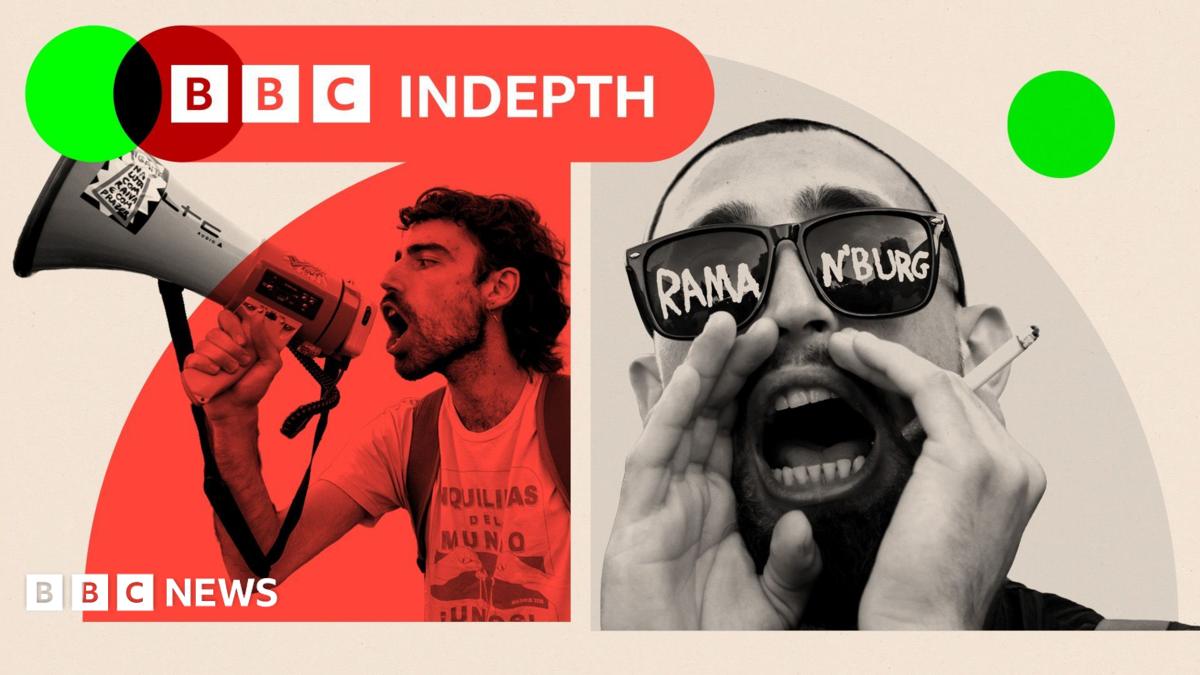
In recent weeks, streets from Milan to Marseille, Madrid and many other European cities have erupted in colourful, passionate protests. While most started peacefully, a large number ended in shocking scenes of violence and looting. There have been allegations of radical left-wing groups sparking riots intentionally and reports of police heavy-handedness. This was reported by Qazaqyia.kz citing BBC News.
Thousands have rallied in Rome and Florence. Hundreds of thousands across France. In Madrid, an encampment of tents has occupied a city-centre square since late September. In Lisbon, tens of thousands of mostly young people marched earlier this month. Tear gas and water cannon were used on protesters in Brussels after young men dressed in black, their faces covered, threw rocks and firecrackers at police. In Albania, demonstrators alleging government corruption are demanding that Prime Minister Edi Rama — already 13 years in power — stand down.
This continent feels volatile, socially and politically. I've spent years in Europe reporting from a multitude of demonstrations, both peaceful and violent. I remember well the ardent Catalan pro-independence marches of 2017, the desperation and Molotov cocktails flying through Athens' streets during the 2015 Greek debt crisis, and various outbreaks of violence in France during President Emmanuel Macron's first term, sparked by fuel tax and pension reform proposals. But this feels different. Protests are exploding simultaneously across Europe and the majority of demonstrators — both peaceful and violent — are young. Some really young. Among those arrested, there's an eyebrow-raising number of minors. Over half of those detained in Barcelona scuffles last weekend were under 18. Minors were among those apprehended by police in Milan after clashes, according to Italy's LaPresse news agency.
Europe's governments, for the most part, have been careful to distinguish between looters and rioters on the one hand, and loud but peaceful, legally organised demonstrations on the other. The latter tend to focus around a particular cause. In the current protest wave, placards and chants mainly take aim at education grievances, social inequalities and the rising cost of living — though each country also comes with its own unique set of complaints.
What has triggered this public fury in Europe's youth, seemingly so quickly? Are all these demonstrations in some way interwoven? And with major European elections on the horizon, how will governments choose to respond — listening to protesters' concerns, or playing the law and order card to win support from older voters?
Students have taken to the streets in France, Belgium, Ireland, Spain, Portugal, Italy, Greece, Serbia and Albania — a more than 1,000-mile span of the continent. Demonstrations are often organised in an ad hoc way via TikTok or Instagram. Belgium's interior minister has complained about what he calls the "TikTokisation" of protests.
Student unions play a role in organising marches, but they are also inspired by the actions of peers in other countries, even other continents. Think of the so-called Cockroach student movement in India — a Gen Z social and political protest movement that emerged in May this year, starting with criticism of the Indian education system.
France, where the current wave of student protests kicked off in late September, fuelled by student complaints over staff shortages and dilapidated buildings, is a stand-out catalyst in Europe. There's a saying in neighbouring Belgium: whenever it pours in Paris, it at least drizzles in Brussels. The Belgian capital and the town of Liège have also now seen weeks of protesting youngsters.
In Barcelona this weekend, students were encouraged to demonstrate under the social media hashtag #InstitutsIndignats, echoing the French slogan, Lycées Indignés (Outraged High Schools). In Athens, 17-year-old Greek school pupil Yiannis Papanikolaou told AFP: "School buildings are terrible and poorly maintained… I think something might change, because of what France is doing, France will spur Greece."
There's a continent-wide sense of economic malaise felt by large numbers of young people — and it goes far beyond education. They worry about the environment, and fret that AI will rob them of job opportunities. They fear the spiralling cost of living could prevent them from finishing their education and stop them buying or renting a home big enough to start a family.
In Madrid and in Lisbon, frustration has focused on the prohibitive price tag attached to housing. Portuguese Instagram-linked campaigns stated "enough is enough" and called on people to take to the streets as peers had done in Spain. In Lisbon, Carolina Cruz, 26, a PhD student and biology researcher, said she faces losing her home as her rental contract nears expiry. "I'm the first person in my family to enter a doctoral programme and even with all the studying I've done, I still can't make it," she told Reuters.
It's an anger shared by 22-year-old Riccardo, a protester in Italy's financial capital, Milan. "Even if we don't manage to throw the country into chaos like in France or block every road like in Spain, the aim is at least people will start talking about these issues again," he told AFP.
And it's certainly not just young people on the left of politics who are angry. At the presidential campaign launch of French nationalist Marine Le Pen last weekend, young supporters described different concerns to me. Calling themselves the "silent majority" — not (yet)...