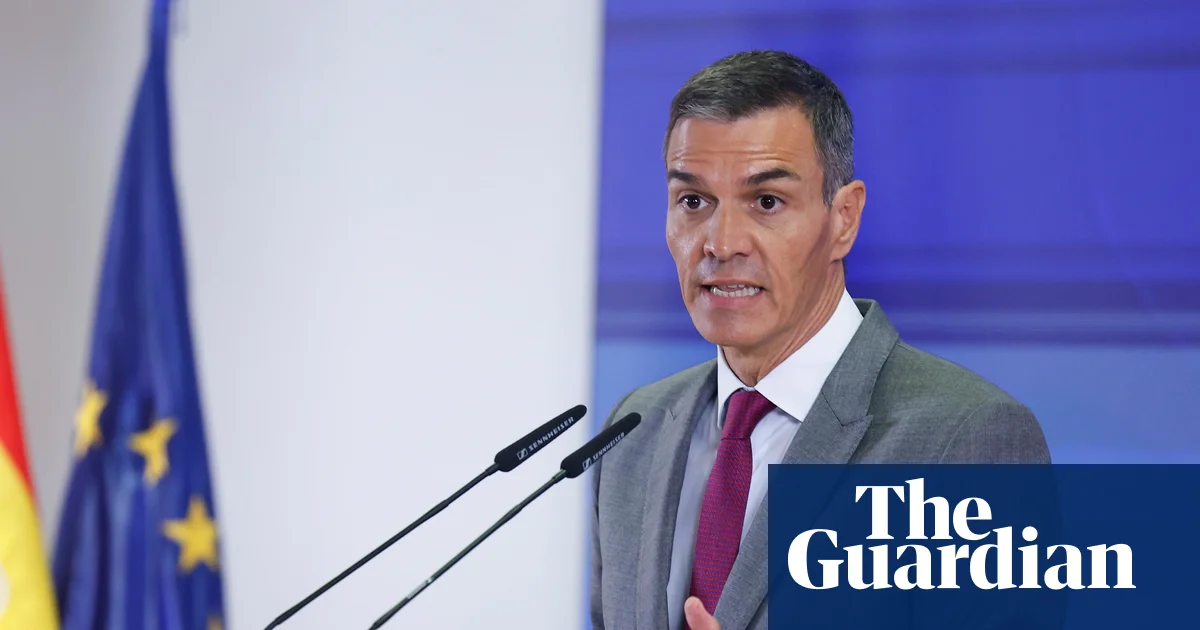
Spain's Prime Minister Pedro Sánchez is one of the few European leaders who seems to be taking the climate crisis seriously. This was reported by Qazaqyia.kz citing The Guardian.
French radical-left politician Jean-Luc Mélenchon told his party's summer congress that the climate crisis means "we're going to have to change everything – the way we live, the way we produce, the way we trade." He said the term "climate change" may sound "almost reassuring," but its actual impact will feel like "landing on another planet whenever we leave home."
The speech is notable because despite four heatwaves that have scorched Europe this summer, shattering temperature records, fanning unprecedented fires and causing thousands of excess deaths, few politicians want to talk about climate action.
Europe is the world's fastest-warming continent, heating up twice as quickly as elsewhere. The consequences, as UN climate chief Simon Stiell puts it, are "reaching national emergency levels."
And yet major policy speeches by Europe's political leaders addressing the climate crisis can be counted on the fingers of one hand. Le Monde said in an editorial that French voters have faced "silence from some politicians and inadequate pronouncements or demagoguery from others," warning that "decision-makers on both the right and the left are losing credibility."
People want "a political message that translates into action, and sheds light on the future," it said. The gap between "citizens' heightened awareness of the crisis and the lack of commitment from their elected officials to address it" will trigger mounting frustration and anger.
A mid-July Ipsos poll found environmental protection had jumped 12 points from June to become French voters' fourth greatest concern, after what the pollster described as "a first real experience of what the hell of a significantly hotter world might look like."
In the UK, Labour party activists worry that despite the ever more visible impacts of the climate crisis, there has been no major political push from the government on the issue. And while Friedrich Merz said this week action was needed to "curb climate change and adapt to the consequences" (though not at a cost to German industry), he's been accused all summer of ducking the issue for fear of boosting the climate-sceptic, far-right AfD.
There are, of course, exceptions. Spain's outspoken prime minister, Pedro Sánchez, has long warned that "climate change kills," and recently stressed: "It's not enough to address the consequences; what we have to do is reduce its causes." A French centre-left presidential contender, Raphäel Glucksmann, spoke this week of the need for an "ecological transformation" ending the use of fossil fuels, and pledged a 100-day "ecological revolution" if elected president.
But the silence from most mainstream politicians is deafening, says veteran French climatologist Jean Jouzel. The political class in general, he says, "have simply not yet engaged with the reality of global heating. They have to tackle it head-on."
The root of the problem, Jouzel suggests, is that "politicians live in the short-term. Their horizon is avoiding any damage during their period in office. For me, a real political leader … has the courage to look to the medium and the long-term."
Short-termism, political polarisation and cost-of-living fears have silenced leaders across Europe, as populist and far-right parties successfully frame green laws as an "ideological mantra" and the elite's punishment for "ordinary working people."
The reasoning is clear: voters suffering high energy bills, food inflation and stagnating wages are unlikely to hail demands for real financial and lifestyle sacrifices in pursuit of an ill-defined climate gain. Carbon taxes and boiler restrictions carry electoral risk.
But that reluctance to address the real issue has shifted Europe's climate debate away from long-term carbon reduction towards more localised adaptation – which, perhaps inevitably, has itself now become a battleground in the continent's culture wars.
Air conditioning is a prime example, now loudly touted on Europe's right as a vital symbol of personal freedom and technological comfort, but widely decried by the left as environmentally irresponsible and symptomatic of long-term planning failures. Marine Le Pen trumpeted this summer: "If I am elected president, I will put into place a massive air-conditioning plan," arguing the technology had little or no impact on global heating.
The risk in all this is that by focusing on necessary but essentially reactive measures, we overlook the root causes of the climate crisis. Until European leaders make long-term decisions, citizens' anger and frustration will only grow.