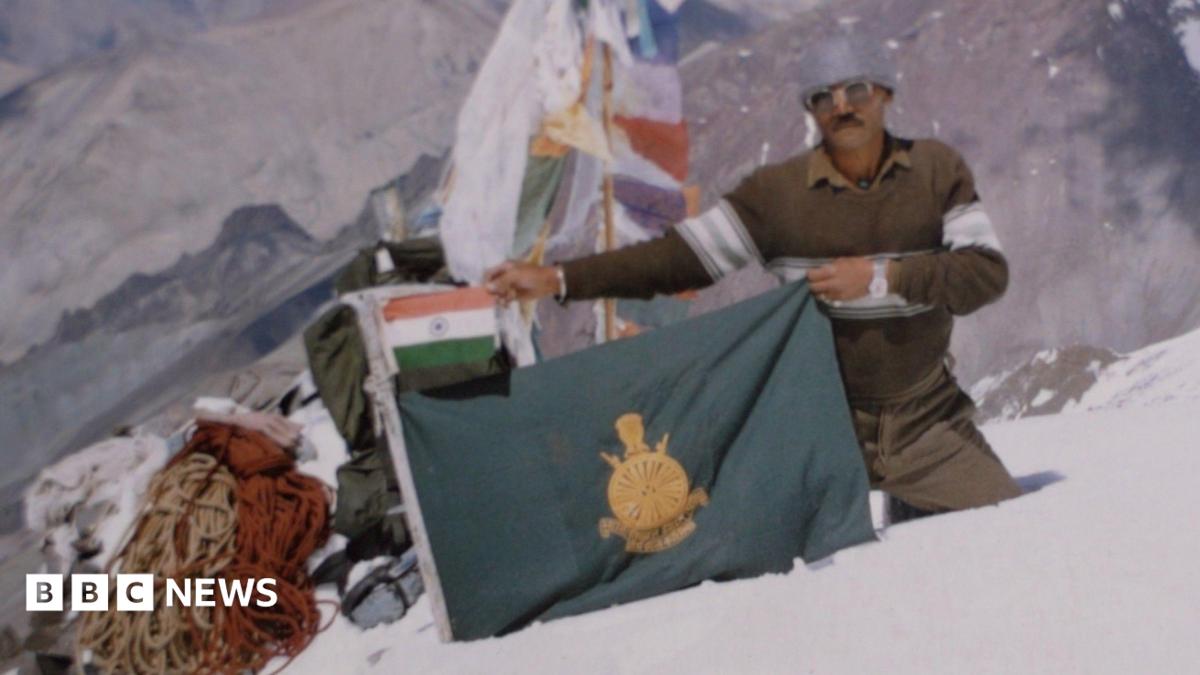
For 30 years, a dead body known as "Green Boots" has been lying in the snow, nestled under an overhanging rock, not far from Mount Everest's summit. The lime mountaineering boots worn by an Indian climber who died in 1996 have been a grim trail marker for many climbers on their way up the world's highest peak ever since. This was reported by Qazaqyia.kz citing BBC News.
Now India is looking for a specialist high-altitude recovery team to undertake a complex and risky mission to retrieve what they say is Dorje Morup's body – arguably the most famous of the hundreds whose bodies have been left frozen on the mountain. They hope they are on the cusp of returning his remains to friends and family who never gave up hope he'd come home.
"On some days, before I went to sleep, I would think that there'd be a knock on the door tonight and that when I opened, he would be there," Morup's wife told the BBC. "When he comes home, I will ask him: 'Where were you all these years?'"
Morup was a lance naik, or lance corporal, in the Indo Tibetan Border Police (ITBP), the force guarding much of India's border with China. The 48-year-old was no stranger to Himalayan trekking. He was one of six climbers on the ITBP expedition attempting to reach the top of Everest – which lies on the border between Nepal and the Chinese-governed territory of Tibet. Most climbers choose to ascend from the Nepalese side, but Morup's crew wanted to write their names into the history books as the first Indian expedition to do it from the treacherous Chinese side.
Three out of six members of the expedition turned back due to a snowstorm, but Morup and two others - Tsewang Smanla and Tsewang Paljor – kept struggling, all the way up to the 8,849m summit. Disaster, a blizzard, struck as they descended and killed all three.
Like many of the more than 300 people who have died in the Everest region since records began a century ago, their bodies remain on the mountain. Two have never been found, but the third body - that of "Green Boots" - has been lying frozen in the snow for three decades at an altitude of 8,500 metres. For years, it was assumed that "Green Boots" was another member of the expedition, Tsewang Paljor. But testimony from surviving members of the 1996 expedition and the location of the last radio contact with the climbers have now led authorities to believe the remains belong to Morup.
An ITBP official, speaking anonymously because he is not authorised to speak to the media, told BBC News Hindi that Morup's clothes and climbing gear helped officials identify the body in recent years. Since then, they've been plotting how to get their comrade home so they can confirm his identity beyond doubt through DNA testing and offer his family a semblance of closure. "We never forgot him. It was only a matter of time," the ITBP official said.
Retrieving those who have died on the mountain is a dangerous, gruelling task, and, up until the past decade, very rare. Many of the bodies, like Morup's, are in what climbers call Everest's death zone – where temperatures can plunge to -40C and oxygen levels are about a third of those at sea level.
"The weather and snow conditions are going to be crucial," said Tshiring Jangbu Sherpa, a prominent Nepalese mountaineer who has taken part in other recovery missions. "The north side has fewer crevasses, but it is riskier. If something bad happens from the Nepalese side, you get quickly evacuated by helicopter. But there is no such system from the Chinese side," he told BBC Hindi.