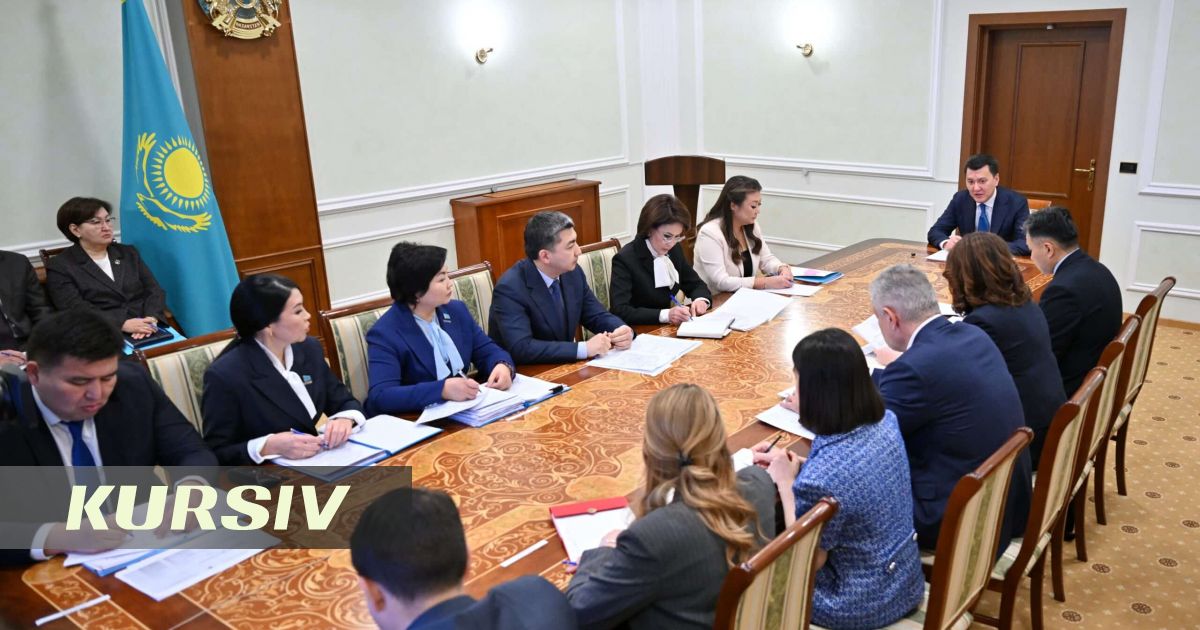
The number of especially grave crimes against children in Kazakhstan has decreased by 45% compared to 2024. These figures were presented at a meeting chaired by Vice President Yerlan Karin. This was reported by Qazaqyia.kz citing Kursiv Media.
The number of crimes against the sexual inviolability of children fell by 10%. The number of crimes committed by minors themselves also decreased by the same amount. The report links these indicators to legislative measures adopted to protect the rights and interests of children.
Over the past three years, 11 laws in this area have been adopted on the initiative of the president. These include the law on ensuring women's rights and children's safety, adopted in 2024. It provides for preventive measures, tougher penalties for violence and liability for bullying.
The meeting discussed the implementation of the unified Concept "Qazaqstan balalary" for 2026-2030, adopted on the instructions of President Kassym-Jomart Tokayev. Karin called creating opportunities for the full development of children one of the main goals of the presidential course.
"On the initiative of the Head of State, a whole set of measures is being implemented in the field of protecting children's rights, ensuring their safety, improving the quality of education, protecting health, social support and educating the younger generation in the spirit of constitutional values," the vice president noted.
According to the data presented at the meeting, over three years under the "National Fund for Children" program, more than 7 million children were credited with over $2.5 billion. Over the past seven years, within the framework of presidential initiatives, 1,342 schools with more than 1 million student places have been built in the country.
In the regions, representative offices of the commissioner for children's rights operate and departments for the protection of children's rights have been created. The staff of guardianship bodies is being increased. 160 family support centers have been opened in cities and districts.
Since 2024, QR codes of the state contact center "111" have been placed in schools. Through this channel, child psychologists have received over 186,000 messages and 6,700 calls. In 9,000 cases, children in difficult life situations were provided with qualified assistance. According to the release, in 73 cases suicide was prevented.
Separately, the participants discussed inclusive policy. On the instructions of the president, deputies of the Kurultai are developing a bill on comprehensive support for children with disabilities.
"It is fundamentally important that legislative norms are not declarative in nature, but provide for specific mechanisms ensuring the improvement of the system of support for children, the protection of their rights and legitimate interests, and also determine clear interaction between authorized state bodies," Karin emphasized.
He also pointed to the need to work out legislative norms to prevent and avoid stigmatization of people with disabilities.
The meeting heard reports from the commissioner for children's rights — deputy chair of the Kurultai Dinara Zakiyeva, first deputy prosecutor general Zhandos Umiraliyev, minister of education Zhuldyz Suleimenova, minister of labor and social protection of the population Asqarbek Yertayev and minister of health Akmaral Alnazarova.
Karin stated that ensuring the rights and interests of children will remain under special control as a priority area of domestic political work. The implementation of presidential initiatives will be considered at republican meetings at least once every two months. At the regional level, the vice president instructed to organize monthly monitoring of the implementation of the assigned tasks.
Earlier, "Kursiv" wrote that "Qazaqstan balalary" unites existing and planned measures to protect the rights and ensure the well-being of children. The document was prepared by the Ministry of Education together with the commissioner for children's rights, deputies and representatives of civil society. During its development, existing programs were analyzed and duplicating provisions were identified.