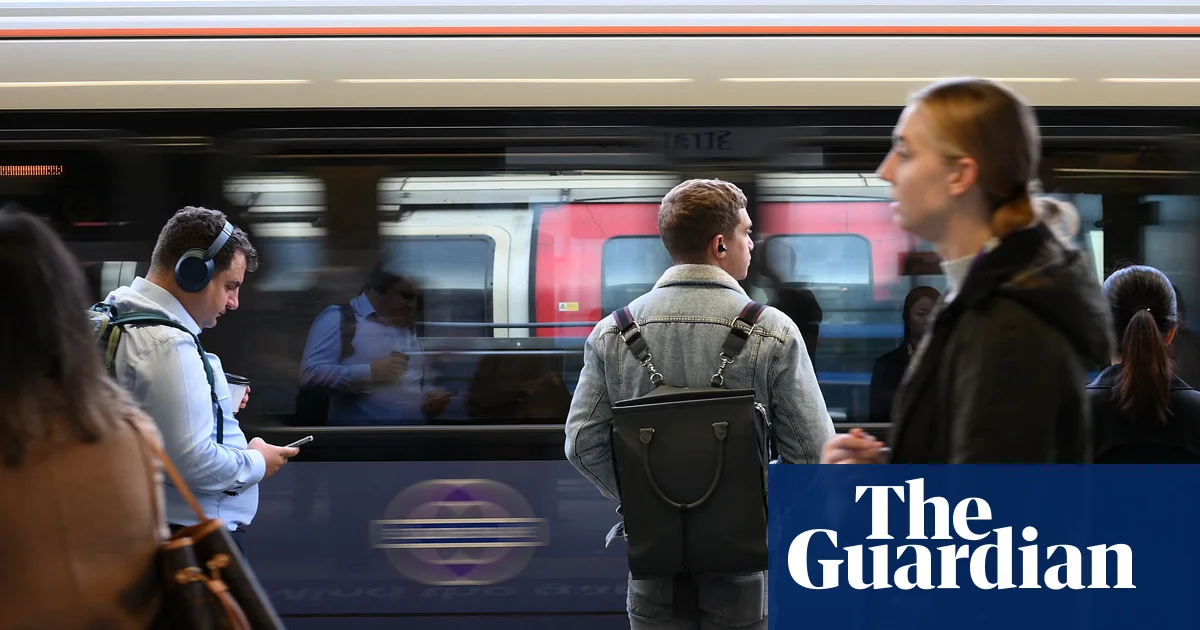
The UK government has announced measures aimed at tackling nuisance behaviour on public transport. Prime Minister Andy Burnham called it "one of the most annoying things on public transport." This was reported by Qazaqyia.kz citing The Guardian.
In a video recorded on a morning train to Manchester Piccadilly and posted on Instagram, Burnham highlighted the phenomenon described as "loudcasting" or "headphone dodging." He urged passengers to plug in their headphones and join a nationwide campaign with the slogan "share the carriage, not the noise." New guidance was also announced to help local transport authorities introduce fines of up to £100 for nuisance behaviour like vaping, littering, and playing loud music or videos on buses. Train operating companies already have powers to impose fines of up to £1,000 for antisocial behaviour.
According to recent polling, about 88% of Britons consider it unacceptable to play music out loud on a train. However, it is still unclear how these new rules would be enforced. Government officials have reassured bus drivers that they won't be expected to police passengers themselves. That job will fall on transport safety officers or police officers.
Mark, a bus driver in central London (name changed), says he and his colleagues simply don't have the capacity to help. He spends his working life in the glass cabinet at the front of the vehicle. He can't hear every noise or spot every puff of vape smoke on the top deck, and, as well as navigating the city traffic, he already has other things to focus on, such as fare-dodging. Mark's route has become noisier in recent years, though he is keen not to blame younger passengers solely. He doubts whether Burnham can isolate the problem to public transport. "It's a whole society thing: being kinder and more aware of their environment," he says. "It's not workable without resources. I don't really see how it would be enforceable: you can't have someone on every bus and train."
The difficulty is that fines for nuisance noise on trains are already vanishingly rare, with offenders able to shut up or leave the carriage before enforcement arrives. The number of British Transport Police (BTP) officers has fallen by more than 10% over the past two years. The people left to challenge the noisy doom-scroller are, therefore, you and me. Transport for London, for example, has done some great work on bystander intervention, suggesting straightforward ways to interrupt bad behaviour without putting yourself in danger, but many of us would think twice about confronting a stranger in the confines of a moving vehicle.
Is this a crackdown on bad behaviour, or a distraction from worse problems? Not everyone is impressed by the scale of the response. Sharon Graham, general secretary of Unite – a woman resolutely resistant to noise – is skeptical of the initiative. In her view, the government should focus on more important issues such as the cost of living crisis, healthcare, and others, rather than minor problems like noise on public transport. However, Burnham's campaign has resonated with commuters: many people are annoyed by noise on public transport and want the issue addressed.
Nevertheless, questions remain about the effectiveness of these measures. Enforcement requires resources, and police numbers are falling. Moreover, many people are afraid to confront noisy passengers on public transport. The problem is much broader than public transport – it is a matter of general culture and mutual respect in society. Andy Burnham's campaign has drawn attention to the issue, but only time will tell if it yields real results.