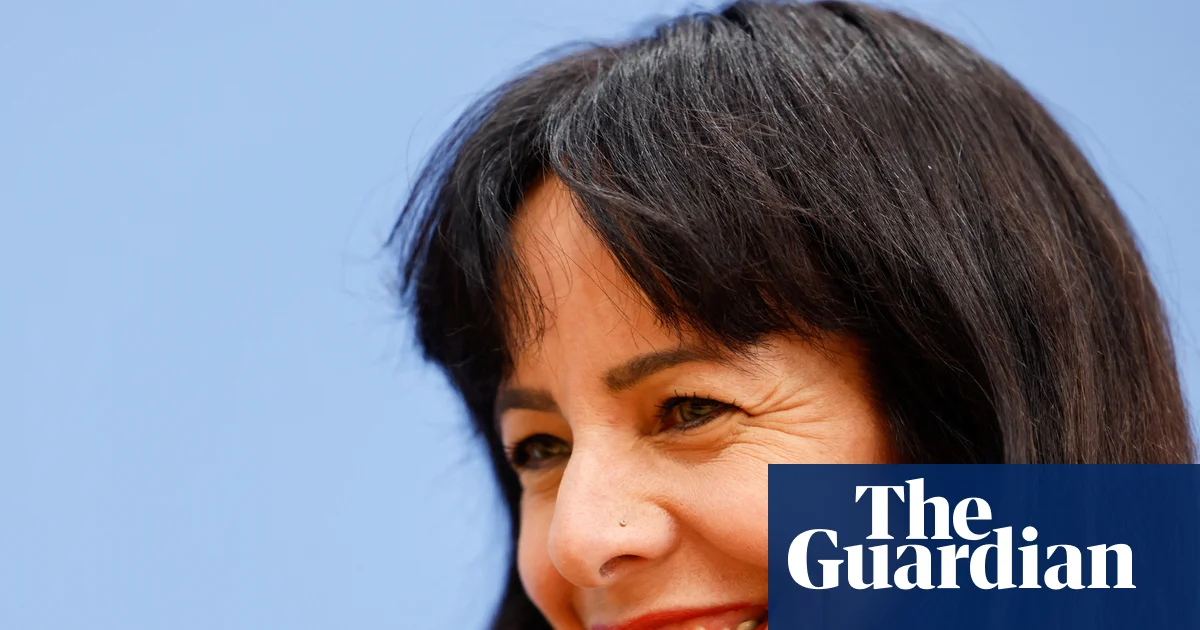
Elif Eralp celebrates in Berlin after the state elections. The 45-year-old lawyer and daughter of political migrants from Turkey is on the verge of becoming Berlin's next mayor and the capital's first leader of Turkish origin. This was reported by Qazaqyia.kz citing The Guardian.
Eralp launched her election bid last autumn with the blunt statement: "People like me are actually not supposed to become mayor in this country." Her candidacy has helped propel her far-left party, Die Linke, from the doldrums to the brink of heading a coalition government in Berlin for the first time.
After last weekend's city state election, in which Die Linke came first with more than a quarter of the votes, Eralp has become a household name.
The mood at Die Linke's election celebrations on Sunday night was electric. Eralp was feted as a star.
Some commentators suggested Germany was "having a Mamdani moment", in reference to the democratic socialist mayor of New York, Zohran Mamdani. One of his advisers was summoned to Berlin to help Eralp weeks before the poll. Her campaign was modelled on that of the veteran US senator Bernie Sanders.
"In our city, love and justice won over hate ... this signal goes out into the world," Eralp said at her victory party. The "hate" was a pointed reference to the far-right Alternative für Deutschland, which was celebrating coming first in another regional election. Even in liberal Berlin, the populist party made considerable gains.
It was Die Linke, however, that came out on top. With about 26% of the vote, the party not only outperformed the centre-left Social Democrats, whose presence has dominated Berlin politics for decades, and the Greens. It was also well ahead of the Christian Democratic Union (CDU), the conservative party of the German chancellor, Friedrich Merz, which had previously held the mayoral position.
A lot is now at stake for Eralp, who has promised to be "a mayor for all Berliners".
Eralp, who was chosen in particular by the young (47% of whom voted for her) and who mobilised thousands of otherwise non-voters thanks in part to intensive door-to-door campaigning and social media, generated most interest with her ambitious promise to take on corporate giants over unaffordable housing in the German capital. Once described as "poor but sexy" by a former mayor for its low cost of living, Berlin's rents have soared in recent years.
In her nomination speech, the lawyer said: "I'm running so that our city becomes affordable again, so that real estate speculators don't decide what happens to our city, but rather we do together." She called sky-high rents a defining social issue, saying: "This city belongs to all of us, not to the speculators."
Merz has led the charge against Eralp's plans to expropriate more than 200,000 Berlin flats from their corporate landlords, saying her policy – decried by some as "socialism on speed" – would have "calamitous effects" on the economy. The chancellor has said he will push for laws to prevent her plans. Eralp has pledged to plough on.
It is not a given that Die Linke will take control of Berlin's towering Rotes Rathaus, or red city hall, named after its red brick and not its association with leftwing politics. Eralp's victory has been overshadowed by accusations that Die Linke has failed to tackle antisemitism within its own ranks as well as charges that the party has tolerated – and at worst courted – the support of criminal gangs.
The Social Democrats and the Greens, potential coalition partners, have said they need urgent clarification on these alleged affiliations before they agree to be associated with Die Linke. Die Linke's leadership has repeatedly denied the accusations while vowing to clampdown on any antisemitism in its ranks. On Tuesday it announced that one of its Berlin MPs, who is alleged to have connections both to criminal gangs and a terrorist-related, pro-Hamas organisation, would "suspend his parliamentary duties until further notice".
On Monday, Eralp sought to reassure critics. "Any form of glorification or trivialisation of violence or terror is completely out of the question," she said. "I stand by that, and for me the promise of protection applies unequivocally to Jewish people just as it does to Muslims, Christians and all people in our city."
Eralp has been keen to stress the ordinariness of her life. She lives with her husband and two children in a rental flat in her own constituency of Kreuzberg, in south-central Berlin, one of the city's most diverse quarters and home to one of Germany's liveliest Turkish communities. Her children attend a state school in her kiez, or neighbourhood, and she has kept her family away from the cameras "for their own safety", she says. Much of her campaigning in the district was carried out in Turkish.
Unlike most Turkish migrants, Eralp's parents did not come to Germany as Gastarbeiter, or guest workers, from Eastern Anatolia but were trade unionists and socialists from Istanbul who were imprisoned after a military coup for their political beliefs. Her mother, Hülya, is a well-known feminist.