Seasonal models are predicting an El Nino climate pattern that could be the strongest on record, bringing with it more extreme weather. This was reported by Qazaqyia.kz citing Associated Press.
WFLA-TV Chief Meteorologist and Climate Specialist Jeff Berardelli, in Tampa, Florida, said Friday: "I think we're going to see weather events that we've never seen in modern history before."
An El Nino event is expected to develop from the middle of this year, impacting global temperature and rainfall patterns, according to the World Meteorological Organization. While the models indicate that this may be a strong event, the WMO cautioned that the models also have a harder time making accurate forecasts in the spring.
El Nino is a cyclical and natural warming of patches of the equatorial Pacific that then alters the world's weather patterns. Its counterpart, La Nina, is marked by waters that are cooler than average.
Berardelli said an El Nino event essentially redistributes heat on Earth. Currently, the subsurface heat in the Pacific is moving east across the ocean and ascending to the surface from the deep waters, the initial stages of El Nino.
The WMO's Global Seasonal Climate Update showed that sea-surface temperatures are rising rapidly. There is high confidence in the onset of El Nino, followed by further intensification in the months to follow, according to Wilfran Moufouma Okia, chief of climate prediction at WMO.
El Nino typically occurs every two to seven years and lasts around nine to 12 months, WMO said.
California Institute for Water Resources climate scientist Daniel Swain said the predictive models seem to be onto something. That is because the volume and the intensity of the subsurface warm water anomalies — or pulses of unusually warm water that are a key part of El Nino physics— are about as large as we've seen in the historical record, he added.
The very strongest events are called "super El Ninos."
"One of the key building blocks to make it fully materialize is, in fact, occurring," Swain said Friday. "We still don't know exactly what's going to happen. It's not guaranteed it'll be a super El Nino. But the potential is there for something genuinely remarkable."
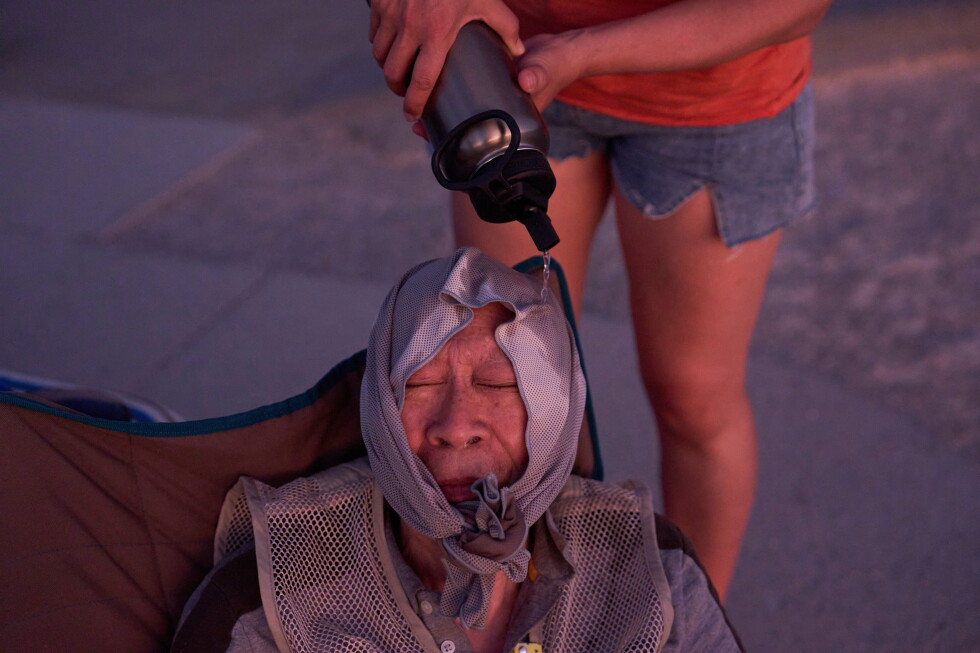
If the Pacific releases a lot of heat, it supercharges the climate system and wreaks havoc weather-wise, Berardelli said. With more heat, there will be stronger heat waves, worsening drought in some areas, but also more moisture in the air that leads to more intense floods, he said.
El Nino also subdues the hurricane season in the Atlantic because there is so much heat in the Pacific that outcompetes the Atlantic, Berardelli added. Places like the Caribbean will be extra dry this summer and likely have fewer tropical systems, he said.