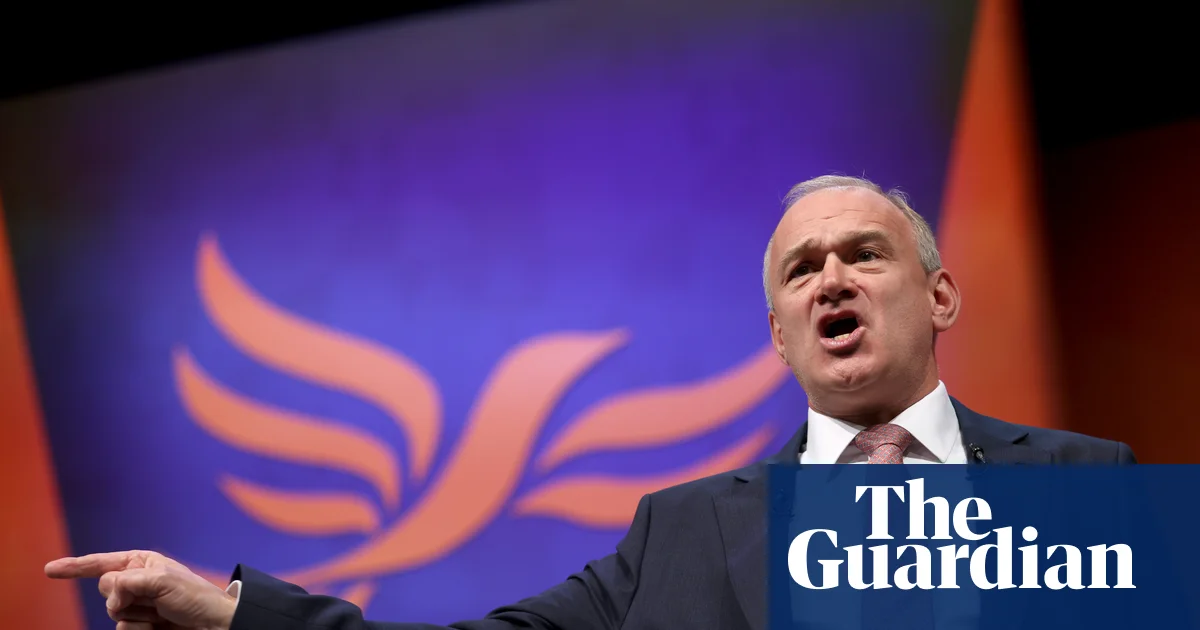
Ed Davey, the leader of the Liberal Democrats, is facing a growing revolt against his leadership after the resignation of a senior frontbench figure on Friday. This was reported by Qazaqyia.kz citing The Guardian.
Charlie Maynard, the Liberal Democrat Treasury spokesperson, has resigned in an attempt to unseat Davey after months of frustration over concerns that the party is failing to cut through with voters, the Guardian understands.
Daisy Cooper, the party’s deputy leader, immediately backed Davey, saying he enjoyed the support of the “vast majority of MPs”, who wanted him to lead them into the next election and were “furious at this distraction”. “We Liberal Democrats are the last line of defence against a Reform UK government, and Ed is determined to lead a strong and united party into the next general election whenever it comes,” Cooper said. “As Ed said at conference, we are in the fight of our lives against the right who want to turn our country into their version of Trump’s America.”
Maynard’s resignation, first reported by the Financial Times, came four days after Alison Bennett, the Lib Dem care and carers spokesperson, stood down from the frontbench.
Davey has led the party since 2019, first as acting leader and then officially from August 2020. At the 2024 general election, he steered the party to its most successful result in more than 100 years. The party now has 71 MPs, and is the third largest party in the House of Commons.
But the Lib Dems have slipped to fourth or fifth in national opinion polls, behind the Greens and Reform UK, and frustration has mounted over the party’s failure to attract voters in a fragmented political landscape.
At the party’s conference in Brighton in September, Davey played down criticism from a Liberal Democrat council leader who questioned whether he was the right person to lead the party. Julian Brazil, the leader of Devon county council, said the party was “sleepwalking into irrelevance” and “lacking ambition”.
Davey announced a plan for a £17bn income tax cut in a speech aimed at shoring up the party’s support among former Conservative voters. He said the cut would be paid for entirely by increased growth generated by rejoining the EU’s single market and customs union.
However, Davey faced opposition by Andy Burnham at the Labour party conference to change the pension triple lock to help fund a national care service. One said his defence of the current policy “gaslights an entire generation into believing it’s for our benefit”.