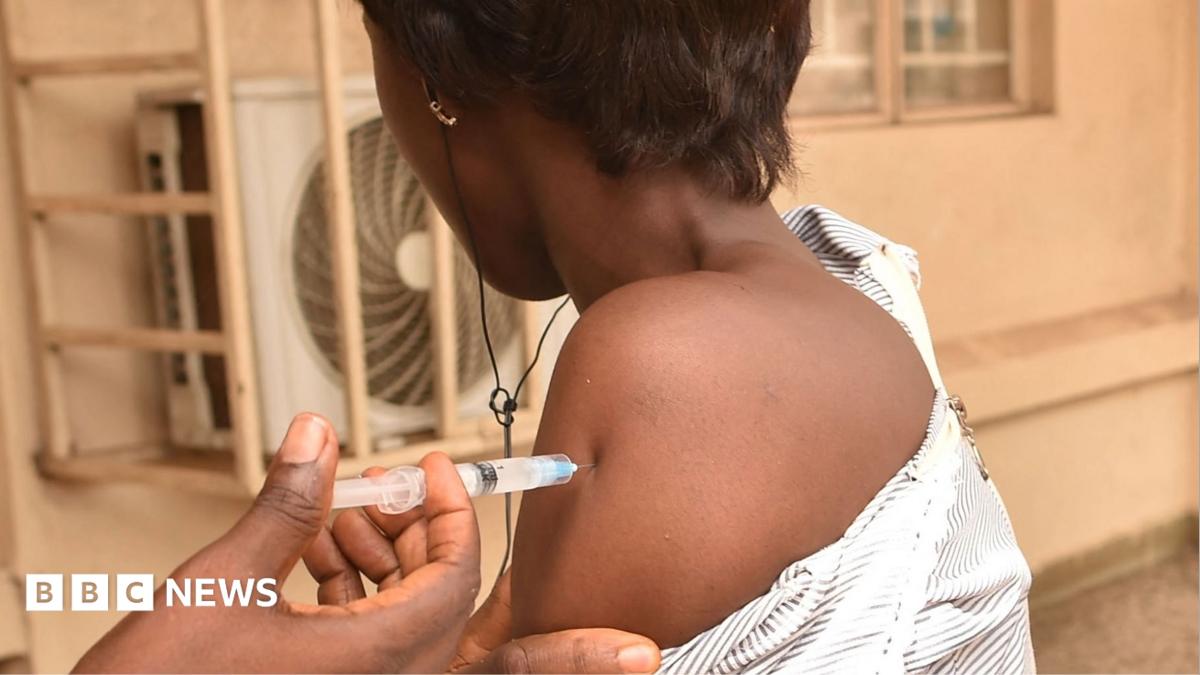
The Democratic Republic of the Congo is gearing up to roll out an Ebola vaccine with some doses being used as part of a trial to see if it is effective against the Bundibugyo species of the virus that is currently circulating in the country. This was reported by Qazaqyia.kz citing BBC News.
The Ervebo vaccine does help protect against the Zaïre species of Ebola but currently there are no proven vaccines or treatments for Bundibugyo.
The rollout comes as the World Health Organization (WHO) issued a new warning that Ebola was "growing exponentially" in the north and east of DR Congo and the spread of infections now covered an area bigger than France.
Close to 2,500 people have now died in this outbreak, which was declared three months ago.
Julien Harneis, the WHO's Ebola co-ordinator, told reporters that half of the deaths happened in the last 20 days.
"It is growing faster and wider than the Ebola response," he is quoted by the AFP news agency as saying.
A new report by Save the Children suggests that at least 180 Congolese children have lost both parents or caregivers since the outbreak began.
This outbreak is now the deadliest in DR Congo's history and the second-worst ever - only surpassed by the 2014-2016 West Africa outbreak when more than 11,000 people died.
Experts say that it may have been spreading in DR Congo since as early as February but the infections of the Bundibugyo species were initially misdiagnosed as typhoid and malaria.
This, along with the difficulties health teams have in working in conflict-hit areas, local suspicions of health authorities and some traditional practices around burial, have hampered the response.
It is hoped that the Ervebo vaccine may be able to help.
The WHO confirmed that 20,000 doses would be used in a clinical trial to assess the vaccine's effectiveness against Bundibugyo, while 50,000 doses will be administered to front-line health workers.
The WHO and the Africa Centres for Disease Control and Prevention welcomed the allocation, describing it as a vital reinforcement of the response.
Meanwhile, the M23 rebel group that controls parts of the east of DR Congo has announced new restrictions on movement between government-held and rebel-held areas of North Kivu province.
Shared taxis and passenger boats between the areas will be suspended for one month starting on Saturday.
Other transport will continue to operate under strict health controls.
The measures follow reports that two travellers tested positive for Ebola in a village under M23 control. The rebel authorities said the restrictions were necessary to prevent further spread.
The move highlights the complexity of tackling Ebola amid ongoing hostilities between the Congolese government and the rebels.
The M23 alliance, which captured Goma and Bukavu in early 2025, has sought to demonstrate its administrative capacity by mounting a parallel Ebola response in territories under its control.
In late June, the rebel authorities declared their zones Ebola-free.
Ebola is a rare but deadly viral disease and the Bundibugyo species is even rarer, with only two known prior outbreaks.
Symptoms of Ebola, which are similar to the flu or malaria, include fever, headache and tiredness, and can begin suddenly within two to 21 days of infection.
As the disease progresses, vomiting and diarrhoea can develop, leading to organ failure. Contact with infected bodily fluids such as blood or vomit causes the virus to spread.