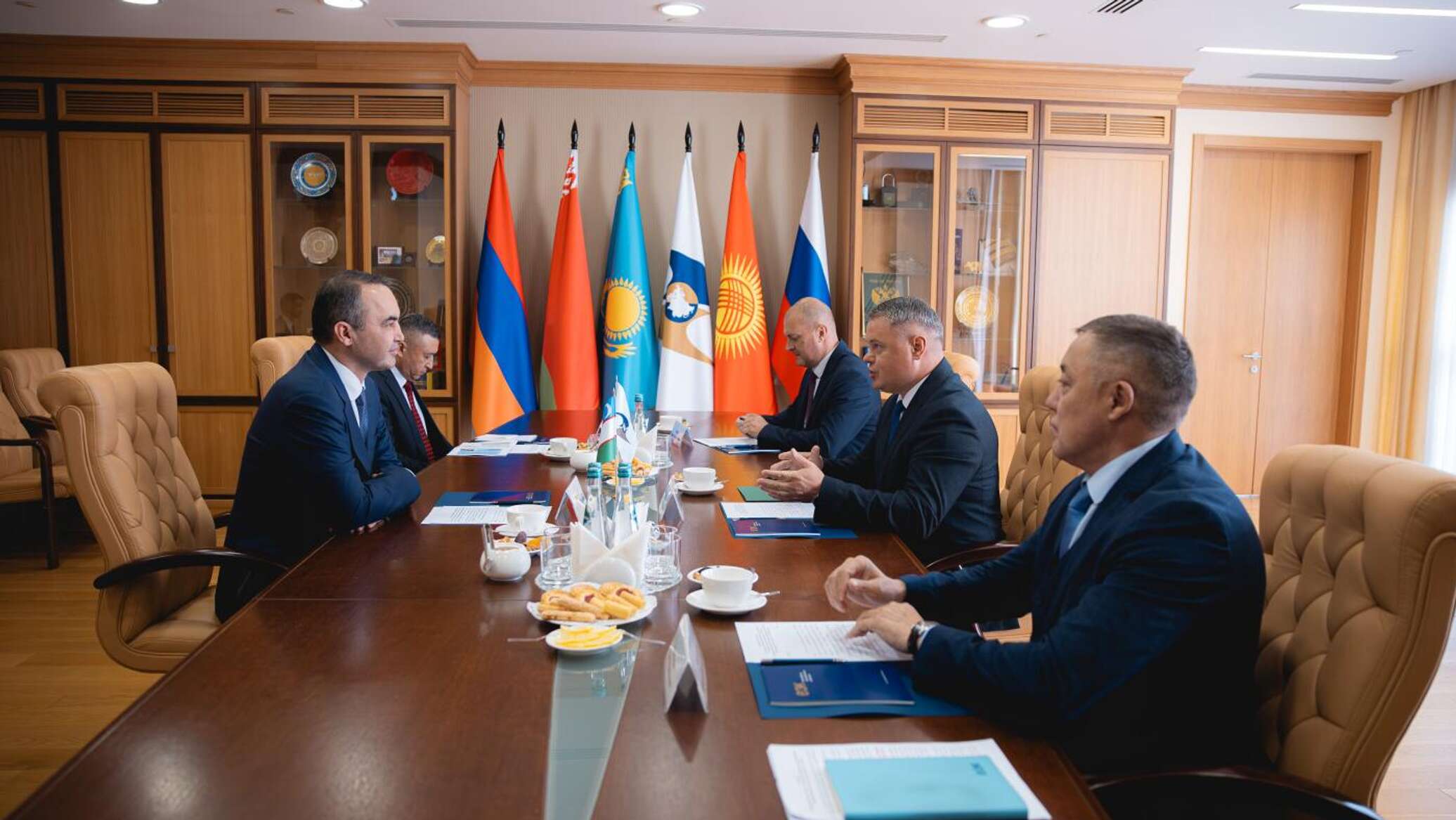
The Eurasian Economic Union (EAEU) and Uzbekistan will start exchanging information on customs cargo from October. This was reported by Qazaqyia.kz citing Sputnik Kazakhstan.
According to the agreement, the parties will provide each other with data on the movement of goods during customs control. This measure is aimed at simplifying customs procedures and increasing trade turnover.
The exchange of information will allow coordinating the work of customs services, as well as improving customs risk management. The new system will help both sides strengthen control over the passage of goods through customs procedures.
This initiative is being implemented as part of deepening economic cooperation between the EAEU and Uzbekistan. According to preliminary agreements, the exchange of information will begin in a pilot mode and then be transferred to a full format.
According to experts, this step will reduce customs barriers and accelerate trade flows. In addition, the process will increase the transparency of customs services and strengthen the fight against illegal transportation.
The mechanism for exchanging customs information between the EAEU and Uzbekistan may be expanded in the future. This was confirmed by official sources, but the exact timing and conditions have not yet been published.
After the implementation of the new system, it will be easier to track the history of goods during customs control. This is especially important for transit transportation, as it will allow more accurate monitoring of cargo flows between countries.
For Kazakhstan, this agreement is of great importance, as the country is an active member of the EAEU. The exchange of customs information with Uzbekistan will contribute to the development of bilateral trade and the strengthening of economic ties.
It is worth noting that this initiative marks a new stage of cooperation between the EAEU and Uzbekistan. In the future, several more agreements may be concluded between the parties, which will further deepen economic integration in the region.