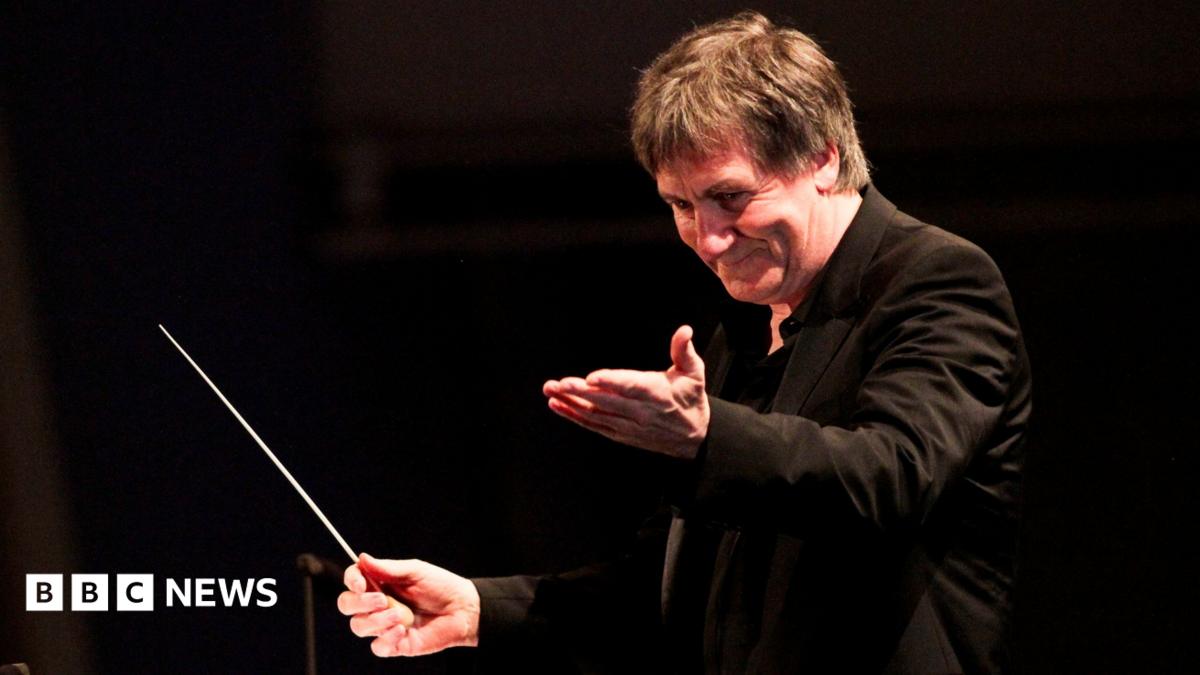
Composer George Fenton, whose work included music for films such as Gandhi, Groundhog Day and The Fisher King, as well as TV shows like Planet Earth and Bergerac, has died at the age of 76. This was reported by Qazaqyia.kz citing BBC News.
The prolific musician received five Oscar nominations for his film scores, including those for Dangerous Liaisons and Cry Freedom. His work on the BBC TV show Blue Planet also earned awards from the Baftas, Emmy Awards and Ivor Novellos; and he also composed theme music for BBC News programmes such as Newsnight and Breakfast Time.
In a statement, Fenton's family said: "We are very sad to announce that George Fenton passed away unexpectedly today." They continued: "He is survived by his loving wife Amanda, ex-wife Jane, children Gemma, Grace and Bridget, and grandchildren Lola, Audrey, Alfred, George, Frank and Beatrice, and a life of music."
The cause of death was not disclosed but, underlining the suddenness of his passing, Fenton had signed a new worldwide publishing deal just three weeks ago. At the time, he said he was working on two new film scores and a musical.
Fenton was born George Howe in Bromley, Kent in 1949. According to a biography on his official website, his father was a mechanical engineer, and his mother had been a dancer before becoming a nurse during the war. Both parents were musical - his father played drums and his mother played piano - but Fenton chose the electric guitar as his instrument at the age of seven.
That was "when music became more important than football," he later told The Express newspaper. "The Beatles had a huge influence on me." He took his first lessons from a musician called Brian Rudd. "He came into our lives as a chimney sweep, which he clearly wasn't," Fenton later recalled. "My mother went mad at him because he filled the house with soot. As he left he said, 'I'm really sorry – but I tuned the boy's guitar for you.' She suggested that as compensation for the mess he could give me a lesson, which he did and then carried on doing."
Later, Fenton began to study the church organ, but rejected the offer of music college to pursue a stage career. In 1968, he appeared in Alan Bennett's first West End play Forty Years On. Upon joining the actor's union Equity, he was forced to adopt his mother's maiden name, due to rules preventing two actors from sharing the same name. During that production, he also understudied the musical director of the show, Carl Davis - who also became a prominent composer for film and television.
A year later, Fenton signed a record deal, and scored a top 10 hit in Sweden with a cover of The Beatles' Maxwell's Silver Hammer, but his career as a solo artist was short lived. In the mid-1970s, he took a recurring role as the soldier Martin Gimbel in the ITV soap opera Emmerdale Farm. But as time went on, he found that directors were always casting him in roles that required him to play an instrument, so he decided to make music his main focus.
Fenton got his first job as composer and musical director for a production of Twelfth Night at the Royal Shakespeare Company in Stratford-upon-Avon in 1974. Eight years later, he was nominated for an Oscar for his score for Richard Attenborough's Gandhi, on which he worked with Indian composer and instrumentalist Ravi Shankar to develop themes reflecting the country's musical traditions. It was only his fourth attempt at film music, and he was still almost entirely self-taught.
Throughout the 1980s, he wrote the soundtrack for a number of TV series, including the Bafta-winning The Jewel in the Crown, The Monocled Mutineer, and Alan Bennett's Talking Heads. He also wrote many well-known theme tunes, including the BBC's One O'Clock News, Six O'Clock News, Nine O'Clock News, Newsnight, The Money Programme, and Radio 4's PM Programme. For 1987's Cry Freedom - the story of South African campaigner Steve Biko, who was brutally killed by police - he worked with South African jazz musician Jonas Gwangwa, earning two Oscar nominations for best original score and song.