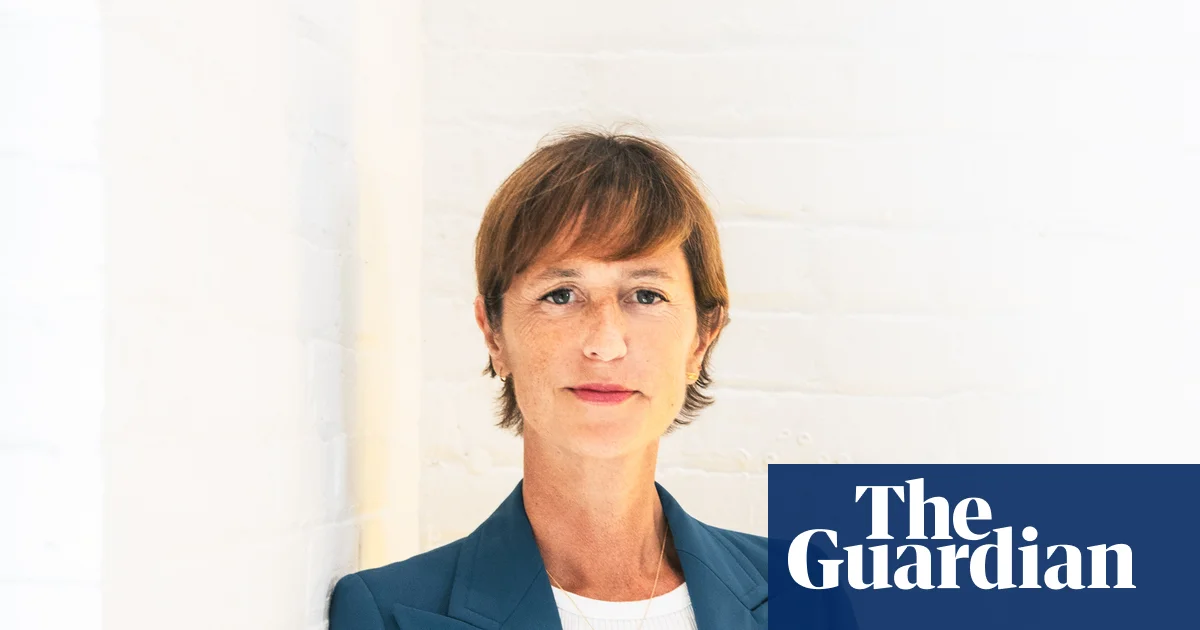
Jessica Morgan has been confirmed as the new director of Tate, marking her return to the arts organisation where she worked as a curator for more than a decade, at a critical juncture in its history. This was reported by Qazaqyia.kz citing The Guardian.
Morgan, the clear frontrunner in the race to replace Maria Balshaw, who left this spring after nine years in charge, is currently based in New York, where she has led the Dia Art Foundation since 2015.
One talking point around Morgan was her wages at Dia, which were thought to be substantially more than the £220,000-£225,000 Balshaw earned at Tate.
Tate’s chair, Roland Rudd, said he had paid Morgan the most he could “under the constrictions he faced”, confirming she was accepting a “very big pay cut” to take up the role.
Described as “an agent of change” by Tate, Morgan will need to guide the organisation through a difficult financial landscape, raise poor staff morale and grapple with fluctuating visitor numbers.
Rudd told the Guardian that Morgan was going to “question a lot of things” at the organisation. “She’s an agent of change, but she takes people with her,” he said. “At Dia she transformed that museum, but she’s done it in a way where she’s carried people with her and I really like that.”
Morgan said it was an immense privilege to take over at Tate, which she called the “world’s foremost institution for international modern and contemporary art and for British art”.
She said her time as curator at Tate “deeply informed” her work at Dia, where she placed “artists and our public at the centre of what we do”.
Morgan added: “I look forward to this pivotal next stage at Tate and, most importantly, continuing and advancing the incredible work of Tate’s committed and talented team in the years to come.”
She takes over an organisation that is bruised after a difficult few years. Finances were hit hard during the pandemic, leading to rounds of redundancies, restructuring and “culture war” battles that, according to one senior staffer, left staff morale “on the floor”.
Lately, there has been a more positive story, with the success of Balshaw’s Tracey Emin retrospective, the record-breaking ticket sales that accompanied the Frida Kahlo exhibition, and critical admiration for the Ana Mendieta show at Tate Modern.
But Tate is unlike other British arts institutions, with four sites spread around the country that can make it financially exposed, and the feeling in some quarters that it has not found a new direction since the departure of Nicholas Serota, who created Tate Modern and was in post for 28 years.
Many will welcome Morgan’s appointment. As the search for a successor to Balshaw began, her name was on most people’s lips, partly because of her connections to Tate, but also because of her reputation as a talented curator and tireless fundraiser.
Frances Morris, the former Tate Modern director, described the 57-year-old as a “hugely hardworking individual with a very strong sense of what’s right”.
Morgan studied art history at Cambridge and the Courtauld Institute of Art, before establishing a reputation for developing talent from the Middle East, south Asia, South Korea and Latin America.
“What drives me on is finding the artists we’re not talking or writing about, that we’re not showing,” she once said.
“She’s fizzing with so many ideas,” Rudd added. “I think within the committee, there were a few people who said she’s been incredibly hyped, is she really this good? And the answer is, yes, she really is.”
She is also arguably the coolest director Tate has ever had, dressing in designers such as Rabih Kayrouz, and being profiled in New York Magazine and The Gentlewoman.
Morgan’s appointment was one of the last tasks Keir Starmer completed as prime minister. She will start in January, with the interim director and former boss of Tate Modern, Karin Hindsbo, taking charge until then.