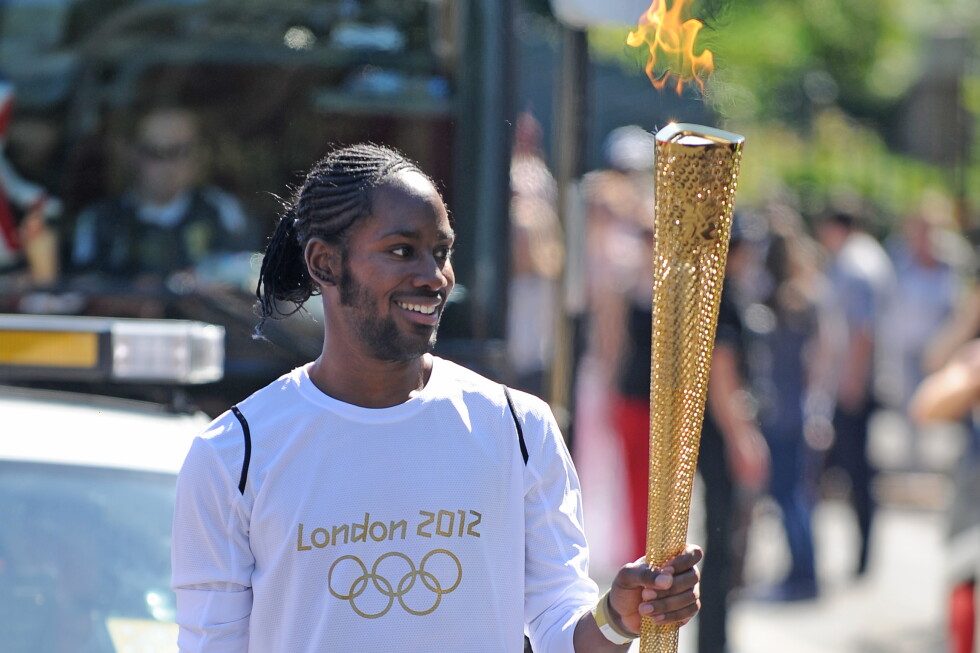
LONDON (AP) — In 2012, a smiling Jason Arday was photographed by the British press carrying the Olympic flame in the torch relay that preceded the London Games. He was back in the news in 2023 when Cambridge University hailed him as the youngest Black professor in the institution’s history. This was reported by Qazaqyia.kz citing Associated Press.
Three years later, after weeks of news stories presenting evidence that he was a plagiarist and fabulist, Arday, 41, was found dead on Friday at his apartment in south London. This was reported by Qazaqyia.kz citing Associated Press.
His death quickly led to a blame game. Cambridge has been criticized for elevating Arday in a rush to promote diversity — despite red flags about his qualifications — and the news media has been targeted for driving him to despair when his credentials and life story began to unravel under intense scrutiny.
James Cleverly, a Black member of Parliament who held Cabinet positions in past governments, said a number of universities “failed to do the proper due diligence” on Arday.
“We see now that he was not completely honest and he clearly did have frailties and failings,” Cleverly told Times Radio. “But he was teed up by a number of academic institutions because they desperately wanted a wunderkind. They desperately wanted to play on the fact he was young and Black and good-looking, and they wanted him to be their poster child.”
But Patrick Vernon, who was recently knighted for his work on racial equality, is focused on the media.
Coverage of the Arday story was out of proportion to his position in society, reflecting the higher standard to which people of color are held when compared with their white peers, Vernon said.
“The level of scrutiny that the late Professor Jason Arday faced was unprecedented,” Vernon said.
“He’s not the prime minister of this country. He’s not a current secretary of the civil service or local government or the (National Health Service) or a chief executive of a major PLC. ... But he was treated at the same standard, which is outrageous,” Vernon said.
Cambridge hired Arday as a professor of sociology of education in February 2023, when he was 37.
In announcing the appointment, Cambridge highlighted his place as the youngest Black professor in the university’s history and described him as a “respected scholar” focused on increasing the representation of Black, Asian and other minorities in higher education. Arday achieved this stature, the university said, even though he was born with a form of autism spectrum disorder that left him unable to speak until he was 11 and unable to read or write until his late teens — aspects of his biography that have since been questioned in news stories.
British universities have been working to hire more academics from racial and ethnic minority backgrounds so that their faculties better reflect the broader society.
There were 270 Black professors at U.K. universities during the 2024-25 academic year, up from 120 in 2016-17, according to data published by the Society for Research into Higher Education. Black scholars still represent just 1% of all U.K. professors, even though Black people make up about 4% of the working age population, the data shows.
Questions about Arday’s qualifications became public last month.
Nathan Cofnas, a one-time Cambridge researcher who left the university after his vitriolic comments about diversity programs and minorities sparked widespread protests, said he had found evidence of plagiarism in Arday’s Ph.D. thesis. The Times of London and other newspapers picked up the story, publishing an analysis of the thesis and highlighting multiple passages they said were “identical or near-identical” to an earlier paper by another academic.
The news media also questioned Arday’s claims about astounding personal accomplishments, such as running 30 marathons in 35 days, and raising 5.5 million pounds ($7.4 million) for charity over 20 years.
The public scrutiny was partly fueled by the impending publication of Arday’s memoir, “Great and Unfortunate Things.” Simon & Schuster published the book last week in the U.S.