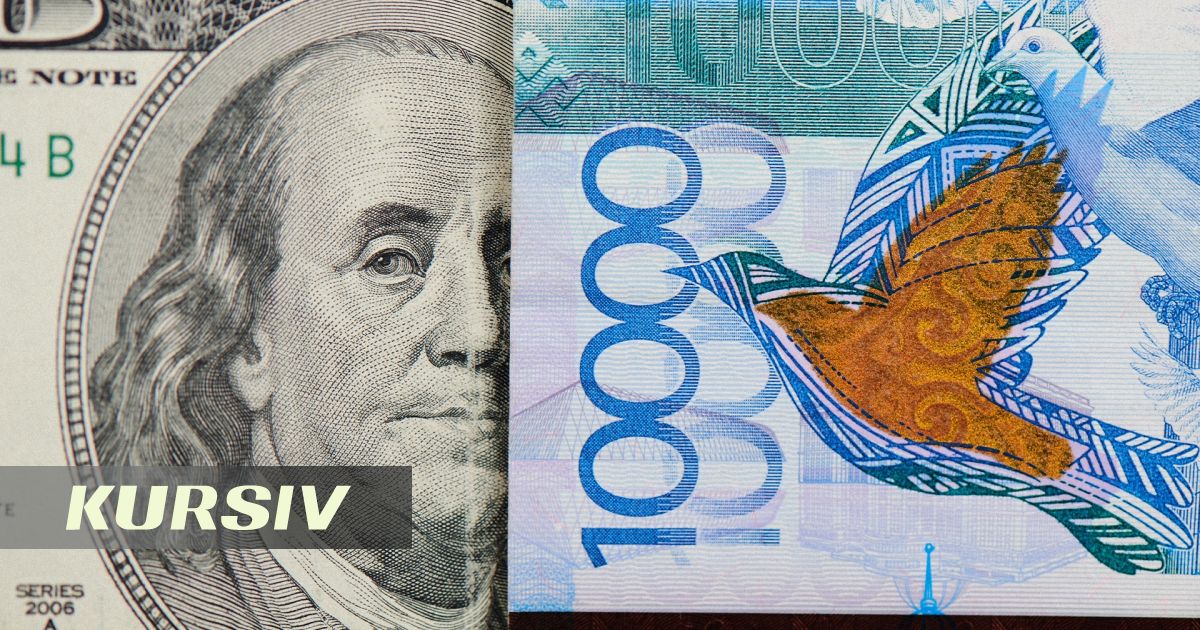
On July 14, the dollar exchange rate on the Kazakhstan Stock Exchange (KASE) significantly decreased after a sharp rise the day before. This was reported by Qazaqyia.kz citing Kursiv Media.
According to trading results at 17:00, the weighted average exchange rate of the US currency was 468.94 tenge, which is 7.39 tenge lower than the previous trading day's close (476.33 tenge).
During trading, the minimum dollar rate reached 468.40 tenge, the maximum – 469.50 tenge, and the closing rate was 469.01 tenge.
Despite the decline in the exchange rate, the US currency is still sold significantly more expensive at exchange offices. According to Kursiv Media data at 17:00, the maximum dollar selling rate in Astana reached 475 tenge, in Almaty – 472 tenge.
At the same time, the official exchange rate of the National Bank of Kazakhstan for July 14 was set at 477.11 tenge per dollar.
Earlier, it was reported that the National Bank would cancel the obligation for quasi-state companies to sell 50% of their foreign exchange earnings on the domestic market. This measure was adopted to support the tenge exchange rate at the end of 2024.
Reasons for the dollar decline
According to experts, several factors influenced the decline in the dollar exchange rate. First, rising oil prices in global markets supported the tenge. Second, the National Bank's currency regulation measures helped stabilize the market. Third, a decrease in domestic demand also affected the exchange rate.
Situation at exchange offices
At exchange offices, the dollar rate remains higher than the exchange rate. This is due to exchange offices adding their margin, as well as continued demand for dollars from the population. Differences between Astana and Almaty are due to peculiarities of supply and demand in different market segments.
Official rate of the National Bank
The official rate of the National Bank is set at 477.11 tenge, which is higher than the exchange rate. This is because the official rate is often calculated based on the previous trading day's results and does not immediately react to market changes.
Future forecasts
Economists predict that if oil prices remain high and the National Bank's policy is stable, the tenge may continue to strengthen. However, global economic conditions and geopolitical risks could affect the exchange rate.
Conclusion
The decline in the dollar exchange rate on July 14 is a positive sign for the Kazakh currency. However, the high rate at exchange offices indicates continued public confidence in the dollar. Further steps by the National Bank may contribute to market stabilization.