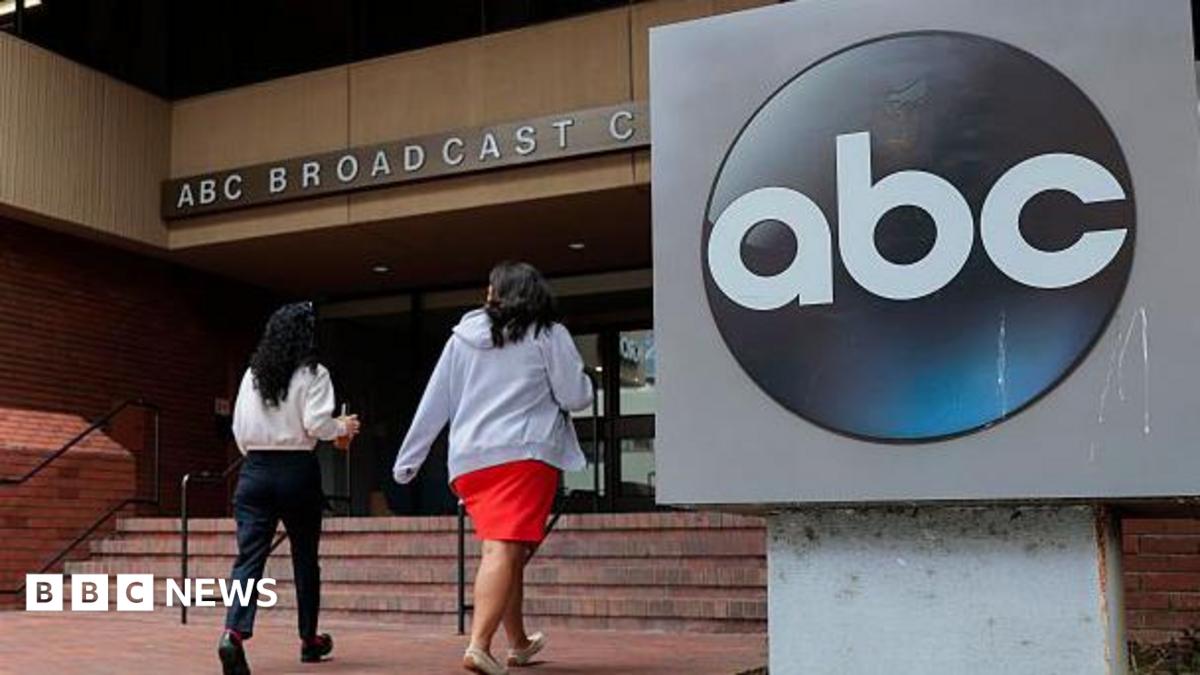
Disney and ABC have filed a lawsuit to stop the Trump administration from launching an early license renewal process, arguing that the network is being unfairly targeted over its editorial content. This was reported by Qazaqyia.kz citing BBC News.
This was reported by Qazaqyia.kz citing BBC News.
"Government censorship is deeply un-American," the lawsuit says. "This case concerns the Administration's sustained effort to do just that."
The lawsuit says the Federal Communication Commission (FCC) - the government's media regulator - is being pressured to renew broadcast licenses years early. It alleges the push stems from complaints from, and under the direction of, President Donald Trump.
FCC chairman Brendan Carr has said that the renewal requests were focused on "public interest," not retaliation.
"If broadcasters don't like that, that's okay," Carr told CNBC in July. "They can become a cable channel, they can become a podcast, they can stream online. But if you want to uniquely be on the public's airwaves, you have to comply with those obligations."
The BBC has contacted the FCC for comment.
Disney and its eight owned-and-operated TV stations are plaintiffs in the lawsuit filed on Tuesday against FCC and its chairman.
The FCC ordered license renewals for the Disney-owned ABC stations in April.
Disney previously had been under investigation for its alleged diversity, equity, and inclusion (DEI) practices and for ABC's daytime talk show, The View.
But the notice for early renewal of license from the FCC came a day after ABC's late-night host Jimmy Kimmel made a joke about first lady Melania Trump.
In the lawsuit, Disney calls the order by the FCC "unprecedented," saying that before then the commission had not called for early renewal in over 50 years.
"Acting through the Federal Communications Commission, the Administration has waged a retaliatory campaign against ABC for a single reason: it disapproves of what ABC broadcasts," the lawsuit says.
It cites Trump's own social media posts as evidence, including one in which Trump complained about ABC's coverage of him being "almost 100% negative."
In the same social media post, Trump also questioned whether their broadcast licenses should "be terminated," and answered his own question: "I say, Yes!"
Under pressure from FCC chairman Carr, Disney pulled Kimmel off air in September 2025, after he made remarks about the murder of conservative activist and Trump ally, Charlie Kirk.
But Kimmel was quickly returned to his role after widespread public backlash over alleged free speech violations, including from Republican Senator Ted Cruz.
The FCC gave ABC and Disney 30 days to file applications, which, according to plaintiffs in the lawsuit, "ordinarily take months to prepare."
The lawsuit also notes that the FCC has never demanded early renewal applications from a group of stations commonly owned by a single broadcast network.
ABC and Disney have requested a "speedy hearing" from the court and a temporary restraining order.
Carr - who President Trump once hailed as a "warrior for free speech" - has long found himself at the center of the administration's increasingly combative relationship with the media.
Even before assuming his position in January last year after years on the commission, Carr made clear that he would take an expansive view of his power.
ABC in particular has repeatedly drawn Carr's ire. In September 2025, he openly threatened to take action against media companies that did not push back against comedian Jimmy Kimmel after he made comments in the wake of Kirk's murder.
"We can do this the easy way or the hard way," Carr told conservative podcaster Benny Johnson. "These companies can find a way to change conduct and take action, frankly, on Kimmel, or you know there's going to be additional work for the FCC ahead."
Earlier, Trump successfully sued ABC News and George Stephanopoulos for defamation after the TV anchor said that the president had been found "liable for rape" in the E Jean Carroll case, rather than sexual abuse and defamation.
ABC settled the case and agreed to pay $15m for his presidential foundation and museum, plus $1m in legal fees.