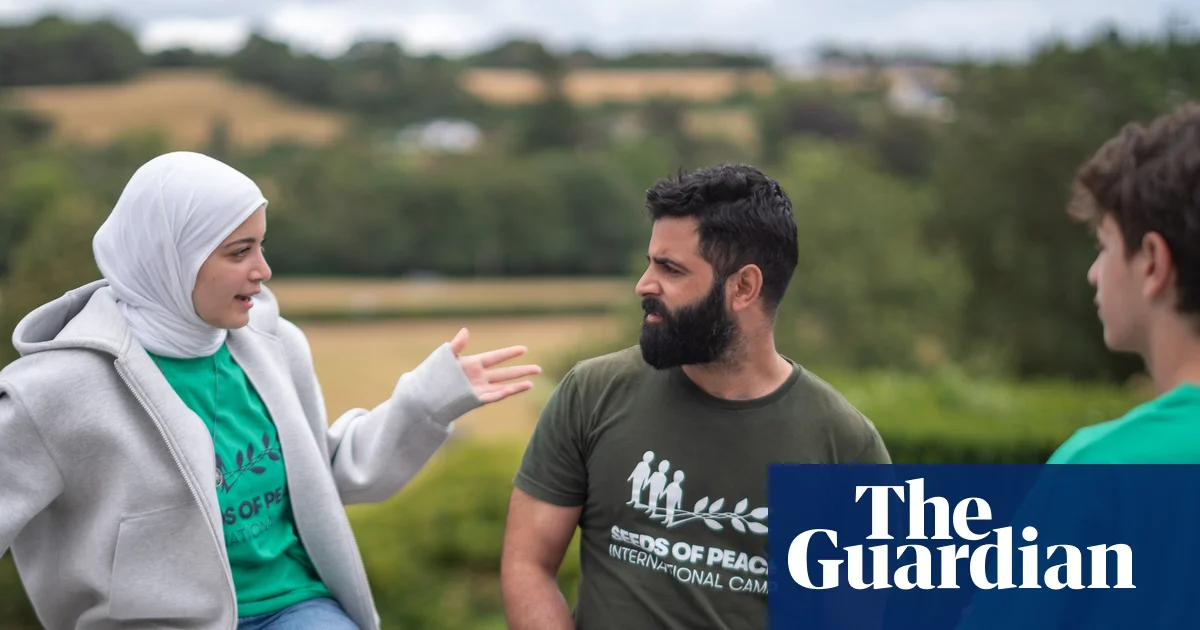
On the surface it looks like a normal summer school in the Devon countryside, with teenagers playing volleyball in the sun, doing arts and crafts in the hall, and preparing for the night's talent show. But behind the scenes, intensive discussions are taking place, as many of these teenagers come from opposite sides of historical national conflicts – from Israel and Palestine, India and Pakistan. This was reported by Qazaqyia.kz citing The Guardian.
Every day at Seeds of Peace they spend two hours in dialogue sessions with each other, sharing their personal experiences, their pain and trauma, and trying to find the common ground that unites them. Over the course of three weeks, that is 32 hours in a room discussing heavy topics and trying to build bridges.
"You won't find them sitting with maps and facts and books," said Eva Armour, Seeds of Peace's executive director. "They're talking about their own lived experiences – that's how the learning is happening. You can't debate someone else's lived experience the way that you might debate what happened in the war."
"It's almost embarrassingly simple how well this model works, but we need to invest in this work even a fraction of what we're investing in the aftermath of war."
The Seeds of Peace summer camp, for teenagers aged 14 to 17 from eight different countries including the UK, has been running for 30 years but this is the first time it has been held in Britain. Founded in 1993 by the American journalist John Wallach, it usually takes place in the US but political uncertainty meant organisers felt the UK was a safer bet this year.
"Picking a country to host this is one of the enormous challenges," said Qasim Aslam, the global youth programme lead. "If you pull up a map, there are very few countries where all parents from all eight countries would be comfortable sending their kids, and where we can get visas for all participants."
Coming to the end of their three-week stay at a Devonshire boarding school in Tavistock, many of the campers – known as "seeds" – said the experience had been challenging but life-changing.
Mika, a 17-year-old from Israel, said she was glad she attended even though she had not come closer to answering her questions about peace. "Now I'm thinking, did I really expect three weeks to fix it all?"
"Facing someone who is supposed to be my enemy, but she's just a girl like me – it's difficult," she said. "I could just not know about it and go and have fun in another summer camp and it would be way easier. But I prefer knowing it and starting to work through it for what I believe."
"If one day maybe I have the power to change something, I don't want to be ignorant. I want to know the pains of everyone."
Hala, a 16-year-old Palestinian from Jerusalem, said it was the first time she had met Israelis "outside of checkpoints, raids and IDF uniforms".
"It was hard at first, I thought I was betraying something deep down inside of me," she said. "But when I got to know these people, I realised they have very different views about their government. And we like the same movie. We have so many things in common."
Even for those coming from outside the main conflict zones, the experience has been enlightening. "I have never had the chance to speak to people from different countries like Israel and Palestine before – you never know how the media censors stuff so it's really powerful to hear from people themselves," said Esther, a 17-year-old from Belfast. "I feel like I'll be much less quick to judge people now."
For some participants, the act of attending is fraught with difficulty. Ahmad, a 26-year-old Palestinian camp counsellor who previously attended as a teenager, said he would not be speaking about his summer trip back home.
"For some people, it feels like you're betraying your country, because you're trying to make peace with the people who are killing you at the same time," he said. "You can't just go home and expect people to understand Seeds of Peace in a second. You need to be here to understand that."
While camp organisers aim to get a diverse range of teenagers, they admitted there were limits to how accessible they could be – English language skills are required so the dialogue sessions can be most effective. The cost to attend the summer camp is $9,000 (£6,700), although many of those attending receive grants and scholarships.