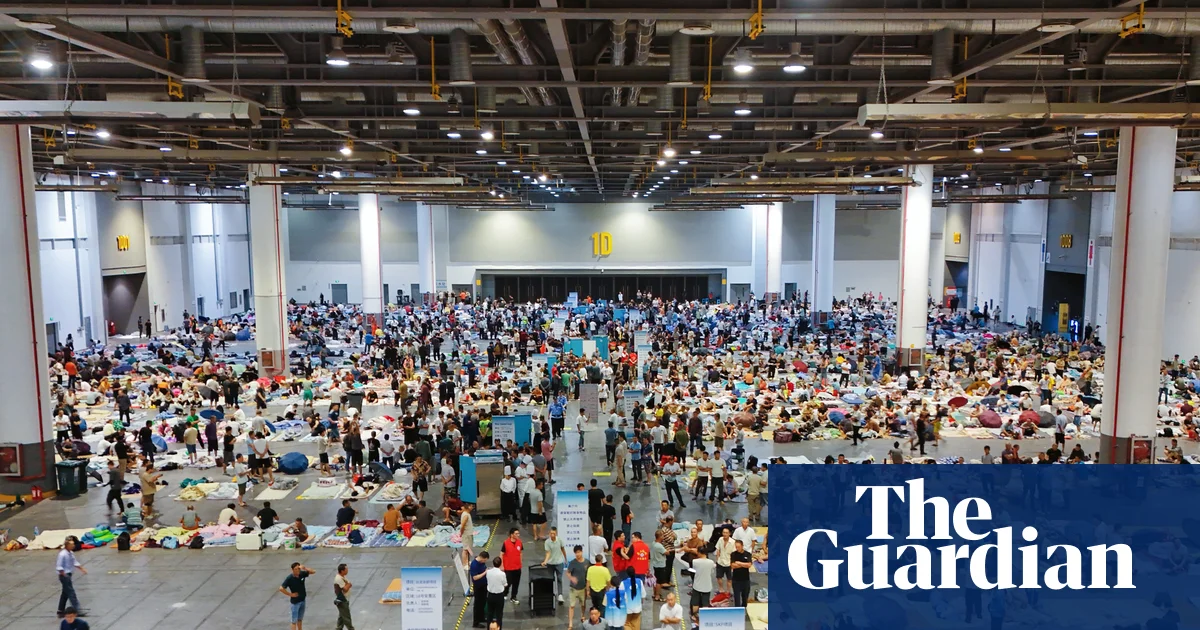
More than a million people were moved to safety across eastern China by Sunday evening as powerful Typhoon Dolphin made landfall amid fears torrential rain would cause flooding and landslides. This was reported by Qazaqyia.kz citing The Guardian.
Wenzhou, a coastal city in Zhejiang province, said it relocated more than 900,000 people and opened more than 1,500 emergency shelters. In neighbouring Fujian, 98,900 people were moved from high-risk areas.
In Shanghai, 215,600 people were moved from areas considered at risk by Sunday evening, substantially higher than an earlier figure of 30,300. A weather station in the city centre recorded its highest 24-hour rainfall in more than 150 years.
Forecasters in China predicted some areas could see 200-400mm (7.9–15.7 inches) of rainfall over the coming days.
Dolphin weakened rapidly to a tropical storm by 5am on Monday. But as the storm continued to move northwards and farther inland, heavy rain was forecast across large parts of eastern and central China, extending north into Shandong and affecting Henan, Hubei, Anhui, Jiangsu, Zhejiang and Shanghai. Authorities warned that days of intense rain could trigger widespread flooding and landslides through Wednesday, urging people to stay indoors during the heavy downpours.
The storm forced Shanghai’s two airports to cancel more than 1,300 flights.
Dolphin earlier swept through Japan’s southern Okinawa prefecture, injuring six people and cutting power to more than 50,000 buildings.
In the Philippines, the typhoon did not make landfall in the country’s north but intensified the seasonal monsoon rains, which flooded many areas of the main northern Luzon region, including around Manila.
Scientists say global warming has made extreme weather more likely, including more powerful typhoons.