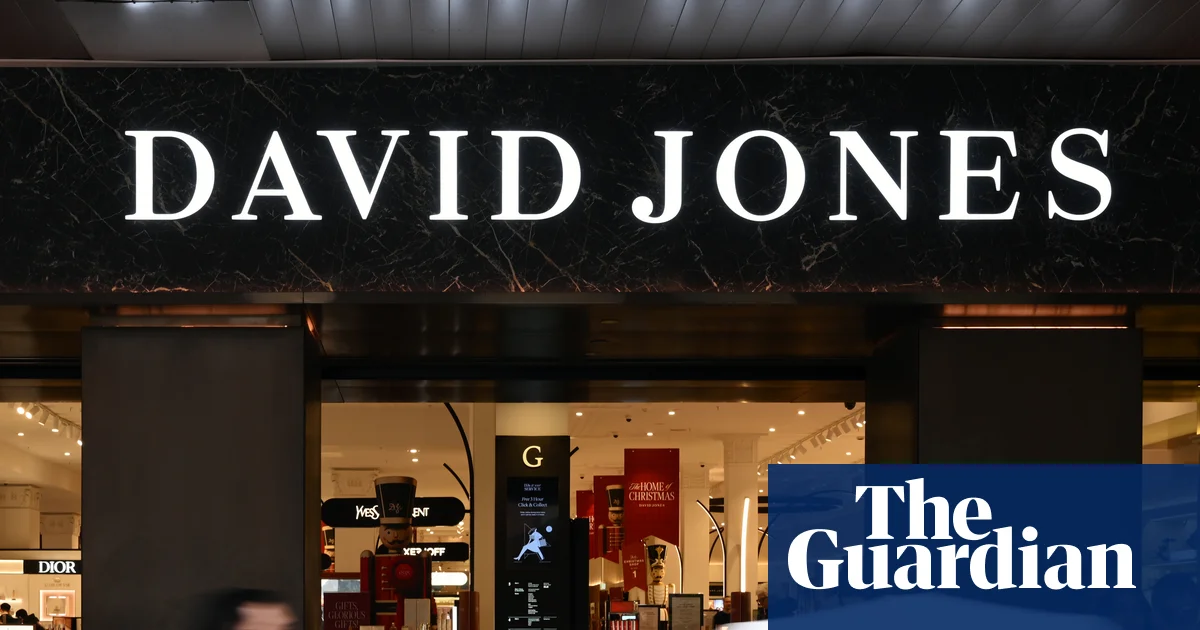
David Jones is poised to fall into administration after 11th-hour talks between its private equity owner and primary landlord broke down, putting the future of the 188-year-old upmarket department store chain at risk. This was reported by Qazaqyia.kz citing The Guardian.
The upheaval follows years of steep losses, weak consumer spending and a string of underperforming stores that left the heritage retailer defaulting on its rent.
Its main landlord, Scentre Group, which owns Westfield, said discussions with David Jones’s owner, Anchorage Capital Partners, had ended without an agreement.
“They have not paid rent since September and therefore are in breach,” Scentre’s chief executive, Elliott Rusanow, said in a statement on Wednesday.
“We have made a generous offer to Anchorage Capital Partners that would have facilitated the continuation of David Jones trading and that offer has disappointingly been rejected by them.”
Two people with knowledge of the discussions but unauthorised to speak publicly said the next step was for administrators to be appointed.
While an administration process could help David Jones overhaul its business, it also takes the retailer’s fate out of its own hands, with the retailer subject to the competing claims of creditors.
Administrators would want to keep stores trading with little interruption through Black Friday and Christmas to capture the vital cash injection during those popular trading periods, one person briefed on the matter said.
Earlier on Wednesday, a David Jones spokesperson said its chief executive, Erica Berchtold, was in advanced discussions with key stakeholders.
“This includes a review of the portfolio of stores across Australia and the trading terms with suppliers and brand partners,” the spokesperson said in a statement.
The retailer was contacted for comment after Scentre confirmed that talks had ended.
David Jones had been seeking to renegotiate lease terms with its landlords and reduce its store numbers from the current 38, aiming to offload poor performing suburban sites, according to a person with knowledge of discussions.
Longer term, the retailer had wanted to reduce its network to about one-third of its current size.
While mid- to upmarket department stores have been struggling for years, the re-emergence of high inflation and the associated cost-of-living pressures has made trading conditions even worse.
Shares in Myer Holdings, operator of the rival Myer department store chain, are down more than 50% in 2026.
RMIT University advertising expert, Prof Robert Crawford, said David Jones had been caught in an intensifying squeeze between discount chains and luxury fashion houses that sell direct to consumers.
“The David Jones model has really struggled to adapt to modern retailing,” Crawford said.