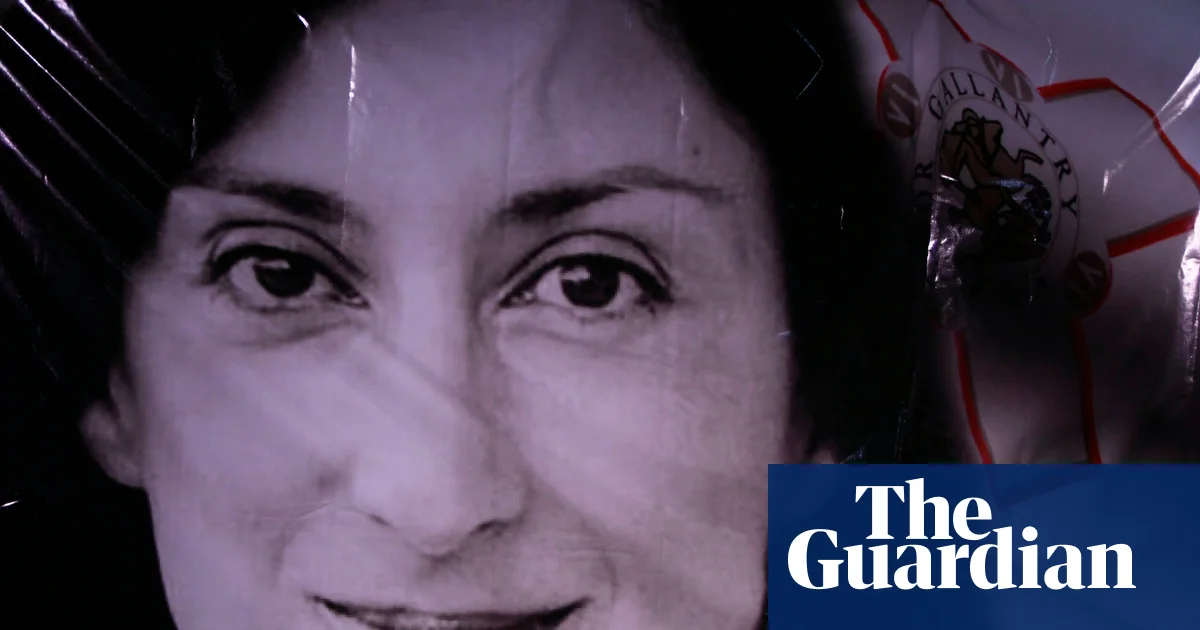
The conclusion of the longest-running murder trial in Maltese history has left a country in turmoil, and a grieving family still searching for answers. This was reported by Qazaqyia.kz citing The Guardian.
At 7.30pm on Wednesday, gasps and cheers echoed around hall 22 of the courts of justice in Valletta, as a jury pronounced a businessman accused of ordering the murder of the investigative journalist Daphne Caruana Galizia not guilty.
Yorgen Fenech, 44, had been facing a life sentence if convicted. Now, after nearly seven years in and out of custody, he is free to return to a gilded life as the heir to one of Malta’s biggest fortunes.
In her reporting, Caruana Galizia had taken aim at many powerful figures, including Fenech and the politicians he was close to. Her revelations, and the fallout from her violent death in a car bombing in October 2017, had ultimately led to the resignation of the prime minister, Joseph Muscat, and several members of his government.
Within weeks, three hitmen accused of planting the bomb were arrested. Two were sentenced to life in prison after pleading guilty to murder, while the third was given a reduced 15-year sentence in exchange for evidence against his accomplices.
After Wednesday’s decision, the long search for whoever was responsible for hiring them must begin again.
The opposition leader, Alex Borg, has demanded the recall of parliament from its summer recess, and called for the government to act to strengthen press protection and anti-corruption measures. “We believe journalism is the backbone of a democracy,” he told the Guardian, describing the failure to find the culprits as a black mark against the Labour government. The party has been in power since 2013.
Caruana Galizia’s family described the verdict as “justice denied”.
The attorney general is considering whether to appeal for a retrial. The chances of success may be slim: Both charges brought against Fenech were dismissed by an 8-1 majority.
It had taken nine years, a relentless family campaign and a determined judge to bring Fenech before a jury. In the end, they took him at his word. During his evidence, he was adamant: “I never ordered Daphne Caruana Galizia’s murder, or anyone else’s. I had no role in her murder.”
While the identity of the mastermind remains a mystery, what the trial did reveal was the full extent of the challenges faced by those leading the search for Daphne’s killers.
Witness after witness spoke of attempts to block and sabotage the murder investigation. As detectives worked to identify all of those involved, from the bomb makers to the hitmen to their ultimate client, they heard evidence that the most sensitive details were being leaked. Most disturbingly of all, the jury was told much of the information was coming from the prime minister’s right-hand man.
“Don’t worry about me, nobody can touch me,” Fenech was heard saying in secret recordings that formed a cornerstone of the case against him, and played to the jury.
The man who had made those recordings was a taxi driver, Melvin Theuma, who testified to acting as the middleman between Fenech and the bombers. He was the key prosecution witness, having secured a pardon two years after the murder in return for giving evidence.
In July 2020, he was taken to hospital in a critical condition. Overcome with remorse, he had attempted suicide while staying at a safe house, and it took intensive support to get him back in the stand.
What follows is the story of the search for those responsible, based on pre-trial hearings, the trial itself, and related court cases.
In the last summer of her life, Caruana Galizia was deeply isolated.
As a younger woman, she had not only been brilliant, but strikingly beautiful, with big statement earrings and shining black hair. She had co-founded a national newspaper, was a lifestyle magazine publisher, and had become one of Malta’s most-read columnists, all while raising three sons.
In later life, it was the investigative work that consumed her.
Her blog Running Commentary was among the most-read news sites in Malta, but its popularity, and her often scathing satires of public figures, made her a target.
She had as many detractors as fans, and on social media she was vilified as a “witch”. There were arson attacks, and the family dogs were killed.
“I was worried about her,” her middle son, Andrew, told the trial. “The atmosphere around her was horrible. People would stare at her in Valletta. She wouldn’t leave the house.”
Caruana Galizia knew she was at risk and had already started varying her routine. For added security, she drove a rental car.
It was in that car that she died on 16 October 2017, aged 53, metres from her house. A bomb placed under the driver’s seat ripped through the vehicle, scattering burning remains across the road and into a field.