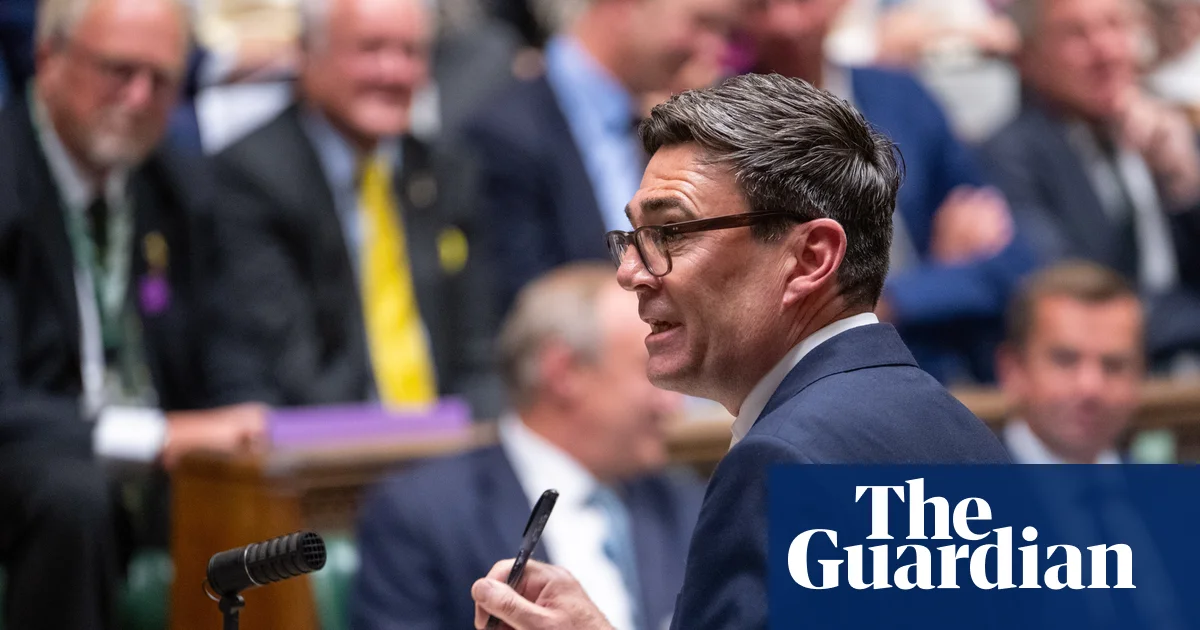
UK Prime Minister Andy Burnham has blamed Brexit and Margaret Thatcher for a decade of low growth in the UK, arguing that Britain needs to be brutally honest about having taken "a series of wrong turns" in the last 40 years. This was reported by Qazaqyia.kz citing The Guardian.
In his first Commons appearance since taking over as prime minister about six weeks ago, Burnham told MPs he wanted to build a new sense of optimism so "we can make this next decade better than the last".
The British people wanted "much more substantial change" on the big issues facing the country, he said. "That is what I will bring. Britain is not where any of us would wish it to be. Things are not working as they should."
The UK economy has taken a 6% hit from the effects of Brexit, according to economists' analysis of internal Bank of England data on thousands of British companies since the referendum a decade ago.
Shortly before Burnham's Commons address, Keir Starmer, his predecessor, announced he would stand down as an MP, saying he wanted to focus on international affairs, triggering a tricky first byelection test for Burnham in a seat where the Greens fancy their chances.
The cabinet was told on Tuesday that the government will have three key priorities: cutting costs of essentials like childcare and mortgages; the regeneration of communities; and greater public control of water, housing and energy.
Burnham's deputy, Louise Haigh, will lead task forces on each of those issues, the Guardian understands. He told his ministers they must be "relentless" in fulfilling his priorities.
His plans are set against a tough economic backdrop. The chancellor's headroom against Labour's fiscal rules could be halved at his first budget if the current global bond sell-off persists, and economists warn mortgage rates could go up this autumn.
In his Commons statement, the prime minister also:
- 01Hinted that he would commit to spending 3% of GDP on defence by 2030, saying he had appointed John Healey as his chancellor "precisely because" of his position on military spending.
- 01Signalled he is open to renationalising the water industry – saying he is looking at "all possible solutions", as the sector is a "leaking monument" to the failures of privatisation.
- 01Opened the door to looking again at electoral reform in Labour's next manifesto. "I do believe there needs to be a mandate to make that change. There are different views in this house, but I believe we will need to get a consensus at the next election. And if there is that consensus, then a change can be made in the next parliament."
- 01Announced he would attend the Cop31 climate summit in Turkey and continue pursuing green energy – but that he would be "pragmatic" on supply, amid expectations he will approve the Jackdaw gasfield. "The mistake is saying it's got to be one or the other for political purposes. The truth is, it's going to have to be both."
Flanked by Healey and Haigh, Burnham suggested to MPs the Brexit vote had been a response to "a series of wrong turns" made by Britain in the 1980s onwards, that were then compounded by leaving the EU.
The prime minister, whose Makerfield constituency voted for Brexit, has previously argued it would be a mistake to rerun the referendum – but has said that he wants the UK to rejoin in his lifetime. He suggested the next UK-EU reset summit could take place in November.
"Political power was centralised, economic power privatised, the country de-industrialised. Austerity followed, hollowing out councils and depriving them of the agency to act to reverse any of this," he said during a three-hour stint in the Commons.
"And then Brexit compounded the damage, ushering in a decade of low growth and stalled regeneration. Change begins with honesty … Unless we are blunt about what went wrong, we won't turn things around."
"Far from taking back control, the combination of these policies took control out of the hands of communities up and down Britain for 40 years. Too many places have been drifting."
He added: "The government I lead will be relentless in giving people and places what they were promised 10 years ago: ownership and control, and from that control over their destiny comes change and growth."
The Tory leader, Kemi Badenoch, accused the prime minister of "living in the past" over his attacks on Thatcher – who was in power from 1979 to 1990 – and four decades of neoliberalism.
"The year is 2026 but the prime minister said everything has gone wrong since the 1980s, still complaining about Margaret Thatcher. He is talking about a woman who became prime minister before I was born. He is living in the past and he wants to take us back to the 1970s."
In the statement, Burnham paid tribute to Starmer, saying he had created a platform for Britain to be fixed, "and we will use it well". Just hours earlier, his predecessor announced he would be standing down as MP for Holborn and St Pancras, despite saying in July he planned to stay on until the next election.
"It has been a huge honour and privilege to represent the best constituency in the country," he said. "I will now focus on other things and that will be international affairs, including defence, security, trade and technology in a fast-changing world."
Starmer's seat, long seen as a safe Labour seat, will now be contested.