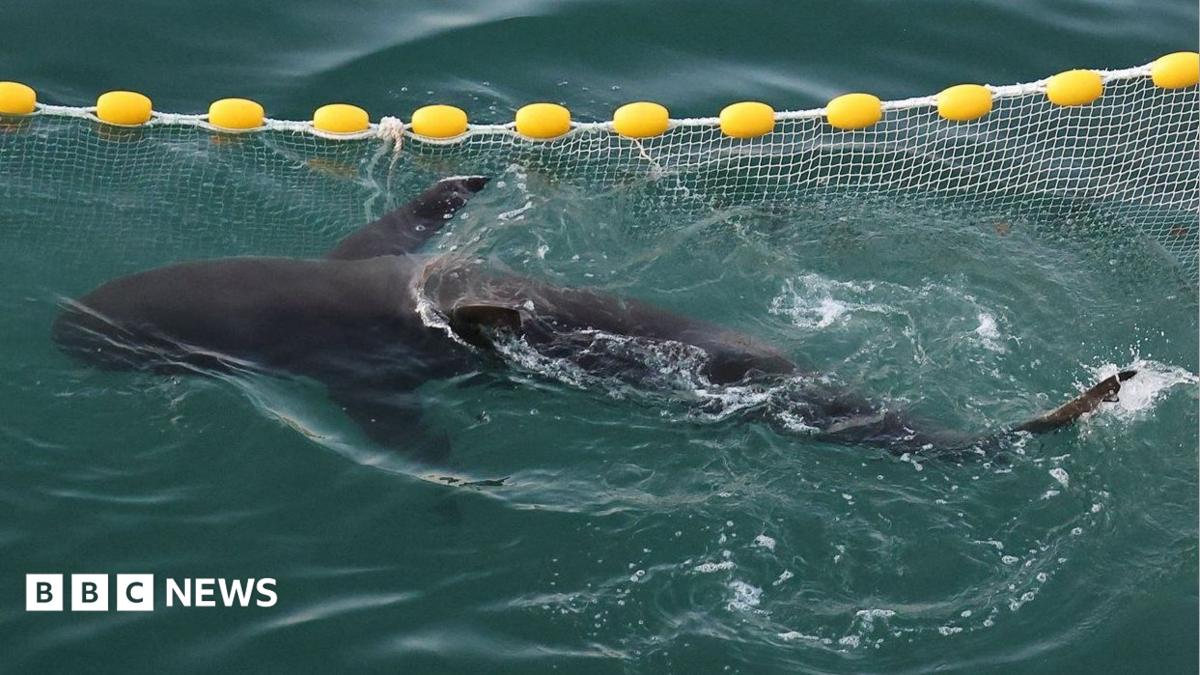
When a large shark was spotted in a canal in Busan — a bustling shipping hub and beach city on South Korea's south-eastern tip — marine biologist Kim Hyun-woo was drafted in to rescue it. This was reported by Qazaqyia.kz citing BBC News.
He got the call in mid-September, on his way home from a business trip tracking shoals of mackerel to aid fishing vessels. Despite being one of the country's leading shark experts, he never thought he'd be asked by the coastguard to actually save one.
South Korea is no stranger to sharks but one this size, in a shallow, concrete canal right by the world's seventh busiest port, was unheard of — until now.
With an excited crowd already gathering at the waterfront, his team from the National Institute of Fisheries Science had to move fast. The first task was to determine the species.
Some sharks are more dangerous than others. The star of the 1975 blockbuster Jaws, the great white shark, is known to attack and kill humans. The specimen in Busan was found to be a female dusky shark, a species linked only to two deadly attacks. Still, Kim feared someone in the crowd might jump or fall into the canal.
A small coastguard ship made an initial attempt using an electrical deterrence device, which generates a weak current that sharks avoid. They're usually used after sightings near popular beaches. But after five hours, officials determined this particular shark was too large and fast for the device.
Kim changed tack, deciding instead to wait for the shark to let herself out. But that did not happen.
As authorities looked for ways to guide her out of the canal, the stranded creature went viral. Just hours after she appeared, the council had sent everyone in the city an emergency text alert, urging pedestrians and residents to "exercise caution for their safety".
People rarely visited the park along the canal but because of the message, the place was soon brimming with people eager to spot the shark.
Adoring fans named her Bukangi, from "buk hang", the Korean name of the nearby harbour. Within days, a business trademarked it and Bukangi pins, plushies and T-shirts began selling online.
City authorities joined in, livestreaming the shark and making her their official mascot. A banner was hung at the entrance of the canal, asking the public to sign a petition "on behalf of Bukangi" to demand the national government's support for the construction of a new 30,000-seater baseball stadium by the canal.
Shark spotting became a team effort among locals and visitors. The unspoken rule was that children were given the front row, and whoever saw Bukangi had to point her out to newer arrivals. Some self-appointed defenders even patrolled the canal at night to make sure no-one was shining torches or lasers at Bukangi.
More than 1.6 million visitors ultimately flocked to the canal. The local mayor said the shark brought "the kind of publicity even billions of dollars cannot buy" to the port.
"It's really rare these days for people to come together," said Kim Joo-eun, who came to see the shark with her two nieces. "I feel that Bukangi brought us all together, cheering for her… It's a lot of fun."
But officials couldn't leave Bukangi in the canal. As September drew to an end, she hadn't been seen feeding for days and was spotted with bloody abrasions on her snout from bumping into the concrete walls. Prominent marine biology professor Choi Yoon told local media that experts were particularly worried about a "critical" injury around the shark's eye.
At the end of September, Kim's team mounted another rescue attempt. The marine biologist looked back to a 2004 incident in Massachusetts, when water jets were used to drive a great white shark away from a shallow pond.