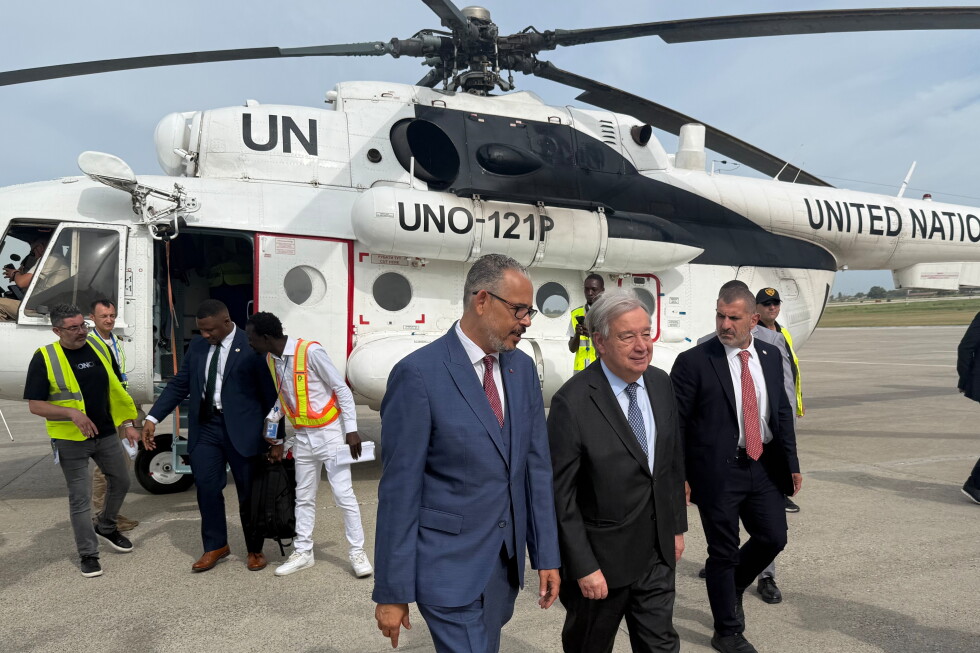
UN Secretary-General António Guterres visited Haiti on Tuesday, where surging gang violence has left more than 1 in 10 people homeless. This was reported by Qazaqyia.kz citing Associated Press.
New statistics released by the UN reveal that 2,300 people have been killed across Haiti so far this year, with another 100 kidnapped, while 1.5 million have been displaced. Among those abducted is James Boyard, cabinet director of the Defense Ministry, who was kidnapped last week in one of the few relatively safe areas of the capital.
Guterres' one-day visit to Port-au-Prince comes after more than 30 people were killed, injured or missing last weekend in Cité Soleil, a seaside slum, according to Cooperative for Peace and Development, a local human rights organization.
His convoy sped past a neighborhood once fully controlled by gangs that left in their wake decimated car dealerships, abandoned homes and dozens of concrete buildings pockmarked with bullet holes. A colorful bus known as a tap-tap rumbled past, its windshield peppered with bullet holes.
Graffiti scrawled on a crumbling concrete wall read: "Down with Viv Ansanm, long live the police." Viv Ansanm is a powerful gang federation that the U.S. government designated a foreign terrorist organization. It is estimated to control 70% of Port-au-Prince.
Guterres traveled past dozens of Haitians who fled the clashes and now live in makeshift homes under large pieces of canvas strung up with frayed rope. They are among the more than 300,000 people displaced by gang violence across Port-au-Prince — a record. Among them are more than 18,000 people who fled the Cité Soleil slum in May, according to the UN International Organization for Migration.
"Haiti's displacement crisis is entering an even more alarming phase," Gregoire Goodstein, IOM chief of mission in Haiti, said in a recent statement.
Guterres' first stop was the headquarters of the new gang-suppression force, which the UN Security Council approved in September. It replaces a UN-backed mission led by Kenyan police that aimed to help Haiti's National Police fight gangs but remained underfunded and understaffed. So far, Jamaica, Chad, El Salvador and Guatemala have deployed troops that number less than 1,000 to form part of the growing force, which is due to start operations in the coming weeks. They are expected to work with Haiti's National Police and its growing Armed Forces.