An avalanche on Broad Peak in Pakistan killed six Nepali guides, including renowned climber Nirmal Purja, who led the expedition. This was reported by Qazaqyia.kz citing BBC News.
Among the dead were climbers who had summited Mount Everest dozens of times and achieved numerous feats previously thought impossible, such as climbing 8,000m peaks without supplemental oxygen and scaling K2, one of the world's most lethal mountains, in the dead of winter.
Beyond these accomplishments, the six Nepalis who died in the avalanche on Broad Peak last week also elevated the world's recognition of Nepali mountain guides, or Sherpas, who had previously been seen as mere aides.
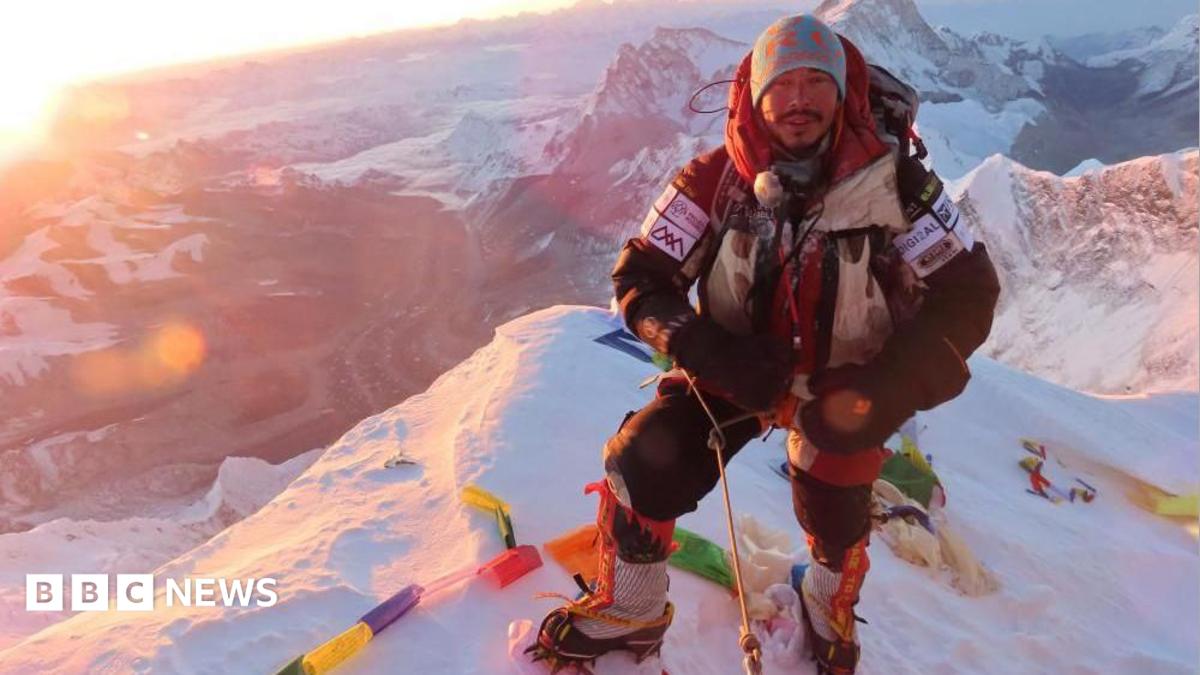
Among those killed was the decorated British-Nepali climber Nirmal Purja, best known for climbing the world's 14 highest peaks, rising above 8,000m, in just over six months. Purja, 43, also known as Nims, was the leading figure of the 10-member international team up Broad Peak, the world's 12th highest mountain, when the avalanche struck.
"Nims of course was iconic and undisputedly amongst the best of his generation," says Ben Ayers, a longtime Everest reporter for Outside Magazine.
Kili Pemba Sherpa and Pur Bahadur Gurung, who were also guiding the Broad Peak expedition, were "strong climbers with a solid resume", Ayers said.
Kili Pemba, 46, had just earned the coveted mountaineering Grand Slam after completing his last of the 14 highest peaks, also known as eight-thousanders, in early July. Even before this crowning achievement, he was already among the best in the industry having been part of the Nepali team, led again by Purja, that completed the first winter ascent of K2 in January 2021.
Many have described Kili Pemba as humble and deeply committed in serving his clients. Two of the 15 times he summited Everest he did so guiding double-leg amputees up the mountain.
"That was the toughest task for any guide, [Kili Pemba] did that with a lot of care," says Gyanendra Shrestha, a government official who was at Base Camp during one of these climbs.
Pur Bahadur Gurung, 37, scaled 12 of the 14 highest peaks and was one of only 100 Nepali guides certified by the International Federation of Mountain Guides Association (IFMGA).
"It takes a lot of money, passion and dedication to become an IFMGA guide. This tells us a lot about Pur Bahadur's zeal for mountaineering," says Himal Gautam, a spokesman for Nepal's tourism department. "It also speaks to the unprecedented loss we have suffered on Broad Peak," he adds.
In 2024, Pur Bahadur was part of the team that discovered a century-old boot on Everest, believed to be that of British climber Andrew Irvine, who vanished on the mountain in 1924.
The other three Nepali guides who perished on Broad Peak last week include Gyaljen Sherpa, best known for scaling the third-highest mountain Kanchenjunga three times in one season – a feat that some colleagues say deserves a Guinness World Record.
Then there's Nima Sherpa, 36, who scaled four eight-thousanders in 2026 alone, and Nawang Thindu Sherpa, who in his 20s was among Nepal's rising generation of mountain guides.
Nepal's mountain guides spend each spring leading international clients up Nepal's highest mountains as guides or porters. When the monsoon comes around from June to September, some of them head towards Pakistan's far north, home to some of the world's highest peaks, including five eight-thousanders.
International visitors to this rugged region are relatively few, but demand is growing. While over a million adventure travellers go to the Himalayas each year, the Karakoram mountains in Pakistan attract only about 15,000 hikers annually.
Some credit Purja for bringing Pakistan onto the radar of mountaineers through his feat of scaling the 14 peaks in just over six months, which was documented in a Netflix film.
"Nims' success gave many [guides] and foreigners the courage to believe that this mountaineering crown was truly possible," says Iswari Paudel, acting president of the Nepal Mountaineering Association. "This has made Pakistan a major overseas base for Nepali Sherpas. And while helping foreign climbers fulfil their dreams, many guides have themselves completed the 14 peaks," Iswari says.
Ayers, the Everest reporter, says Purja helped "publicise a new era of mountaineering" which in many ways helped "democratise mountain-climbing", but also "fuelled commercialisation and risk".
Because of how remote Pakistan's mountains are, it is far more challenging to organise expeditions there – a feat that only the best guides undertake, Sherpas tell the BBC.
"We have to fix our own ropes, cut our steps into the ice, and set up camps as we go along," says Nima Rinji Sherpa. The 20-year-old set a new record in 2024 as the youngest mountaineer to summit the world's 14 highest peaks.
"Even in an era of commercial mountaineering, we experience real, old-fashioned mountaineering [in Pakistan]," he says.