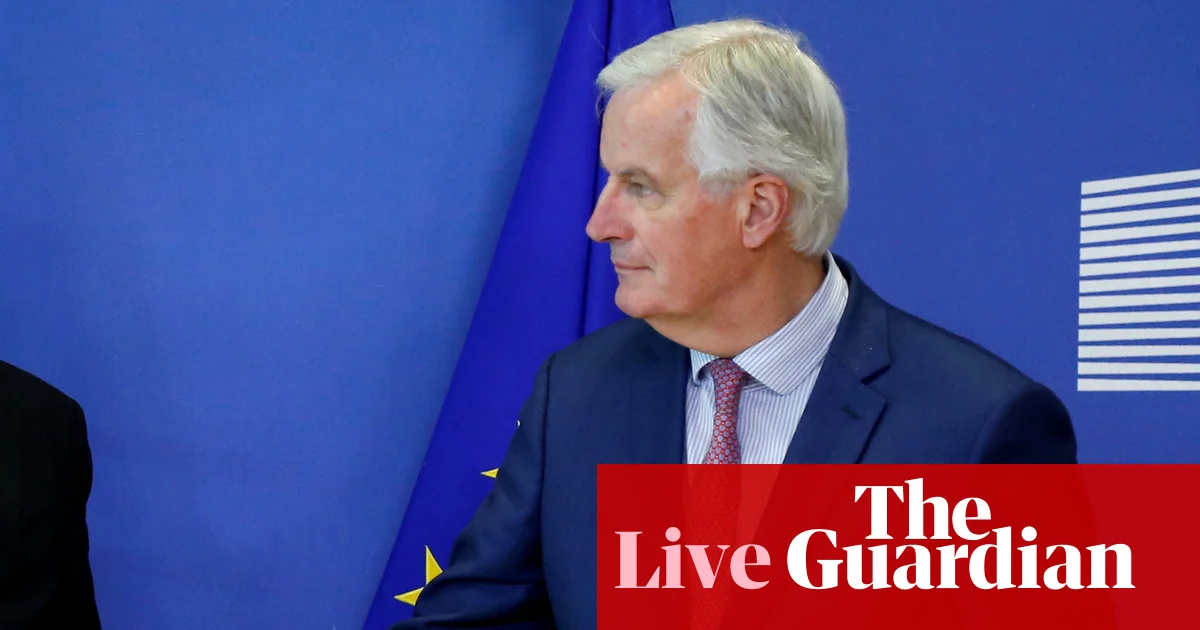
Former EU chief Brexit negotiator Michel Barnier has said Britain could rejoin the European Union without having to adopt the single currency, but free movement of people remains non-negotiable. This was reported by Qazaqyia.kz citing The Guardian.
According to Barnier, the UK could become an EU member without entering the eurozone, but the principle of free movement would remain a condition that cannot be negotiated away.
The statement comes amid renewed debate over Britain's future relationship with the bloc after Brexit.
On the same day, new research from the British Social Attitudes (BSA) survey showed that, under Donald Trump, Britons now regard the US as a greater threat to world peace than North Korea and China, and about as dangerous as Iran.
This is not good news for Reform UK, whose leader Nigel Farage used to boast about his friendship with Trump and some of whose policies are directly inspired by the MAGA playbook.
BSA also found that, by a margin of more than four to one, people are now more likely to say Britain's interests are best served by closer links to Western Europe than to the US. On this measure, British opinion is more supportive of Europe over the US than at any time in the past 40 years.
These are also bleak figures for Brexiters in Reform UK and the Conservative party who argued that leaving the EU would be a good move because Britain would be better off aligned with the US.
In their London Playbook briefing for Politico, Andrew McDonald and Megan McElroy quote a Reform UK source downplaying the problems caused to the party by Trump's toxicity on the grounds that Farage has been trying to distance himself from his old friend for a while now. They report:
"Farage's long friendship with Trump is something else bound to keep rearing its head. But we've been hearing much less about discussions or meets between the pair for some time. 'A distancing has already been going on,' a senior Reform official told my colleague Sam Blewett. 'I don't think this [the US midterm election results] is going to change anything fundamentally. Reform is looking to be a UK government and though the US is important and has massive implications for international policy, nonetheless that doesn't alter what Reform needs to focus on, and that's U.K. interests.'"
Ministers have pledged to halve the proportion of young care leavers in England who are at risk of or end up homeless, vowing to ensure this group "don't face a cliff edge just when they need support most".
According to official data, there are more than 6,000 households with a care leaver aged 18-24 owed homelessness support by councils. The government estimates 2% of care leavers in this age group are deemed to be owed help from local authorities for homelessness each quarter, and is now pledging to halve that proportion by the end of this parliament in 2029/30.
Difficulties faced by care leavers were highlighted in a report published in August which found young adults who left care had a death rate around four times higher than the general population – having often been left alone "with no safety net and with catastrophic consequences". On turning 18 years old, people leaving care in England often lose "significant levers of support", the government-commissioned report concluded as it warned the so-called "care cliff" must be addressed.
The government has set out the new target in a care leaver homelessness reduction action plan. Josh MacAlister, the children's minister, said: "Too many care leavers step into adulthood without a strong support network around them, and homelessness can be one of the tragic consequences. We're changing children's social care from top to bottom, making enduring relationships the focus of the system and expanding support for care leavers to help ensure they have a place to call home."
Meanwhile, Nigel Farage has appointed an RAF commander as his spokesperson, saying he has got more military experience than the entire MoD team.
Ministers also said they would target the "wild west" of ebikes blocking pavements.
Additionally, activists across Europe are preparing two days of protests against datacentres this week, with demonstrations taking place in 15 countries. The planned protests include an event in the Brick Lane area of east London, where a datacentre development has met local opposition.