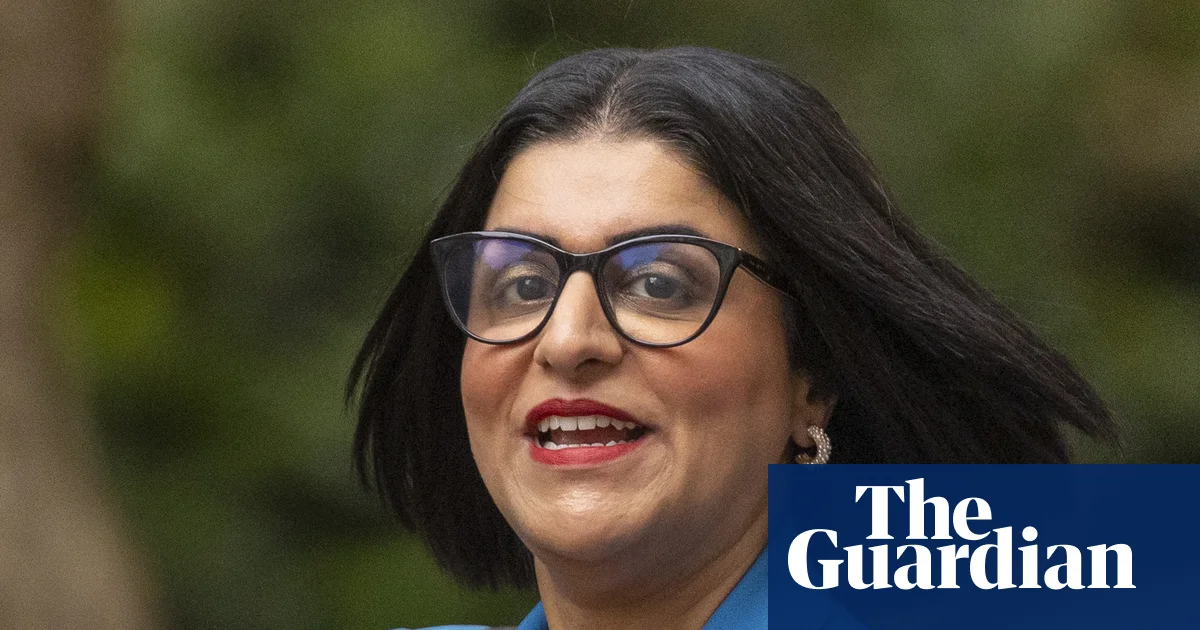
Shabana Mahmood has been accused of launching a “perfunctory political gimmick” by the Eritrean government in a row over the return of rejected asylum seekers and criminals. This was reported by Qazaqyia.kz citing The Guardian.
After the home secretary threatened to block all Eritreans from entering the UK unless a returns deal was agreed, the country’s embassy claimed the UK had failed to engage in “meaningful and appropriate” dialogue.
The spat began on Thursday morning when the Home Office claimed that the east African country had abruptly withdrawn co-operation on the return of unwanted citizens earlier this year.
From Thursday, diplomats from the east African country also face restrictions on their movement outside London while VIPs will be stripped of access to fast-track visas as preferential processing is scrapped.
It prompted a statement from Eritrea’s north London embassy “categorically” rejecting Mahmood’s claims.
“Despite Eritrea’s repeated requests for constructive discussion with relevant UK authorities on the dignified return of its citizens, the UK has shown no interest to engage in meaningful and appropriate dialogue,” it said.
Describing the home secretary’s decision as regrettable, the statement added: “The act is nothing more than a perfunctory political gimmick. The fact is, the UK has not issued a single visa to an Eritrean official since 2023.”
Eritreans were the most common nationality arriving by small boat in the year ending June 2026. Returns arrangements are vital for removing people who have been refused asylum and foreign criminals.
Mahmood said on Thursday morning: “Eritrea has had every chance to accept the return of criminals and those with no right to be in the UK. Unlike other countries, it has refused.
“My message to the Eritrean government is simple: take back your nationals or face a complete ban on your citizens entering the UK. I will not hesitate to impose further measures on other countries refusing to cooperate.”
The move followed similar threats of visa sanctions against Angola, Namibia and the Democratic Republic of the Congo in 2025.
Angola and Namibia subsequently agreed to cooperate with demands on migrant returns, while the Democratic Republic of the Congo faced visa restrictions before reaching an agreement with the UK in February.
In March, ministers also placed an emergency brake on visas for nationals from four countries after the home secretary accused them of exploiting Britain’s generosity to claim asylum.
Study visas for nationals from Afghanistan, Cameroon, Myanmar and Sudan were also halted, as were work visas for Afghans.
Just over 100 refused asylum seekers from Eritrea have been deported – a figure comprising less than 4% of the 2,626 people whose claims were rejected in the past four years. Nearly 6,000 Eritreans have reached the UK across the Channel in the year to June, the highest number of any nationality.
After the success of the previous sanction threats, Mahmood warned other countries that they faced similar visa restrictions if they continued to refuse to take back their criminals, illegal migrants and rejected asylum seekers.
India, Pakistan, Nigeria, Bangladesh, Somalia, Egypt and Gabon have been identified as resistant to taking back illegal migrants and could face sanctions.
Madeleine Sumption, the director of the Migration Observatory at Oxford University, said roughly 7,000 applications for asylum came from Eritreans, about 8% of the total.
About 84% are successful on first application and more will be successful on appeal, she said.
“There are different types of threats that can be made such as stopping student visas, or stopping visit visas. It will be interesting to see what kind of impact this has on the number of returns.”
Reacting to Mahmood’s announcement, one Eritrean asylum seeker said any returnees would “be put in prison and may never be able to get out”.
The advocacy group Justice for Eritreans condemned the announcement. “Many Eritreans have fled indefinite national service, arbitrary detention and severe human rights abuses,” it said. “These risks cannot be ignored for the sake of immigration targets. Refugee protection is a legal responsibility, not a political bargaining tool.”
UN experts say that the human rights situation in Eritrea continues to be dire. Mohamed Abdelsalam Babiker, the special rapporteur on human rights in Eritrea, said there were no signs of meaningful improvement in the country’s human rights situation.
“There remain reasonable grounds to believe that crimes against humanity continue in Eritrea,” he said when launching a report this year into the human rights situation.
“Regrettably, the core human rights issues that prompted the creation of this mandate 14 years ago remain mostly unresolved.
“The ongoing systematic, and widespread enforced disappearance and prolonged incommunicado detention without charge or trial, torture, and the persecution of political opponents, journalists, and members of religious communities remain central features of governance in Eritrea.”
Steve Valdez-Symonds, Amnesty International’s policy lead on refugee and migrant rights, said: “As Amnesty and others have documented, Eritrea has an appalling human rights record.
“It has not become any less unsafe following the election in this country of a Labour government in”