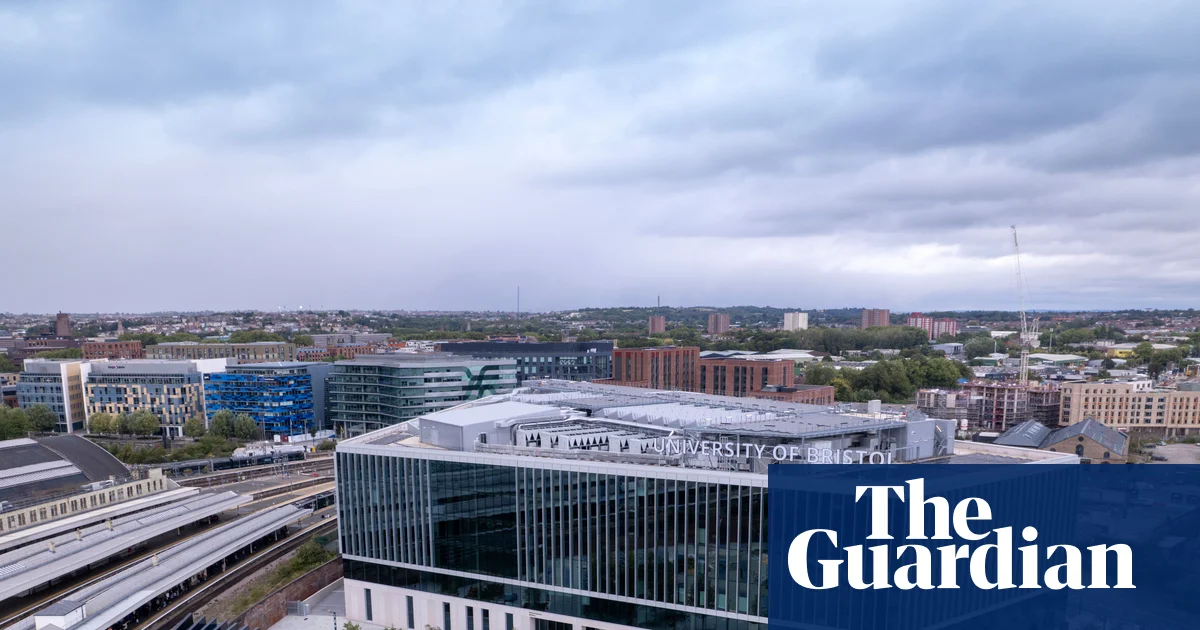
The University of Bristol's new £500m campus in Temple Quarter has opened its doors to students and the public. This was reported by Qazaqyia.kz citing The Guardian.
The campus, built on the site of a former postal sorting office, is located next to Temple Meads station. This will make it easier for students and staff who cannot afford Bristol's expensive housing market to commute.
The campus is designed to be "porous", with many areas completely open to the public, turning it into a front door to the university for Bristolians.
Campus features
The campus will be a hub for teaching and research in business, innovation, digital engineering, artificial intelligence, cybersecurity, advanced telecommunications, and quantum technologies. It features a rare example of a circular lecture theatre.
The university emphasizes that it is not just for academics but for all Bristol's citizens. A new entrance from the station to the campus has been created, and new footpaths and cycleways added.
Spaces for the community
The ground floor includes the Bristol Rooms and the Story Exchange, designed to bring academics and students together with business, public sector, and community organizations. Sessions on topics important to Bristolians, such as health inequalities, reparative justice, and the climate crisis, have already been organized.
Members of the public will be able to have a coffee on the campus, plug in a laptop and work, or use it as a meeting spot.
Funding
The main building cost £241m and is named the Sloane Robinson building, after a foundation set up by former Bristol University student and hedge fund manager Hugh Sloane, who donated £20m.
The West of England Combined Authority (WECA) has invested £35m into the campus and £25m into the station entrance and new paths. The university has acquired other parcels of land nearby to expand the campus in the coming years, bringing the total cost to £500m.
Regeneration project
The campus is a major part of one of the UK's biggest regeneration schemes, Bristol Temple Quarter, which will bring thousands of new homes, work spaces, and health and education centres to one of the city's most deprived neighbourhoods. The scheme is so important to Labour that it got a mention in Andy Burnham's first prime minister's questions.
Judith Squires, deputy vice chancellor and university lead for the TQEC, speaking in a garden space almost directly above Temple Meads' platform 15, said the new site puts the university "front and centre" in the city.
"We think it opens up lots of opportunities that we haven't yet explored," she said. "One of them will be for students who commute to Bristol, which I think may become an increasingly important trend given that rent is such an expensive cost. Living at home is becoming an increasing option for students."
Squires added that the campus is also accessible for staff and industrial partners who will come for research and collaboration.
She emphasized that they wanted to make it a "porous" place so people feel it is a space for them: "We wanted to make it a porous place so that people can feel it is a space for them, designed with them in mind. It's really great to have such an accessible front door to the university where everybody can find it, so we don't feel so cut off from the city."
Future plans
Behind the Sloane Robinson building, work on the wider Bristol Temple Quarter project is under way in the St Philip's Marsh area, currently a place of factories, waste disposal sites, and Bristol's fruit market. Though the new quarter will be 30 years in the making, workers are preparing the way for new homes, shops, and community spaces. A bridge is to be built from TQEC to link to it.
Helen Godwin, the mayor of the West of England, said the opening of the campus was a major milestone for Bristol: "Our investment in Bristol Temple Quarter will unlock a giant leap forward for the West of England."