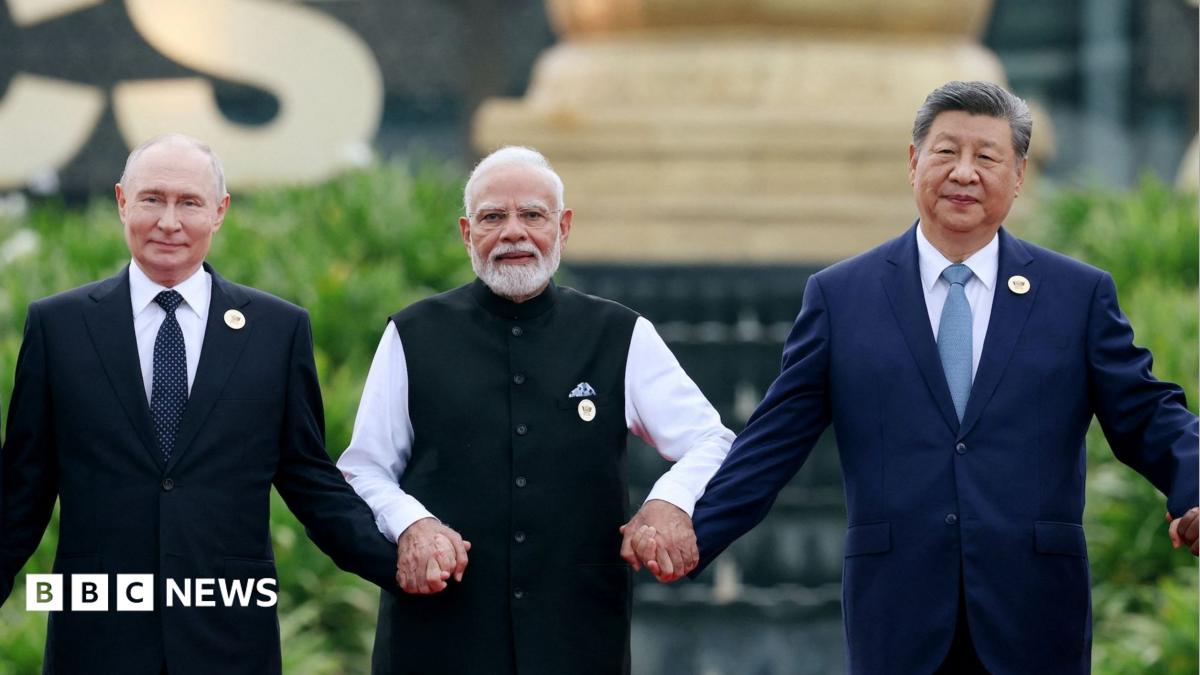
The Brics summit took place in Delhi, attended by Chinese President Xi Jinping, Russian President Vladimir Putin, Iran's President Masoud Pezeshkian, Abu Dhabi's Crown Prince Sheikh Khaled bin Mohamed bin Zayed Al Nahyan and South African President Cyril Ramaphosa. This was reported by Qazaqyia.kz citing BBC News.
Indian Prime Minister Narendra Modi said at the summit that the Brics group is "not against anyone". He urged participants to become "rule-shapers", not "rule-takers". However, these leaders are hardly natural allies: they have histories of border disputes and even military confrontations. In 2020, India and China engaged in a deadly clash along their disputed border, while Iran and the UAE have been on opposing ends of the war in the Middle East.
The summit adopted the "New Delhi Declaration", but it lacks clear solutions on many issues. The declaration urges "maximum restraint" on the war in the Middle East and condemns "attacks on civilian infrastructure and peaceful nuclear facilities" but assigns no blame. It reiterates support for a two-state solution and opposes forced displacement of Palestinians. It makes no mention of Russia's war in Ukraine.
On trade, caution is also evident: it lists concerns over "indiscriminate rising tariffs" but stops short of naming the US. This may be an attempt to avoid Washington's ire. Donald Trump has previously called the group's proposals, including potentially linking central-bank digital currencies for cross-border trade, "anti-American".
On the sidelines of the summit, Iran's Pezeshkian and Abu Dhabi's Crown Prince held talks. This is the highest-level face-to-face meeting known between the two countries since the war began. As Iran tries to withstand US sanctions, Pezeshkian pressed for deeper economic ties with Brics members, including Malaysia, India and Ethiopia.