Kazakhstan's participation in the BRICS Plus summit in New Delhi acquired a clear economic dimension. President Kassym-Jomart Tokayev said Kazakhstan's trade turnover with BRICS members and partners reached about $72 billion in 2025, and set the task of further diversifying trade, investment and transport links. This was reported by Qazaqyia.kz citing Kursiv Media.
Eurasian connectivity occupied a special place in his speech. Kazakhstan intends to increase transit traffic from almost 40 million to 100 million tonnes per year and advocates linking the Trans-Caspian route, the Belt and Road initiative and the North-South corridor. Separately, Tokayev proposed using the capabilities of the BRICS New Development Bank to finance commercially viable projects.
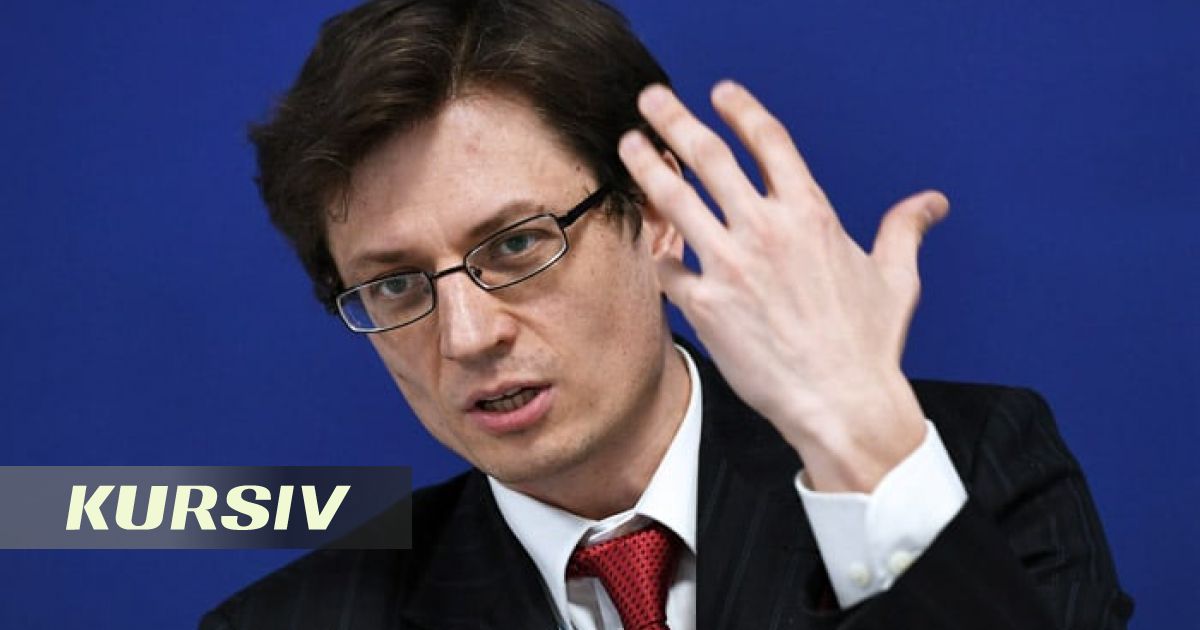
For Kazakhstan, this agenda has additional significance as a member of the EAEU and a country located between the largest markets of Eurasia. Economist Yaroslav Lissovolik, founder of BRICS+ Analytics, explained how BRICS+ can connect regional integration blocs, expand South-South trade and create new financial and transport opportunities for Kazakhstan.
BRICS+ as a platform for regional blocs
– You view BRICS+ not only as an association of individual states, but also as a platform for interaction between regional integration blocs. Kazakhstan simultaneously participates in the EAEU and is a BRICS partner. Can such a position give the country additional economic advantages?
– I largely view BRICS+ not simply as interaction between individual developing countries, but as a platform for economic cooperation between regional integration blocs of the Global South.
This refers to associations such as the Eurasian Economic Union, MERCOSUR in Latin America, the Southern African Customs Union, the African Continental Free Trade Area, ASEAN and other regional blocs. On the basis of BRICS+, they can gradually move toward greater mutual openness and trade liberalization.
This is especially important for Kazakhstan, since the trade policy of the world economy is increasingly implemented not only by individual states but also by regional integration associations. As one of the key participants of the EAEU, Kazakhstan can gain additional opportunities from the Union's interaction with other economic blocs of the Global South.
In this context, the line outlined by President Tokayev to expand EAEU interaction with BRICS looks economically justified. Moreover, Kazakhstan, as EAEU chair, is already advancing work on a free trade agreement with India.
The share of developing countries and BRICS+ economies in the world economy is growing, and their growth rates are higher than those of developed states. Therefore, Kazakhstan has significant potential to take advantage of further growth in trade between Global South countries.
There is also a second important track related to regional development banks. Kazakhstan actively participates in the activities of the Eurasian Development Bank, whose headquarters is located in Almaty. This creates opportunities for co-financing projects with the participation of the EDB and the BRICS New Development Bank.
Thus, Kazakhstan receives several channels of interaction at once: through the EAEU, development banks and expanding trade with other regions of the Global South.
Trade and transport as priority areas
– President Tokayev named trade, infrastructure, investment and transport connectivity among cooperation priorities. Which areas can give Kazakhstan the most noticeable economic effect?
– From the point of view of cooperation with BRICS countries, I consider trade and transport the most priority for Kazakhstan.
Transport is of particular importance for greater connectivity of Kazakhstan with world markets and access to the largest ports of Eurasia. Here one can use the potential of BRICS and, above all, instruments such as the New Development Bank, to finance transport connectivity projects.
In this regard, the economic agenda that Kassym-Jomart Tokayev presented in New Delhi corresponds to the opportunities that are opening up for Kazakhstan today. The emphasis on transport connectivity can strengthen the country's transit role and expand access of Kazakh products to external markets.
Russia, India and China are of key importance for Central Asian countries in terms of access through transport corridors to the ocean coast and the largest port capacities of Eurasia.
Therefore, the North-South corridor, Chinese infrastructure initiatives and other routes need to be linked to a greater extent on a common Eurasian platform. For Kazakhstan, this means the ability to bring its own products to world markets more freely.
The second area is related to trade. BRICS is increasingly becoming one of the drivers of trade growth between the largest economies of the Global South.
Despite growing protectionism, trade turnover between BRICS countries continues to grow. In the future, one can expect the emergence of additional mechanisms for mutual market opening and new trade agreements.
For Kazakhstan, work through the EAEU is especially important here. Additional opportunities are also opening up in relations with ASEAN, including Indonesia.
The potential of South-South trade significantly exceeds current figures. Therefore, Kazakhstan's participation in this process is a significant economic advantage for the country.
Financial infrastructure and cross-border settlements
– BRICS is developing financial infrastructure and cross-border settlement mechanisms. How useful can they be for Kazakhstan, which simultaneously trades with Russia, China, Europe and other markets?
– The development of financial infrastructure for cross-border settlements by BRICS gives Kazakhstan greater variability in terms of realizing its investment and trade potential.
Additional payment platforms and broader use of national currencies allow Kazakhstan to implement its foreign economic strategy in several directions at once and work with various trading partners.
It is precisely optionality that I would call one of the key advantages