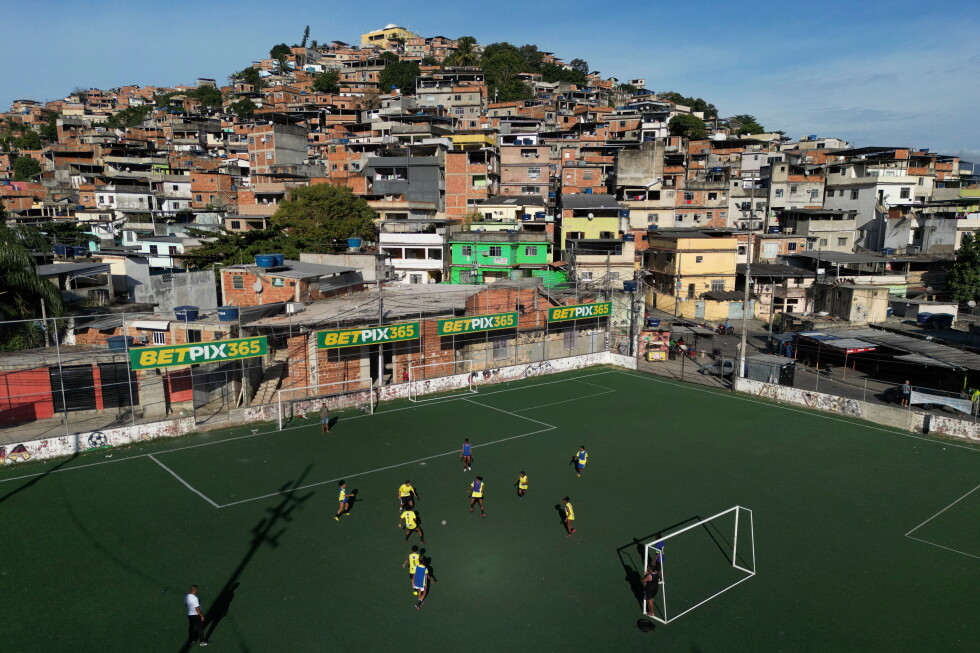
When World Cup season descends upon soccer-mad Brazil, green and yellow banners decorate restaurants, bars and apartment buildings, streets are painted with flags and soccer balls, and discussions of the beloved national team's games are ubiquitous. This was reported by Qazaqyia.kz citing Associated Press.
But this year, another topic has taken center stage: the prevalence of ads for bets on the games, even as the country grapples with a surge in gambling which leaves some with crippling debt and has led to the number of people seeking care for addiction more than doubling in the past five years, according to Brazil's health ministry.
Since the FIFA World Cup began, the percentage of Brazilians placing bets has more than tripled, rising from 11% in May before the tournament kicked off to around 35% at the end of June, said Brazilian fintech company Klavi in a study based on a sample of 1.2 million people.
Advertisements extending beyond traditional commercial breaks to include live presenter endorsements and real-time odds promotions have sparked a fresh wave of indignation, with politicians across the political spectrum calling for tighter controls.
When sports betting was made legal in 2018, rampant advertising and sponsorship coupled with an unregulated market resulted in a turmoil that prompted the government to usher in new regulations in 2023. Earlier this week Brazil's Finance Minister Dario Durigan said the government would announce new measures to increase regulation.
In a statement to The Associated Press on Thursday, Brazil's Finance Ministry said it had asked two media outlets and four betting operators to provide explanations regarding content that may have breached laws. Authorities also ordered the immediate suspension of any advertisements found to be in violation of the current regulations, the ministry added.
Brazil has become the third-biggest market in the world for sports betting, following the U.S. and the U.K., a report by data analysis company Comscore said in 2023.
Betting and gambling are estimated to cost Brazilian society 38.8 billion reais ($7 billion) annually and increase suicide and depression, according to a 2025 study by the non-profit Insti.