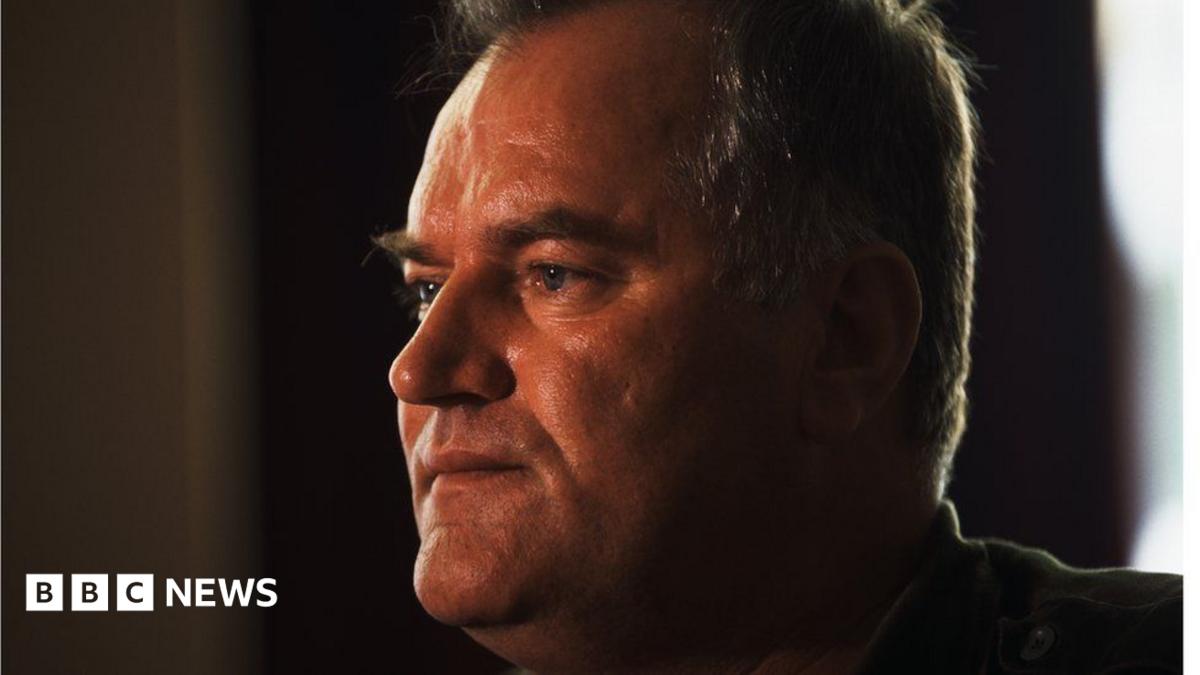
Ratko Mladić, the Bosnian Serb army commander known as the "Butcher of Bosnia", has died at the age of 84. This was reported by Qazaqyia.kz citing BBC News.
Mladić oversaw a brutal campaign of "ethnic cleansing" as Yugoslavia splintered in the 1990s. The phrase was a chilling euphemism for the massacre of tens of thousands of men, women and children - in pursuit of what he saw as a chance to fulfil the historic destiny of Greater Serbia.
His fanaticism made him a hero to his people. He told them their Muslim neighbours planned to "impale Serbs, burn them alive, crucify them and put out their eyes".
He led the long and bloody siege of Sarajevo; killing and maiming its citizens in a daily hail of shells and sniper-fire. When his troops overran the UN-declared safe area of Srebrenica, he promised they were safe. Later, 8,000 men and boys were led to unmarked graves.
He and his political counterpart, Radovan Karadžić, ripped Bosnia apart - committing acts of genocide and vicious crimes against humanity. The barrel-chested warlord displayed no remorse, giving relatives of his victims a cheery thumbs-up at his eventual trial in the Hague.
"Borders are drawn in blood," he is reported to have said. "And states marked out with graves."
Ratko Mladić was born on 12 March 1942 in a small mountain village near Sarajevo. Two years later, his father was killed fighting for Tito's partisans. Mladić graduated from officer school in 1965, rising rapidly through the ranks, commanding army units in Macedonia and Kosovo.
Tito's death in 1980 was the beginning of the end for Yugoslavia. In June 1991, Croatia declared independence. Mladić was sent in with the Yugoslav army in an effort to re-impose control. He gained a reputation for courage bordering on recklessness, ever-present in frontline trenches and personally leading expeditions to clear mines.
As the war spilled over into Bosnia, his force switched uniforms - pledging support for the breakaway Republika Srpska. He saw the Muslim population as invaders - the result of an ancient occupation by Ottoman Turks.
So began the siege of Sarajevo - the Bosnian capital defended by a rag-tag multi-ethnic force of Serbs, Croats and Bosniaks. With his troops dug in on surrounding hillsides, the blockade lasted 1,425 days. On 22 July 1993, nearly 4,000 shells rained down on its terrified people. By the end of the siege, 13,000 were dead from shell-fire or a sniper's bullet; almost every building in the city either damaged or destroyed.
In the villages around the capital, legions of men were killed or carted off to prison camps; thousands of women were mercilessly raped.