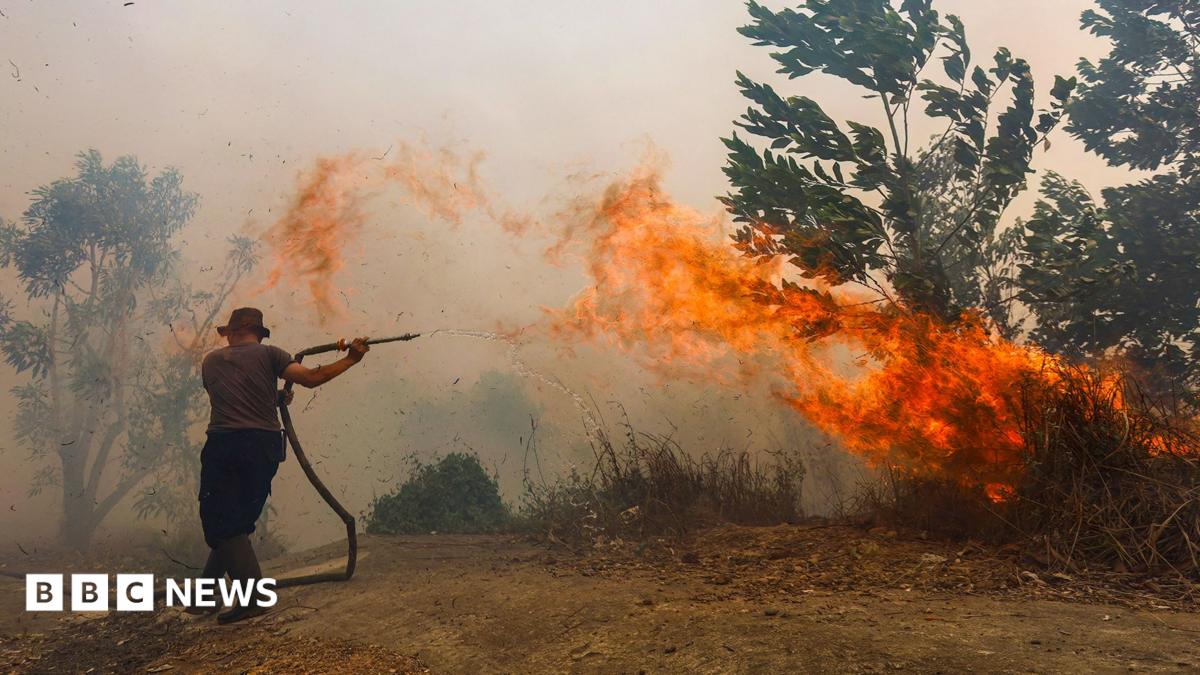
The toxic haze from wildfires in Indonesian Borneo has blanketed large parts of Southeast Asia, causing severe health impacts on local residents. This was reported by Qazaqyia.kz citing BBC News.
Dianyra Eka Nastiti, a mother of three in Palangkaraya, says she hears a rattling sound in her baby's chest at night. "She was hospitalised for bronchopneumonia when she was just a month and a half old, and every single night I worry: Will my child cough tomorrow?" she says.
According to open-access satellite platform Nusantara Atlas, some 1.9 million hectares have burned across Indonesia since the start of the year – an area roughly the size of the US state of New Jersey, or the entire landmass of Fiji. One million hectares are thought to have burned in September alone.
The toxic fallout has drifted as far as Singapore, Malaysia and the Philippines. As of mid-October, Indonesia's Health Ministry had recorded more than 277,000 cases of chronic coughs and acute respiratory infections. More than 62,000 of those were infants and toddlers under the age of five.
Natari Victoria, 22, was admitted to a health centre in Palangkaraya after suffering from a cough for more than a week. "The forest fires have had a huge impact, especially on everyone's health. I have young cousins, including babies, who are coughing too. It's really taking a toll on them," she says.
"Here in Central Kalimantan, especially in Palangkaraya, the sky has turned yellow and hazy," says Riduan, head of the Palangkaraya Health Office. "So what are the residents actually breathing in? It's not fresh oxygen; it's carbon dioxide and pollutants. And what happens as a result? The body – specifically the brain – doesn't get enough oxygen."
In Palangkaraya, official advice is to stay indoors. But Dianyra says this is unrealistic: "I still need to buy vegetables, stock up on food, purchase school supplies, and take care of other necessities. It's simply not possible, and I feel like the people who say things like that have no idea what is actually happening here."
Lola Macitri, 37, from the rural village of Ramang, 50km north of Palangkaraya, has also been housebound. As the smog has deepened, she and her family spend most of their time indoors. Her children, like many others in Indonesia's more haze-affected areas, have been doing school classes online, while adults struggle to manage half-a-day's work in the poisonous air.
"If you ask whether we are afraid of the health risks, of course we are. But where else can we go?" says Macitri. "We just have to endure and stay strong through this situation, because there is simply no other option."
The government is under mounting pressure to do more to stop the fires. Authorities insist they have pursued a range of measures – from aerial waterbombing to experimental weather modification. Last week, the Indonesian government said it had deployed more than 60,000 personnel to carry out a "land operation", claiming they'd achieved an 80% success rate in extinguishing new fires.
"At this point, I think we need to use every safe and effective option available to suppress the fires," says Dr Nisa Novita, a forestry expert and peatland researcher at Indonesian conservation NGO Yayasan Konservasi Alam Nusantara (YKAN). "It's a bit like trying to save a sinking ship: we need to act urgently, use whatever tools can help, and prevent further damage while we still can."
But those resources are fast depleting for responders on the ground.