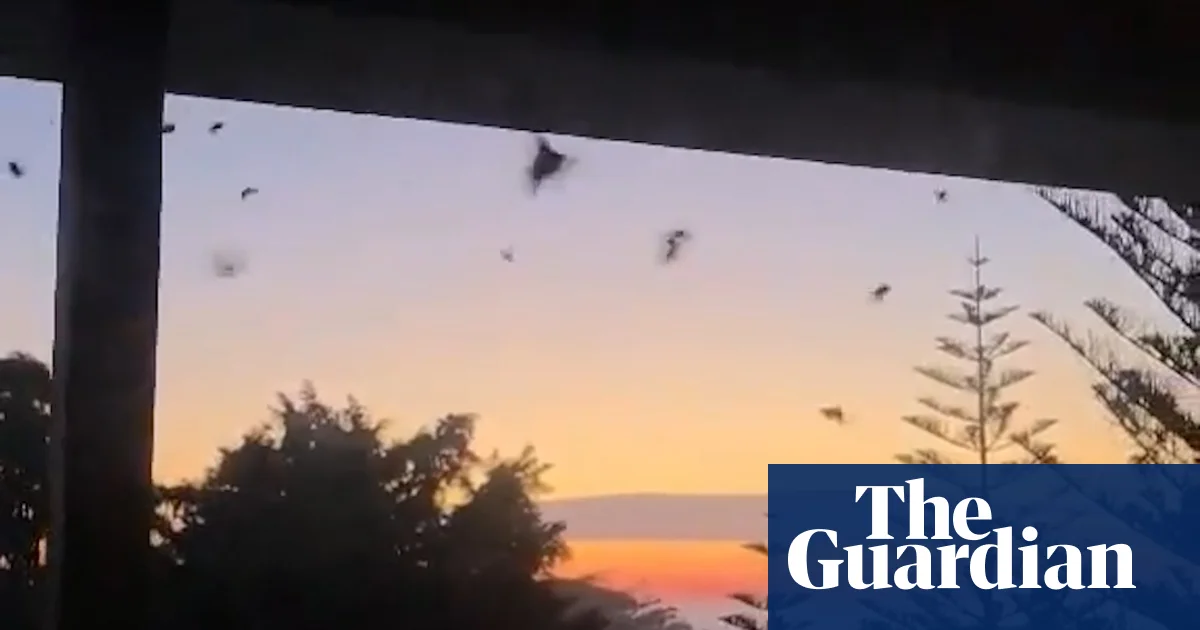
Swarms of bogong moths have surprised New South Wales residents over the last few days, with experts saying sightings of the endangered native insect are cause for excitement rather than alarm. This was reported by Qazaqyia.kz citing The Guardian.
Hundreds of moth sightings in coastal areas were posted over the weekend to the iNaturalist page for Bogong Watch, a citizen science initiative run by Invertebrates Australia.
Spring marks the beginning of an annual bogong moth migration: huge numbers of the insects migrate up to 1,000 km to a small number of cool caves in the Australian Alps, where they spend the summer escaping the heat.
Bogong Watch project manager Linnea Emneby said their bogong "sentinels" — dozens of volunteers spread in all directions from Mount Kosciuszko, who use non-lethal bug lanterns to monitor the moths — were reporting high numbers of the insects. Three NSW households each reported dozens of moths on Monday, while one sentinel sighted more than 200 bogongs on Sunday night, she said.
Emneby said the moths — which are about the size of a 50-cent piece and weigh a third of a gram — were important both "culturally and ecologically", playing a critical role as pollinators and also a key food source for the critically endangered mountain pygmy possum.
"We're absolutely thrilled with what we're seeing," said Dr Marissa Parrott, a reproductive biologist at Zoos Victoria, which runs a separate citizen science program Moth Tracker. "The reports just keep coming in … one of my team members was in tears with excitement this morning."
Sightings of the endangered moth had increased over the last two years, but "this year has blown them out of the water", Parrott said. "In September alone … we've had more bogong moths sightings come in than all of last year.
"We're hoping this means a stronger recovery of this endangered species.
"Those big numbers really are in NSW and the ACT — Victoria is still behind," Parrott said, adding that "wetter, cooler weather" had likely yielded favourable conditions for the moths.
"They do come in waves," Parrott said, with the insects taking days to weeks to complete their migrations to the Alps.
"This is what should have happened in the past, seeing these big swarms of moths coming through Canberra, Sydney, Newcastle and Melbourne, across those south-eastern Australian migratory zones."
An estimated 4 billion moths used to arrive in the Alps each year, until the population collapsed catastrophically — by up to 99.5% — between 2017 and 2019.
They were once found in huge numbers, periodically swarming into Parliament House in Canberra. During the closing ceremony of the Sydney Olympic Games in 2000, a swarm of bogongs drawn by stadium lights was so huge that weather forecasters mistook it for a rain cloud.
The moth has been listed as endangered by the International Union for the Conservation of Nature since 2021, but is not listed as a threatened species under federal conservation laws.
"They migrate generally more inland, but they can move around depending on weather and wind," Parrott said. Moth Tracker sightings from last year showed that "they even get blown across to New Zealand".
The nocturnal moths are the only invertebrate known to navigate using a map of the stars as a compass. "Hopefully the ones blown off course will be able to navigate back safely," Parrott said.
The strongest El Niño on record, and the drier, hotter conditions the climate pattern can bring to Australia, was cause for concern, Parrott said. "While the [bogong] numbers are looking good now, and I think that's something we can all celebrate, we do worry what's going to happen over the next couple of years."
For members of the public who encounter bogongs on their migration, experts suggest turning off unnecessary outdoor lights, refraining from insecticide use, and uploading sightings to the Moth Tracker or Bogong Watch platforms.
"If any come into the house, gently place them back outside," Parrott said. "Females can have 2,000 eggs, so every moth is precious.
"They don't do any damage, they don't eat clothes. They pollinate the plants as they go through, so that's a big help for people who love their gardens.
"The moths are gentle, beautiful little animals that will move on on their own."