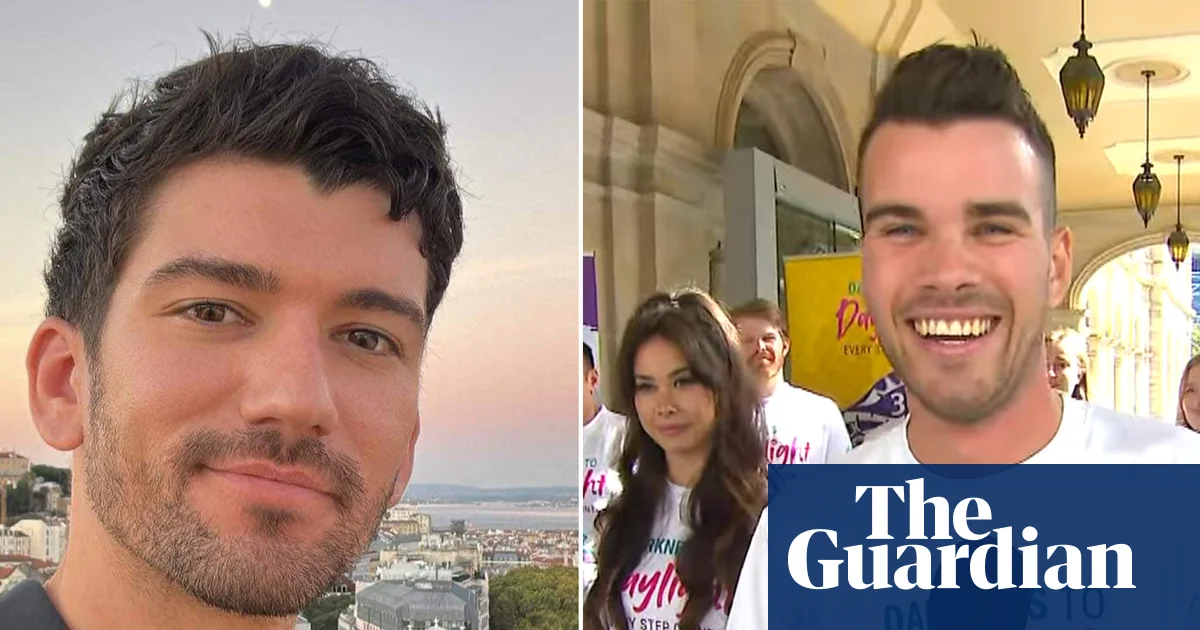
A bullet hole left in a bedroom door and DNA found in the barrel of the firearm have been scrutinised in court as Beau Lamarre-Condon's double murder trial continues in Sydney. This was reported by Qazaqyia.kz citing The Guardian.
Lamarre-Condon, 31, has been accused of fatally shooting Jesse Baird and Luke Davies with his police service weapon in Baird's Paddington home on 19 February 2024.
He has pleaded not guilty to two counts of murder and one charge of aggravated break and enter.
The prosecution argues the policeman disguised himself as an UberEats rider before entering Baird's home, shooting him twice – in the base of the neck and the right temple – and then shooting Davies through the bedroom door.
But the defence alleges they were killed in two separate incidents when Lamarre-Condon was acting in "self-defence". During the tussle with Baird, the firearm was flung across the room where it was picked up by Davies, who later shot himself in a struggle with the policeman, the defence argues.
Defence lawyer John Stratton SC cross-examined crime scene officer Greg Moon on Tuesday, questioning the prosecution's version of events.
Stratton pointed to a swab taken from the barrel of the alleged murder weapon, which returned a DNA profile that partially matched Davies. He then noted the hole in the bedroom door, through which the prosecution alleges Davies was shot, tested negative for blood.
Stratton suggested: "The possibility or likelihood of biological material finding its way from a wound of the deceased through a hole in the door less than a centimetre in width and into the barrel of a gun … approaches zero."
But Moon told the New South Wales supreme court he disagreed.
"I believe it can still happen," he said.
The defence does not dispute the couple were shot.
A diagram from Dr Kendall Bailey, who conducted the postmortem examinations of both men, suggested a bullet entered Baird's body at the base of his neck and exited just below his lip.
Asked by crown prosecutor Brett Hatfield SC about the effect of this wound, Bailey told the jury it did not pass through any major vessels of the neck or the vertebral column or windpipe.
But that did not mean it was insignificant, the court heard.
"It still would be a very nasty injury and that fracturing of the jaw is a very nasty injury," she told the court.
While it is potentially survivable, those kinds of injuries can be painful and cause some to pass out, though others may not lose consciousness, Bailey explained.
Hatfield then asked if person with those injuries could speak.
The bullet went through the jaw and the base of the tongue, Bailey said, adding: "I don't think anyone with that injury would be making any meaningful vocalisations."
"They could make a noise but that would be nothing that would be coherent," she said.
Bailey then explained the shot that entered the temple would go through the brain, where it would incapacitate a person.
Asked if that person would then be able to fling a gun to the other side of the room, she said the body could make some involuntary movements but "I don't think that person is making any conscious movements".
CT scans of Baird and Davies' skulls showing the damage caused by the bullets were presented to the jury on Thursday.
Forensic radiologist Dr James Raleigh explained to the court there was a hole in the right side of Baird's head at the temple region and multiple small bone fragments "presumably from that damage were run in a line across the inside of the skull".
Davies' wound was located in his face just above the left eyebrow, which Raleigh agreed was consistent with a bullet hole.
Two wounds on Davies' thigh were consistent with a "single-bladed weapon", Bailey said.
But she agreed those injuries likely took place after or at the time of death.