Current tariffs for biogas power plants in Kazakhstan do not allow attracting investors and launching new projects, according to Yevgeny Churdalev, sales director for CIS countries at Jenbacher & Waukesha Gas Engines. This was reported by Qazaqyia.kz citing Kursiv Media.
According to him, the maximum price for biogas power plants at auctions is 32.23 tenge per kWh, while for waste incineration plants (thermal waste disposal facilities) it reaches 130 tenge per kWh.
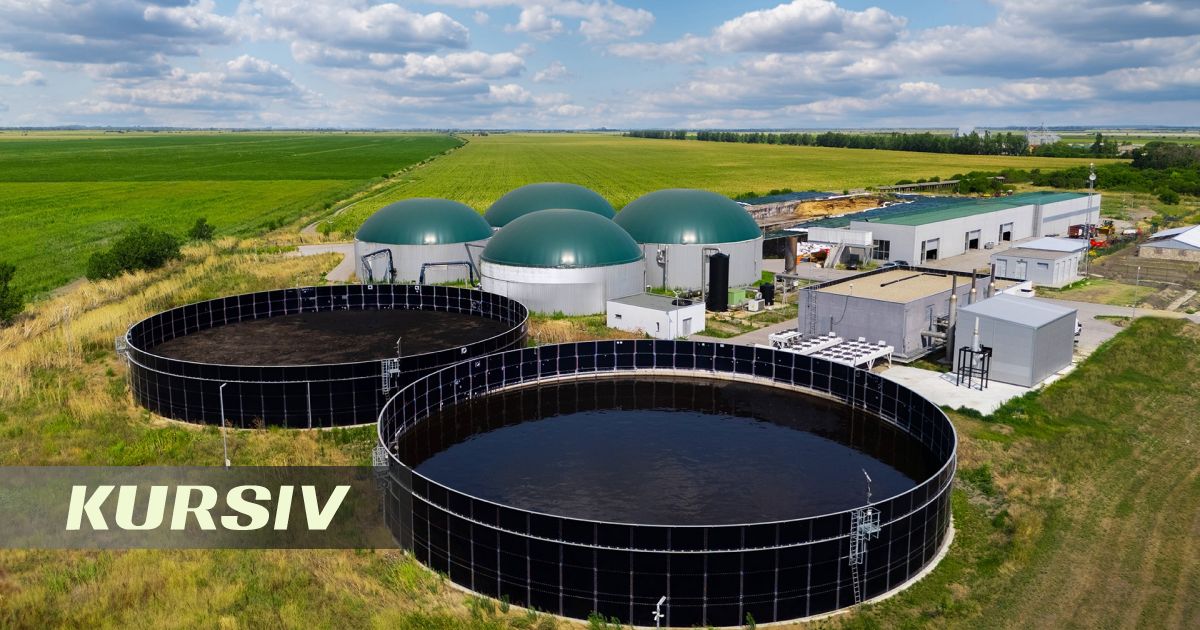
Biogas plants generate electricity and heat from organic waste – manure, food waste, sewage sludge, or landfill gas. In special sealed tanks, waste decomposes without oxygen, producing biogas with a high methane content. After purification, the gas is used in generators to produce electricity, and the remaining material can be used as organic fertilizer.
"Today, landfill gas utilization with energy generation is a directly prescribed option in landfill equipment. What applied barriers do we see?… First of all, of course, the tariff policy at auctions. 32 tenge per kWh is 5 tenge higher than the grid tariff for industry, and this is dramatically low to ensure the payback of a special energy facility, where generation itself is only 30% of CAPEX, 50-80% are auxiliary systems, and in OPEX it's about the same," Churdalev said at the X Eurasian Business Forum Green energy & Waste Recycling.
According to him, this is why only a small number of biogas power plants operate in Kazakhstan. Among other restraining factors, he cited the unstable composition of biogas and the presence of impurities, requiring complex purification. In addition, the industry's development is hindered by limited access to financing, lack of established mechanisms for carbon units trading, and high initial costs for creating infrastructure and gas collection systems.
As Churdalev noted, Jenbacher accounts for about half of equipment sales for generating electricity and heat from special gases. He explained that capital expenditures (CAPEX) in such projects include creating gas collection systems (wells, pipelines, and other infrastructure), gas purification and drying, purchasing gas piston units with generators, obtaining permits, connecting to power grids, and design work.
Operating expenses (OPEX) consist of costs for maintenance and repair of equipment, including major repairs, chemicals and materials for gas purification, personnel salaries, insurance, and electricity for own needs.
"What I really like about Kazakhstan's regulation – it's advanced regulation in Central Asia for special gases, but at the same time there is a funny contrast that in Uzbekistan the volume of work on special gases is an order of magnitude higher," he said.
Churdalev noted that entrepreneurs wishing to engage in energy production from gases should consider the specifics of the issue.
"Kazakhstan's energy sector is primarily built on the spread between the cost of gas and the cost of energy that can be obtained from that amount of gas. And in the case of special gases, we add to the classic energy spread opportunities that we get thanks to tariffs, thanks to offset, thanks to solving problems related to changing the waste class," he said.
According to him, 11% of methane emissions in Kazakhstan come from various wastes.
Kazakhstan needs to increase tariffs offered to investors wishing to implement biogas power plant projects, said Alma Zhukenova, a representative of KOREM, in 2025.
In her opinion, investors who were not particularly interested in building biogas plants at 32.23 tenge per kWh would rather switch to building waste incineration power plants at 130 tenge per kWh than engage in biogas production.
According to her, biogas plants, in addition to electricity, can provide ordinary gas and organic fertilizers. Among her proposals were subsidizing the costs of building biogas plants – covering 50% of costs for equipment and machinery for processing agricultural waste, changing the tariff for electricity generated by biogas plants (through an amendment to the order of the Ministry of Energy), and subsidizing the cost of fertilizers produced by them from 2026.
Zhukenova also proposed extending the implementation period for biogas projects from 36 to 60 months, following the example of hydroelectric power plants. She recalled that historically, the largest number of renewable energy auctions have not taken place since 2018 precisely for biogas plants – four, including one repeated auction.