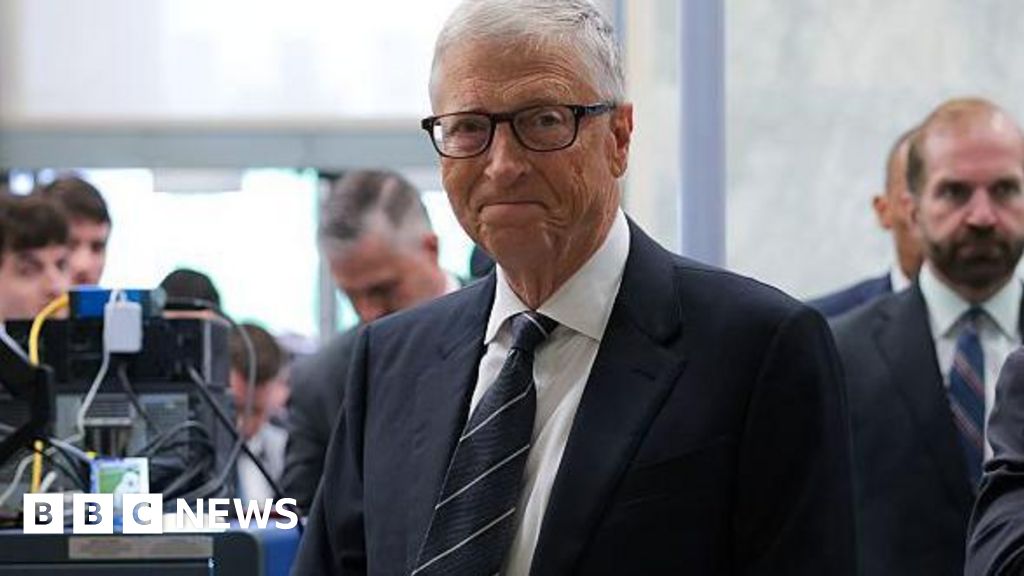
Bill Gates, the co-founder of Microsoft and one of the world's most prominent philanthropists, is being questioned by a congressional committee about his past association with the late convicted sex offender, Jeffrey Epstein. This was reported by Qazaqyia.kz citing BBC News.
Gates, who has appeared voluntarily in Washington, said he welcomed the opportunity to answer questions about his relationship with the disgraced financier before the House Oversight Committee. "I hope my testimony is helpful to the work - important work - of the committee to find justice for the victims," Gates told reporters as he walked into a hearing room, while avoiding further questions.
Epstein killed himself in a jail cell in 2019 while awaiting trial. His long-time friend and associate, Ghislaine Maxwell, is serving a 20-year prison term for her part in his crimes.
Gates's connection to Epstein came to wider public attention after the US Department of Justice (DOJ) recently published more than three million pages of documents linked to the criminal investigation of Epstein. Gates's name appeared thousands of times.
He has repeatedly denied any wrongdoing and rejected the idea that he knew anything about Epstein's illegal activity. But in a TV interview earlier this year, he did acknowledge he exercised poor judgement in meeting Epstein. "I was foolish to spend time with him. I was one of many people who regret ever knowing him," he said.
Among the material released by the DOJ was a photograph that appears to show Gates near an aircraft with Epstein's pilot present. Gates has said he travelled with Epstein on a private jet - one of those facts that have haunted many who have been tarnished by Epstein.
Other images show Gates posing with his arm around Epstein and a number of unidentified women.
Documents also include draft emails attributed to Epstein, containing a series of unverified and disputed claims about Gates's personal life. These include allegations that Epstein facilitated "illicit trysts" with "married women" for Gates, that the Microsoft co-founder had contracted a sexually-transmitted infection (STI) from what Epstein called "Russian girls", and that he had "helped Bill get drugs" to treat it.
A separate email alleged that Gates sought to "surreptitiously" give his then-wife Melinda antibiotics to protect her from the same infection. Gates strongly denies these claims but has admitted having had affairs with two Russian women.
So, what are three big questions Epstein could be asked by the congressional committee?
First question: Why did Gates continue the relationship with Epstein? Gates's core explanation for his association with Epstein has been that the relationship was transactional, centring on discussions about philanthropy and potential funding for his foundation that ultimately came to nothing. However, their association began in 2011 – three years after Epstein was convicted in Florida on two charges of soliciting prostitution, including one involving someone under the age of 18. They still had dealings in 2014. The lead Democrat on the committee, Robert Garcia, told reporters: "Bill Gates was still communicating with Jeffrey Epstein, even after some of this kind of horrific information about him and what he was doing was public to a lot of folks, and so we want to ask Mr Gates, why continue that relationship?"
Second question: What did Gates know about Epstein's past? Gates told staff at his foundation in February that he said he was aware of some "18-month thing" that had limited Epstein's travel, but that he didn't properly check his background. Lawmakers are expected to probe how plausible it is that Gates – one of the titans of the information sphere - would have remained largely incurious about the details of Epstein's background, including facts that were already in the public domain, during a period when the two men appeared to spend significant time together.
Third question: Did Epstein try to influence or blackmail Gates? In its letter inviting Gates to sit for an interview, the committee said it believed he would have useful information concerning the "ways in which Mr Epstein and Ms Maxwell sought to curry favor and exercise influence to protect their illegal activities". Epstein may not have just been looking for powerful friends, but also ways of leveraging those contacts for other, illicit reasons. Congressman Suhas Subramanyam, another Democrat on the committee, told the BBC: "We want to know whether Epstein wanted to influence Gates or even whether he blackmailed Gates in any way like he allegedly did with others."
From Gates's point of view, his stated motivation was raising money for his foundation. However, the committee is exploring whether Epstein could have used personal details he gathered about Gates, including the alleged STI, to pressure him.