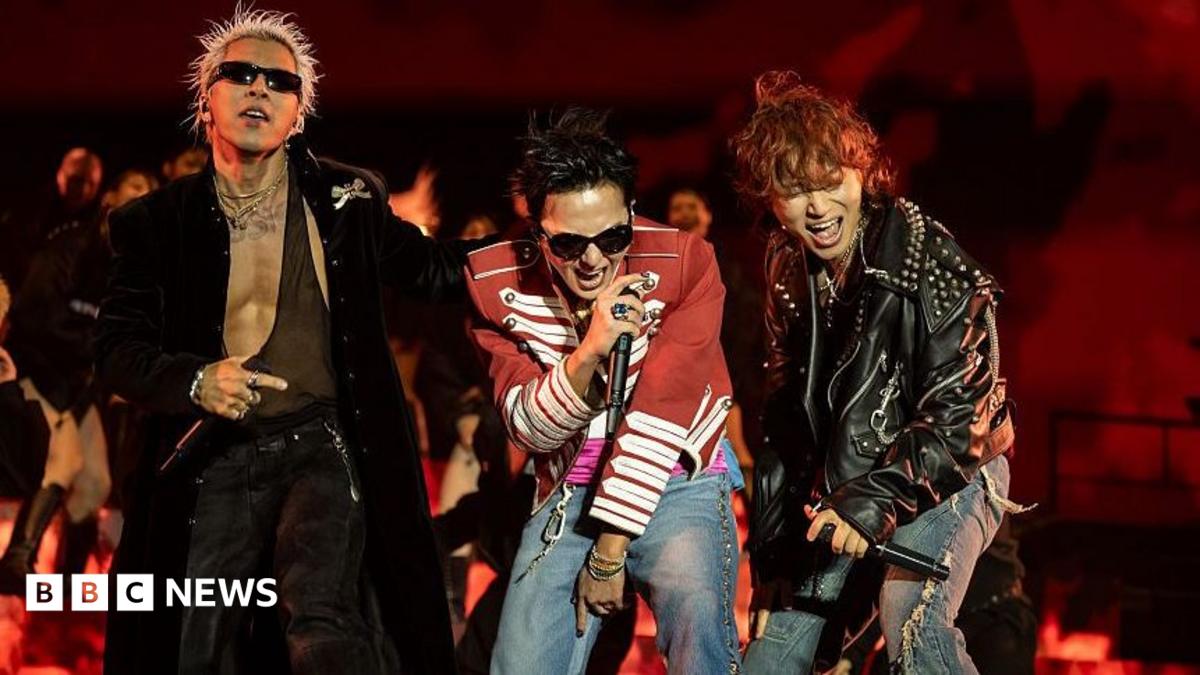
South Korean group Big Bang performed at Tottenham Hotspur Stadium in London on Saturday as part of their 20th anniversary world tour. This was reported by Qazaqyia.kz citing BBC News.
The near-capacity venue was filled with a sea of glowing yellow crowns and thousands of voices chanting in Korean. The opening synth riffs of Fantastic Baby shattered the stadium air as the band emerged in their trademark high-fashion, glittering outfits.
It was a return 14 years after their first major European shows and after a decade marked by military service, member departures and legal scandals. The group performed as a trio comprising G-Dragon, Taeyang and Daesung.
In 2011, Big Bang became the first K-pop group to win a major Western music award when they took home the newly created Worldwide Act prize at the MTV Europe Music Awards. When they made their European debut at Wembley Arena in December 2012, a second show was added after the first sold out in under two hours.
In 2016, Forbes estimated Big Bang had earned $44m (£33.2m) over the previous year, making them the first K-pop act to appear on its Celebrity 100 List.
"When it comes to the global market for K-pop, there is no doubt Big Bang made a huge contribution," says Dr Haekyung Um, senior lecturer in music at the University of Liverpool. "Earlier acts were popular within Asian markets, but Big Bang were true international stars. I would call them the Kings of K-pop, just as we call Michael Jackson the King of Pop."
Music critics say Big Bang broke the mould. They wrote and produced their own songs, shaped their own streetwear image and blended genres ranging from hip-hop and R&B to trot, a traditional South Korean folk genre.
"They were different because they didn't follow the uniform K-pop cookie-cutter pretty boy phase," explains Sharon, who was visiting London from Singapore. "They went harder on their music, a bit more hip-hop. They did what they had to do, and they are the absolute OGs for me."
The shift set them apart across Asia and helped establish the blueprint for modern self-produced acts such as BTS.