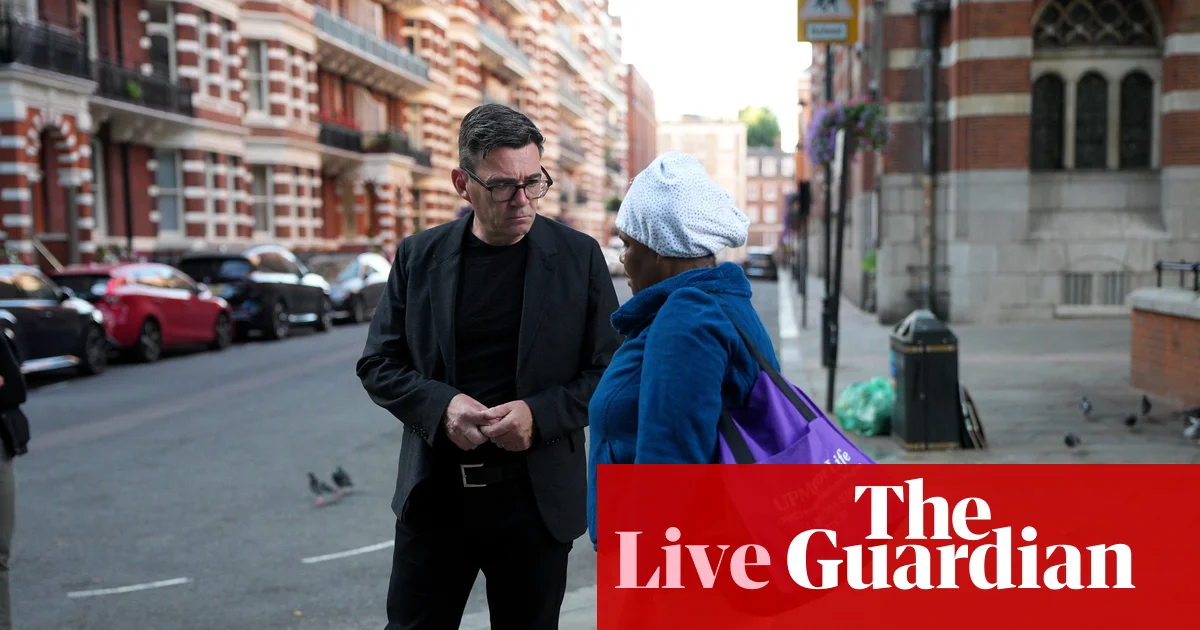
Andy Burnham has admitted government funding "may not fully be enough" to achieve his aim of offering a place to stay to every rough sleeper by Christmas. This was reported by Qazaqyia.kz citing The Guardian.
Speaking on a visit to the north-east of England, the prime minister made a "rallying call" for communities to get behind his plan.
"The government money itself may not fully be enough. So I am saying, putting the call out to community and voluntary organisations – we're at one here in Newcastle today, doing fantastic work," he said.
"But we're saying to the wider community, voluntary, and faith sector: come on, let's get behind this. Let's show what Britain can do when we all pull in the same direction."
"We did it in the pandemic, we can do it again, and it's a rallying call, really, that I'm putting out there today with a lot of government money behind it."
Burnham also defended his previous record on homelessness in Greater Manchester, saying:
"We did bring the numbers right down, but because we were the only area providing a high level of support, more people started to travel and it became difficult."
Burnham's call comes after the government announced funding for the winter period, though the amount has not yet been disclosed. Critics have said the government's efforts to tackle homelessness have faced challenges, and Burnham's admission highlights the scale of the problem.
The government's plan aims to offer a place to stay to every rough sleeper by Christmas. Achieving this goal will require efforts from local authorities and voluntary organizations.
Burnham's reference to the pandemic experience recalls the "Everyone In" program of 2020, which provided temporary accommodation to thousands of people. That success gives hope for the current plan.
However, Burnham's warning indicates that insufficient funding could make the problem harder to solve. He emphasizes that without community support, the goal is unattainable.
Burnham's experience in Greater Manchester is also telling. He managed to reduce numbers, but an influx of people from other regions complicated the situation. This suggests that homelessness needs to be addressed at a national, not local, level.
The government's new initiative may take these gaps into account. Burnham's call is an appeal not just to the government but to the whole of society. He calls for national unity, saying, "Let's show what Britain can do."
This statement by the prime minister is also politically significant. It may be seen as a response to criticism of the government's handling of homelessness. Additionally, he appears to be trying to counter opposition criticism.
Burnham's words "we did it in the pandemic" are an attempt to show that the government can act in emergencies. But critics note that pandemic measures were temporary, and a permanent solution is needed.
In any case, Burnham's admission shows the complexity of the homelessness problem. It requires not just funding but the mobilization of all sectors of society.
Burnham's visit to Newcastle is an attempt to see the situation on the ground. He met with local organizations and praised their work.
The government is expected to announce the exact amount of funding in the coming weeks. Burnham's call may increase public pressure ahead of this announcement.
According to experts, a long-term strategy is needed to solve homelessness. Burnham's Christmas goal is a short-term measure, but it could be the start of a sustainable solution.
Burnham's words also reflect the government's approach to other social issues. He acknowledges the limits of state funding and demands active community participation.
This approach can be seen as a revival of the "Big Society" idea. But critics may see it as the government shirking its responsibilities.
In any case, Burnham's statement draws public attention to the issue of homelessness. This is an important step, as the problem often remains in the shadows.
In response to Burnham's call, many organizations may express support. This would be an example of government and society working together.
Finally, Burnham's words reflect a balance between optimism and reality. He hopes to achieve the goal but acknowledges the difficulties.
This is a true display of leadership, which may strengthen public trust. Now the ball is in the government's court for concrete action.