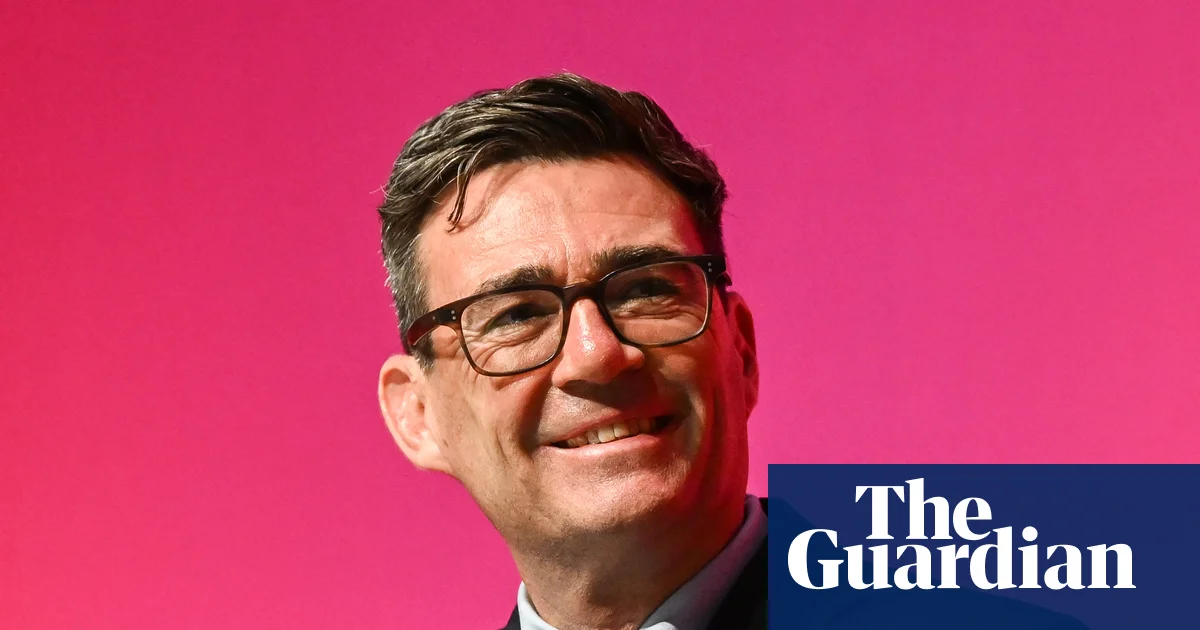
Even Andy Burnham’s closest allies accept that deposing Keir Starmer to install their man as leader was a huge political gamble. But if the mood at the Labour party conference in Liverpool is anything to go by, it is one that – so far – has paid off. This was reported by Qazaqyia.kz citing The Guardian.
The contrast with last year, when Starmer retained his grip on the party and Burnham slunk away from Liverpool early, could not be more stark. Their relief at their turn of fortune is tempered only by the fiscal headwinds ahead.
Cabinet ministers’ account
Cabinet ministers recount how at their political meeting two weeks ago, they were shown a series of charts showing the metrics behind the Burnham bounce. One in particular stood out to those in the room.
It was a graph showing whether the public felt the government was heading in the right direction. Until the end of June, it had been on a downward trajectory as public frustration mounted over Starmer’s leadership. But once Burnham took over at the start of July, the line suddenly rebounded and, while still in negative territory, has been moving definitively upwards since. “We’ve got a second hearing with the public,” one cabinet minister said. “We can’t squander it.”
This time last year, just 14 months after coming to power, several were privately despairing about Labour’s electoral prospects. But with an energetic new prime minister and after a difficult summer for Nigel Farage, they now believe that a second term is winnable.
Snap election speculation
It is perhaps unsurprising, then, that speculation about a snap election escalated in the run-up to the conference, to the extent that Burnham felt compelled to “knock that dead” and confirm a 2029 date instead.
Some of the prime minister’s closest advisers wanted him to rule out an early election from the off, pressing him to be explicit. “The polling isn’t good enough. We could end up being the biggest party but we could lose our majority,” one said. Another said: “Elections have to be about a choice, not a referendum on an alternative plan.”
But others inside No 10 felt he should go to the country while the polling was good, Farage was on the back foot, and before Burnham’s big plans for change ran headfirst into fiscal reality. “Right now the public is willing to give us the benefit of the doubt – that won’t last for ever,” one said.
Burnham’s promise
For his part, Burnham claims he can deliver on his promise of radical change for the country despite the severe economic headwinds, by delivering tangible – albeit smaller – improvements in the short term while setting out a longer-term vision to transform things such as social care and youth unemployment at the same time.
“There’s always things you can do, it’s just whether you’re prepared to do them,” he told the Guardian at the weekend. “I do think it is crucial to have stability and to show that there’s a willingness to face up to the reality of some of these difficult things. But actually from that stability, the permission can come to make bigger change.”
The slogan of his first conference as leader has been “hope again” – but with the bleak global economic landscape there is less hope around than there was when he walked into Downing Street two months ago.
Tests ahead
The first crucial test for Burnham will be next month’s budget, at which he said the government would be “highly prudent” with the public finances, amid concerns that Labour needs to reassure the markets.
But if the budget is about intent, next summer’s spending review is about proof, and as such, that could prove to be a make-or-break moment for this prime minister. It’s easy to make the promises, but much harder to deliver on them.
With obstacles ahead, the relief felt by Labour MPs and ministers in Liverpool is heavily caveated. One cabinet minister quoted Alastair Campbell’s election mantra as a warning to colleagues who might be getting ahead of themselves: “Lots done, lots to do, lots to lose.”