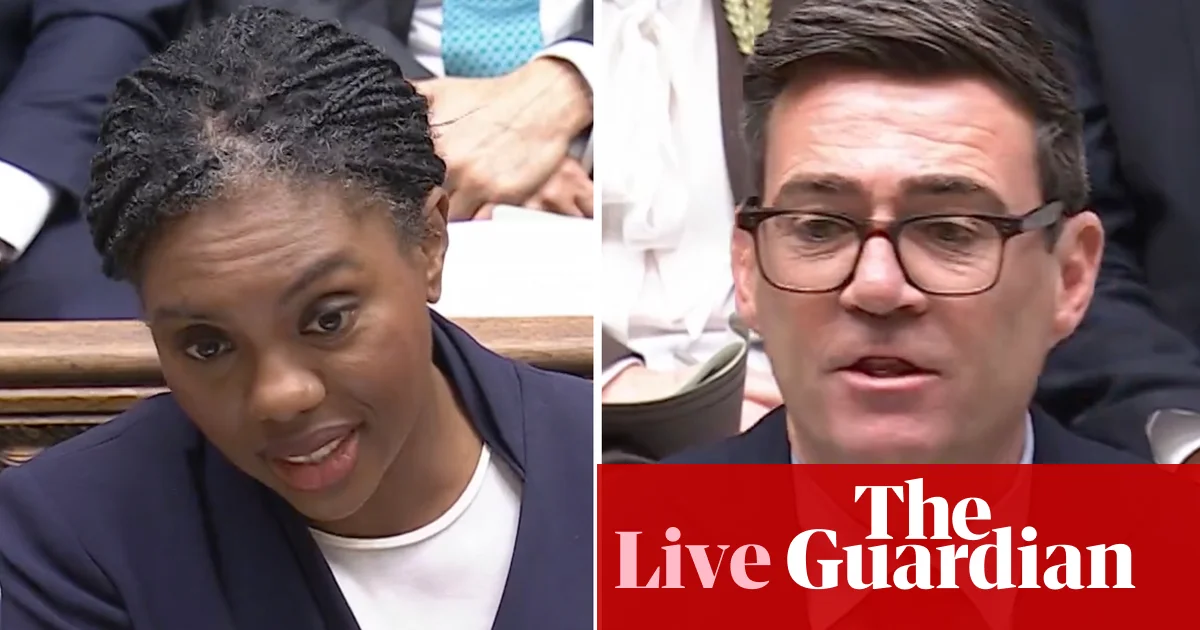
Andy Burnham faced criticism from opposition leader Kemi Badenoch at his first Prime Minister's Questions (PMQs) as UK Prime Minister. This was reported by Qazaqyia.kz citing The Guardian.
Badenoch said Burnham talks about the last government, but the last government was Keir Starmer's, and it fails. She accused Burnham of being "continuity Keir".
In response, Burnham highlighted the UK's leadership on the world stage. He noted that for decades, Conservative and Labour politicians alike have talked about the importance of the two-state solution between Israel and Palestine, but words will only be words if not backed by action.
"Leadership is about taking action," Burnham said. He stated that where there is injustice, where people are being driven out of their homes, the UK must stand for fairness. He credited the Father of the House, Edward Leigh, for applauding the government's action in this difficult and dangerous world.
"Britain has to stand for something. Britain has to show leadership. Britain has to stand for fairness against injustice," he declared.
According to Burnham, when people are bullied out of their homes and intimidated, Britain will always stand with the underdog. This is leadership on the world stage, Britain being true to what it has always been about.
"That is what the British people expect of us, and that is what this government will do," Burnham concluded.
It is worth noting that Burnham has not previously committed to raising defence spending to 3% of GDP by 2030. This issue was not raised during PMQs, but Badenoch's criticism may intensify pressure in this direction.
Experts suggest Burnham's stance may be linked to his prioritisation of economic stability. However, the opposition has indicated it will not drop the issue.
The UK's defence spending currently stands at around 2.3% of GDP. NATO's target is for member states to spend at least 2% of GDP on defence. However, in recent years, due to Russia's war in Ukraine, calls to increase this figure have grown.
Burnham's position on this matter could affect his standing within the party. Some Labour MPs support increasing defence spending, while others prefer more funds for social programmes.
During PMQs, the debate between Burnham and Badenoch focused largely on foreign policy and defence issues. Badenoch labelled Burnham "continuity Keir", criticising his policies as indistinguishable from Starmer's.
Burnham, in his response, emphasised Britain's role on the world stage and the importance of standing against injustice. He sought to convey that he supports the two-state solution not just in words but in action.
This was Burnham's first PMQs as Prime Minister. This initial test demonstrated his political skill, but the defence spending question remains open.
Experts do not rule out that Burnham may eventually have to give a concrete commitment to increase defence spending. Especially ahead of the next NATO summit, this issue could be raised again.
Currently, the Burnham government faces key tasks such as ensuring economic growth and establishing social justice. Increasing defence spending may conflict with these goals, so Burnham is being cautious.
However, an escalation of the geopolitical situation could force him to make concessions on this issue. For now, Burnham maintains his position and refuses to make specific commitments to increase defence spending.