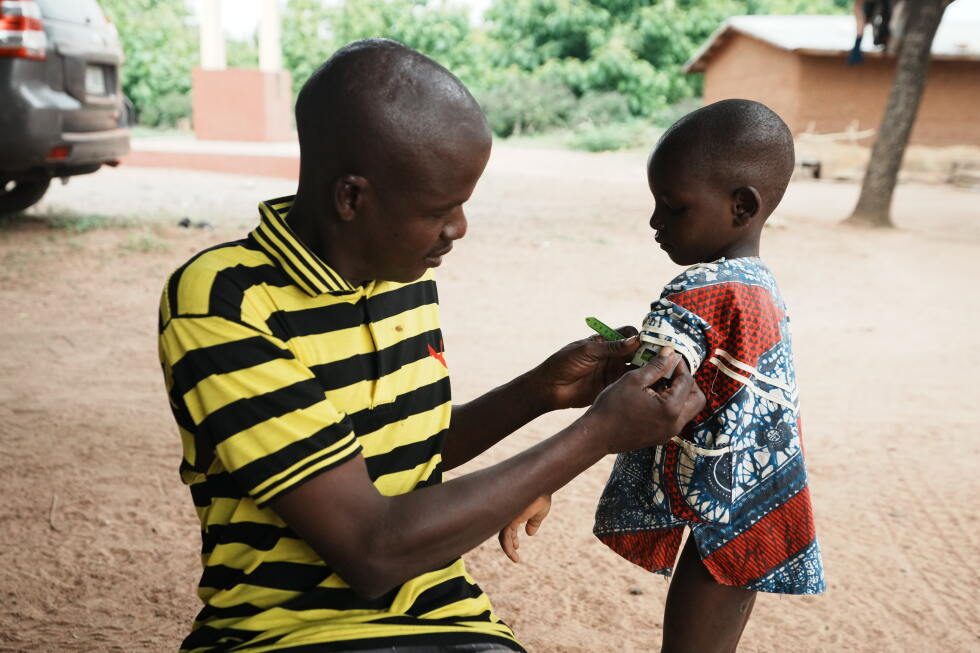
Sabi Bera Zakari, a farmer in N’Dali, Benin, said he didn’t care much how tall his children would grow, only sometimes wishing they could gain more weight. “For me, height is not a problem,” Zakari said. “It’s mainly their weight that sometimes worries me.” This was reported by Qazaqyia.kz citing Associated Press.
This was reported by Qazaqyia.kz citing Associated Press.
The farmer’s wife, Aboudou Salamatou, seemed to disagree, as did development sociologist Boris Gloni, who shook his head as he listened. He believed two of the family’s young daughters suffered from stunted growth.
As a former representative of The Hunger Project, an international organization working to combat hunger across Benin, Gloni spent years trying to convince men like Zakari that stunting in children was a rampant issue that needed to be addressed by families first and foremost.
Despite the abundance of natural resources and widespread subsistence agriculture, stunting — impaired growth and lower than average height-for-age caused by malnutrition — affects over 30% of children younger than 5 in Benin, according to factsheets by the Global Alliance for Improved Nutrition, a Geneva-based nonprofit that tracks stunting figures.
Children who are not achieving the average height for their age may face other issues as well.