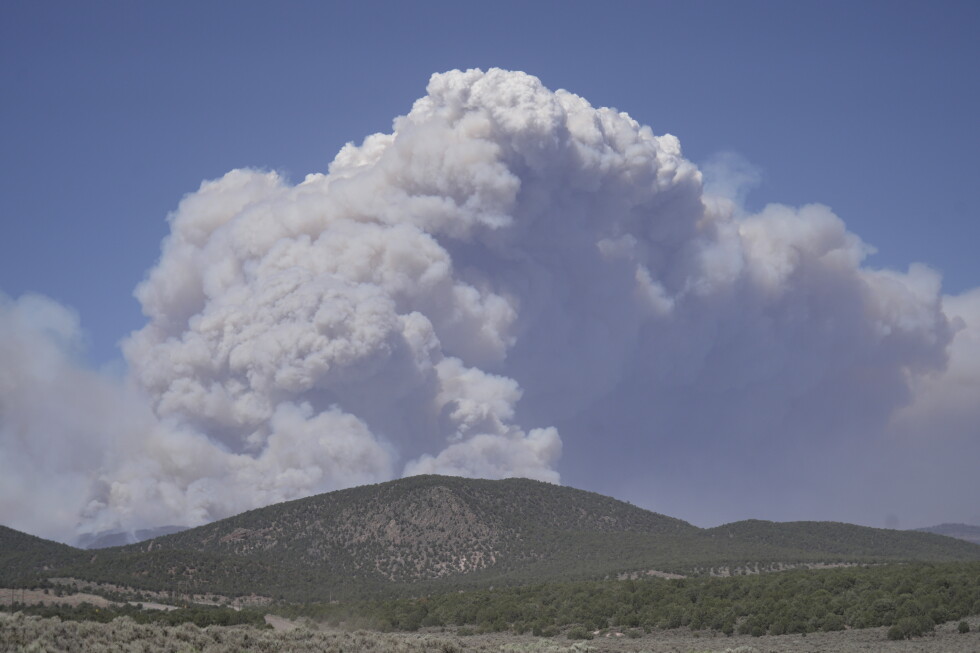
The Iron Fire in Utah's Juab County was first detected Saturday and had blackened 34 square miles, authorities said. The fire, about 70 miles southwest of Salt Lake City, forced the evacuation of Eureka, population 1,000, and people at a nearby ranch. This was reported by Qazaqyia.kz citing Associated Press.
Hot, dry and windy conditions are fueling a fast-moving wildfire in Utah, forcing the governor to declare an emergency and restrict fireworks as critical weather across the West gives way to mounting concerns that anything could cause a spark.
Firefighters are facing more challenges on the ground from what fire managers and experts call unprecedented conditions. Air tankers and helicopters were grounded Friday as winds picked up on the Cottonwood Fire, the largest blaze currently burning in the U.S. Gusts were clocked at 45 miles per hour (72 km/h) and humidity levels were in the single digits, leaving crews with few options for slowing the flames, especially as they raced through the treetops.
"We are not expecting the weather to be kind to us for the next couple of days," said Alyssa Mason, a spokesperson assigned to the fire. "We are seeing extreme fire behavior out there with some crown runs."
The Cottonwood Fire has burned more than 34 square miles, according to authorities. Firefighters have only contained 5% of the fire. Increasing winds and low humidity are hampering firefighting efforts, limiting aerial attacks.
Governor Spencer Cox declared a state of emergency and banned fireworks across much of the state. "We are in a period of extremely high fire danger," he said in a statement. "Any spark could lead to a catastrophic fire."
Firefighters faced extreme conditions on the Cottonwood Fire. Wind gusts reached 45 mph, and humidity was below 10%. These conditions contributed to the rapid spread of the fire, forcing the grounding of aircraft.
The Iron Fire in Utah is also spreading rapidly. The fire was detected Saturday and has burned 34 square miles. Evacuated areas include the town of Eureka and a nearby ranch.
Other fires in the western U.S. are also challenging firefighters. Fires in California are also spreading rapidly in dangerous weather conditions. Authorities urge residents to be cautious and follow fire safety rules.
The Cottonwood Fire is currently the largest fire burning in the U.S. Firefighters are doing everything they can to stop it, but weather conditions are making their work difficult. Fire managers describe the situation as "unprecedented."
The governor of Utah declared a state of emergency and banned fireworks. These measures are aimed at reducing fire risk. Residents are advised to refrain from lighting campfires in open areas and other fire-prone activities.
According to Cottonwood Fire spokesperson Alyssa Mason, the weather is not expected to improve in the coming days. This will further complicate firefighting efforts. Firefighters are working on the ground to stop the flames, but wind and drought are limiting their efforts.
Wildfires in the western U.S. burn millions of acres annually and cause billions of dollars in damage. This year is particularly dangerous, as drought and high temperatures have extended the fire season. Experts warn that climate change will increase fire risk.
In addition to the fires in Utah, large fires have been reported in California, Oregon, and Washington. Authorities say most of these fires are human-caused. Residents are urged to follow fire safety rules.
As part of prevention measures for the Cottonwood Fire, several roads have been closed and residents evacuated. Firefighters are creating containment lines to prevent the fire from spreading. But wind and drought are making this work difficult.
The U.S. Forest Service has sent additional resources to fight the fire. Air tankers and helicopters will rejoin the fight when weather improves. Firefighters are working around the clock.
Utah Governor Spencer Cox has requested federal assistance. The U.S. president is monitoring the situation. Additional funding may be allocated for fire prevention and suppression.
As part of prevention measures for the Cottonwood Fire, several communities have been evacuated. Evacuated residents have been placed in temporary shelters. Authorities are taking all necessary measures to ensure their safety.
Firefighters faced particularly dangerous conditions on the Cottonwood Fire. Wind speeds reached 45 mph, and humidity levels were very low. These conditions contributed to the rapid spread of the fire and made aerial attacks impossible.
As part of prevention measures for the Cottonwood Fire, several roads have been closed and residents evacuated. Firefighters are creating containment lines to prevent the fire from spreading. But wind and drought are making this work difficult.
The U.S. Forest Service has sent additional resources to fight the fire. Air tankers and helicopters will rejoin the fight when weather improves. Firefighters are working around the clock.
Utah Governor Spencer Cox has requested federal assistance. The U.S. president is monitoring the situation. Additional funding may be allocated for fire prevention and suppression.
As part of prevention measures for the Cottonwood Fire, several communities have been evacuated. Evacuated residents have been placed in temporary shelters. Authorities are taking all necessary measures to ensure their safety.